A buried water line can leak for weeks before anyone notices — the water disappears into the soil, and the only signs are a climbing water bill or a soggy patch that never dries. Digging up the whole line to find it is expensive and destructive, which is why detection comes first. Each method has situations where it excels and situations where it struggles. This guide compares the main underground leak detection methods so you know what to expect and can judge whether the right approach is being used.
How Underground Leaks Behave
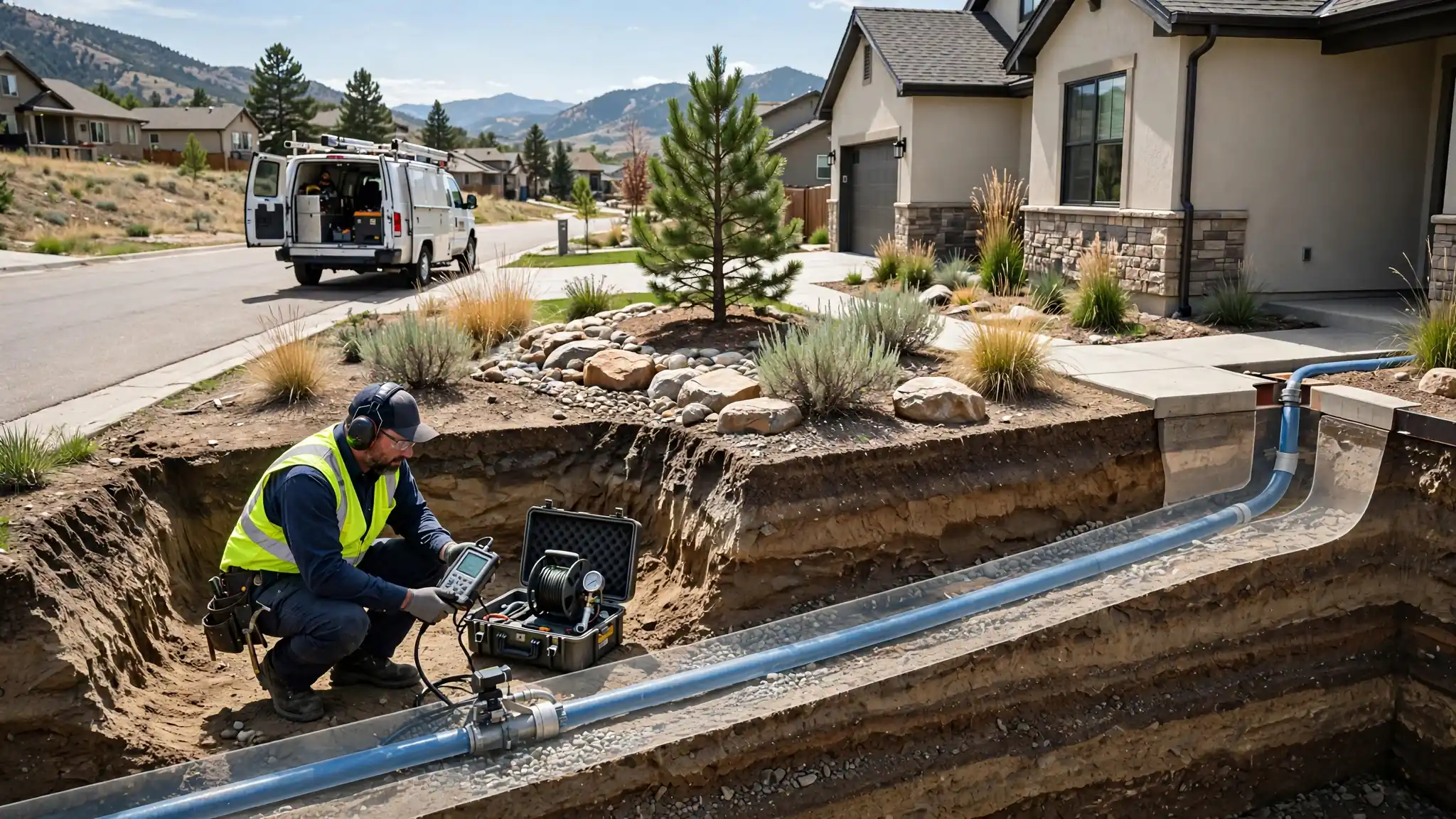
A pressurized water line does not leak politely. Water escapes through the break at line pressure, washing soil away from the pipe and often creating a void around the leak. In sandy or loose soil the water migrates upward and surfaces as a wet spot; in dense clay it may travel sideways along the pipe trench and appear far from the actual break. That migration is why the wet spot is a clue, not a location — digging where the ground is wettest often misses the leak by many feet.
The leak also makes noise and changes temperature. Pressurized water forced through a crack vibrates the pipe, sending sound through the pipe wall and the surrounding soil. Water from underground is cooler than sun-warmed surface soil, creating a thermal signature a camera can sometimes see. And the pressure drop across the leak is measurable. Each detection method exploits one of these physical facts.
Acoustic Listening
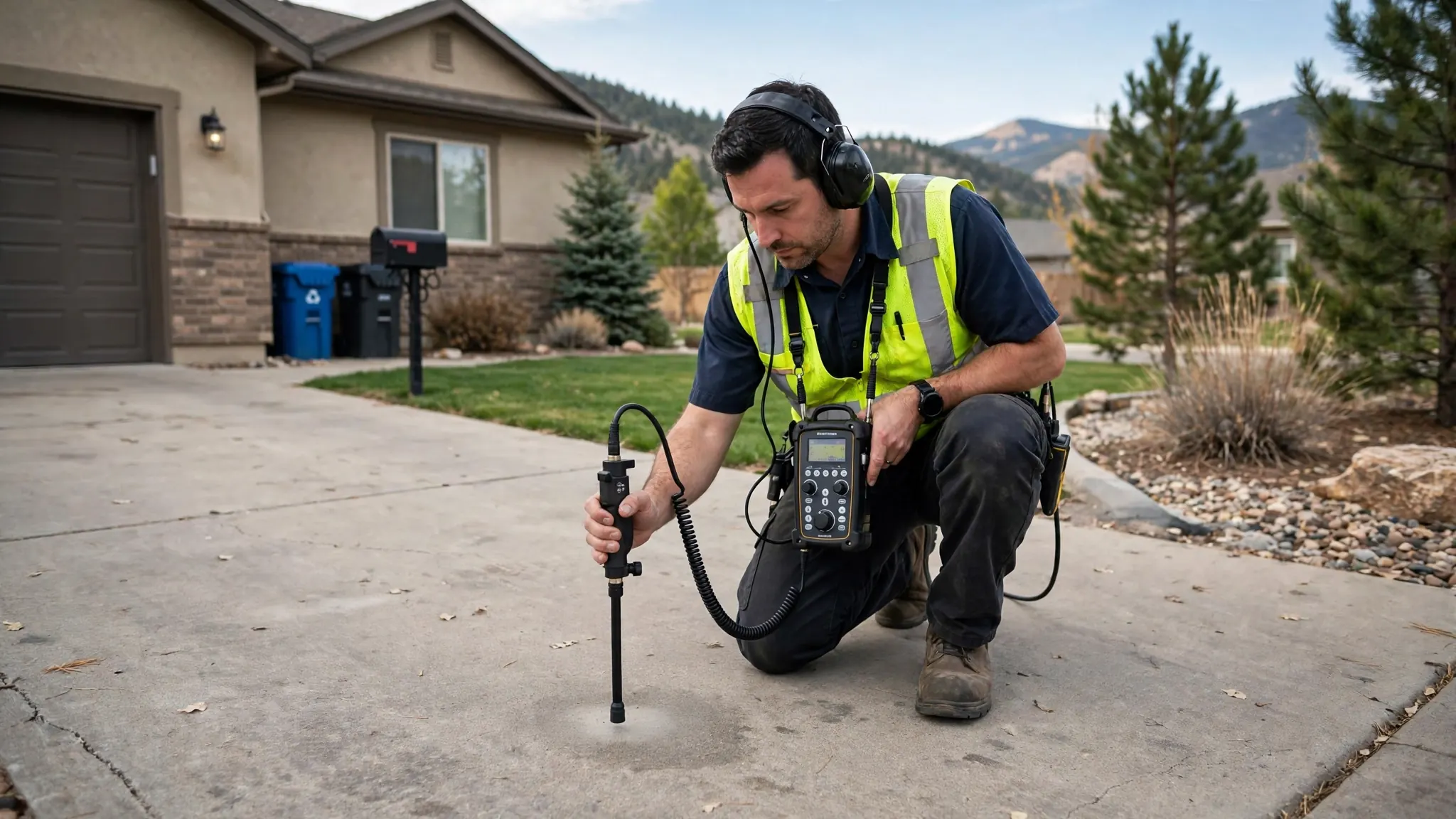
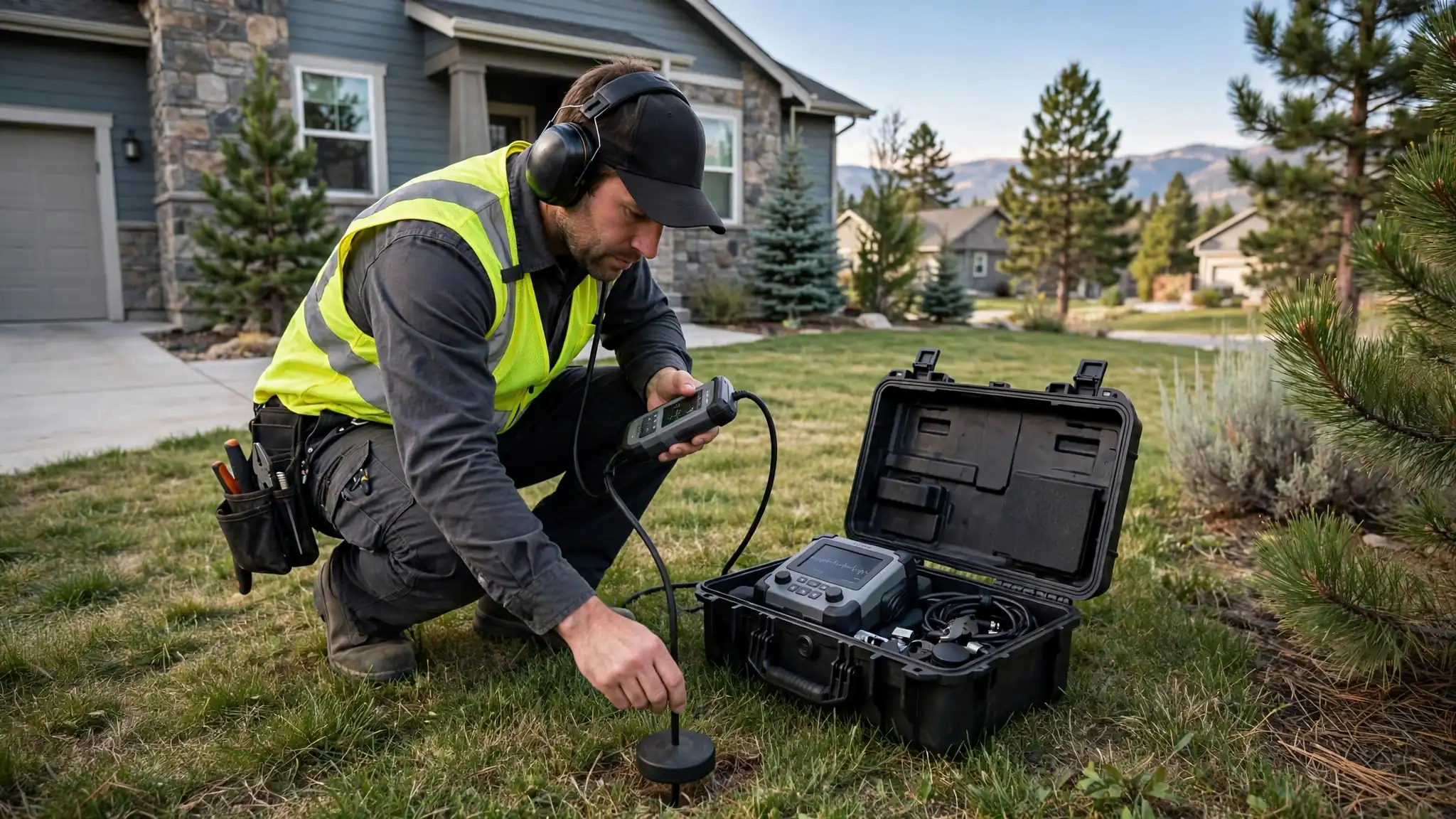
Acoustic detection listens for the sound of water escaping under pressure. The technician places sensitive ground microphones or contact sensors along the suspected line path, and the leak announces itself as a distinct hissing or rushing sound, loudest directly above the break. Modern equipment filters out background noise and can compare sound intensity between points to triangulate the position.
- Strengths: precise on pressurized lines, non-invasive, works under concrete and asphalt
- Weaknesses: needs adequate line pressure; quiet in low-pressure or deep-burial situations
- Best for: water service lines and pressurized supply lines with good pressure
- Limitations: background noise, very deep burial, and plastic pipe (which transmits sound poorly) reduce accuracy
Pipe material matters enormously for acoustics. Metal pipe — copper, galvanized steel — carries leak sound for long distances, making acoustic detection fast and precise. Plastic pipe (PVC, PEX, poly) absorbs sound, so the listening range shrinks and the technician works in shorter intervals. A good technician adjusts expectations and methods to the pipe material rather than promising the same precision everywhere.
Thermal Imaging And Moisture Meters
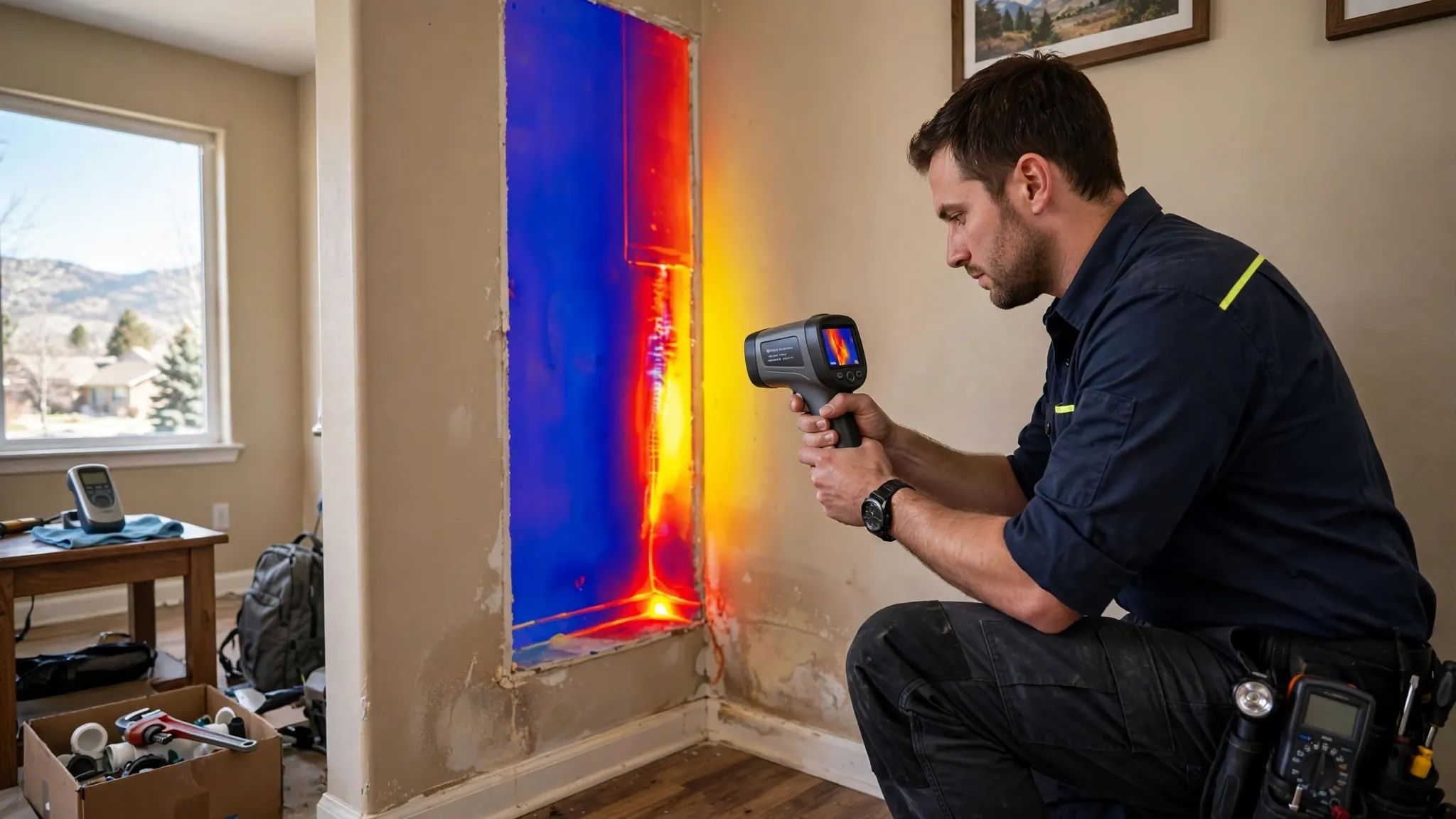
Thermal cameras see temperature differences, and a leak changes the temperature of the soil or slab above it. Water from a buried line is cooler than the surrounding ground in warm weather, creating a cool signature the camera picks up. Indoors, thermal imaging finds the cool tracks of leaking water inside walls and under floors. Moisture meters complement the camera by confirming elevated moisture in the suspect area — the camera shows where, the meter confirms what.
- Strengths: fast area scanning, excellent indoors and under slabs, visual evidence
- Weaknesses: surface conditions (sun, shade, recent rain) affect readings outdoors
- Best for: slab leaks, indoor hidden leaks, shallow buried lines in stable conditions
- Limitations: deep burial insulates the thermal signature; cannot see through saturated soil well
Thermal imaging is at its best as a screening tool. A technician can scan a large area quickly, spot the anomaly, and then confirm with a more precise method. Our guide to thermal imaging for water leaks goes deeper on how the technology works and what its images actually show.
Pressure Testing And Line Isolation
Pressure testing answers a different question: which line is leaking, rather than where. The technician isolates sections of plumbing — shutting valves to separate the service line from the house system, for example — pressurizes each section, and watches whether the pressure holds. A section that loses pressure has the leak. This is especially valuable when the leak could be in any of several lines, or when acoustic methods struggle.
- Strengths: definitively identifies which line leaks; works regardless of soil conditions
- Weaknesses: locates the line, not the exact spot — usually paired with another method
- Best for: narrowing down which of several lines is the culprit
- Limitations: requires accessible isolation valves; takes time on complex systems
The water meter test homeowners can do is a simplified version of this principle. Our article on reading your water meter to check for leaks walks through it. Professional pressure testing is the rigorous version — controlled, sectional, and measured with gauges rather than inferred from a bill.
Tracer Gas Detection
Tracer gas detection drains the line and fills it with a safe, light gas mixture — typically nitrogen with a small percentage of hydrogen. The gas escapes through the leak, rises through the soil faster than water would, and is detected at the surface with a sensitive sniffer. Because gas migrates upward reliably, the surface detection point sits close to the actual leak.
- Strengths: very precise location, works where acoustics struggle (plastic pipe, low pressure)
- Weaknesses: requires draining the line; more setup time than acoustic methods
- Best for: difficult cases — plastic pipe, deep burial, quiet leaks
- Limitations: not a first resort; used when simpler methods cannot pin the location
The gas used is non-toxic and non-flammable at the concentrations involved, and it dissipates harmlessly. Tracer gas is the method of last resort in the best sense — it resolves the cases other methods cannot, rather than being needed routinely. When a technician proposes it, it usually means the leak is real, the simpler methods were inconclusive, and precision matters.
Method Comparison At A Glance
| Method | Detects | Most Precise When | Main Limitation |
|---|---|---|---|
| Acoustic listening | Sound of escaping water | Pressurized metal pipe | Plastic pipe, low pressure, deep burial |
| Thermal imaging | Temperature anomalies | Shallow lines, slabs, indoors | Deep burial, wet or sun-baked surfaces |
| Moisture meters | Elevated moisture levels | Confirming suspect areas | Cannot locate alone — confirmatory only |
| Pressure testing | Which line loses pressure | Multiple candidate lines | Finds the line, not the spot |
| Tracer gas | Gas escaping at the leak | Difficult plastic-pipe or deep leaks | Requires draining; more setup |
In practice, methods are combined. A typical professional detection visit might start with pressure testing to identify the leaking line, use thermal imaging to narrow the area, and finish with acoustic listening to mark the exact spot. The combination is more reliable than any single method, and a technician who explains which methods are being used and why is one you can trust.
Before booking, ask which detection methods the company uses and whether they combine them. A one-method-fits-all approach misses leaks that a combined approach finds. The equipment list tells you a lot about the thoroughness of the diagnosis.
What Detection Does Not Include
Detection finds the leak; it does not fix it. The deliverable is a location — usually marked on the ground or floor — plus an explanation of what was found. Repair is a separate step: excavating, exposing the pipe, and fixing or replacing the failed section. Some companies do both; others specialize in detection and hand off to a repair contractor. Either model works as long as you know which you are getting.
Detection also does not guarantee a single leak. Older lines sometimes have more than one weak point, and finding the loudest leak does not prove it is the only one. A thorough technician says what was found and what the methods can and cannot rule out. If your water service line is aging and problematic, ask about the overall condition — not just the one break.