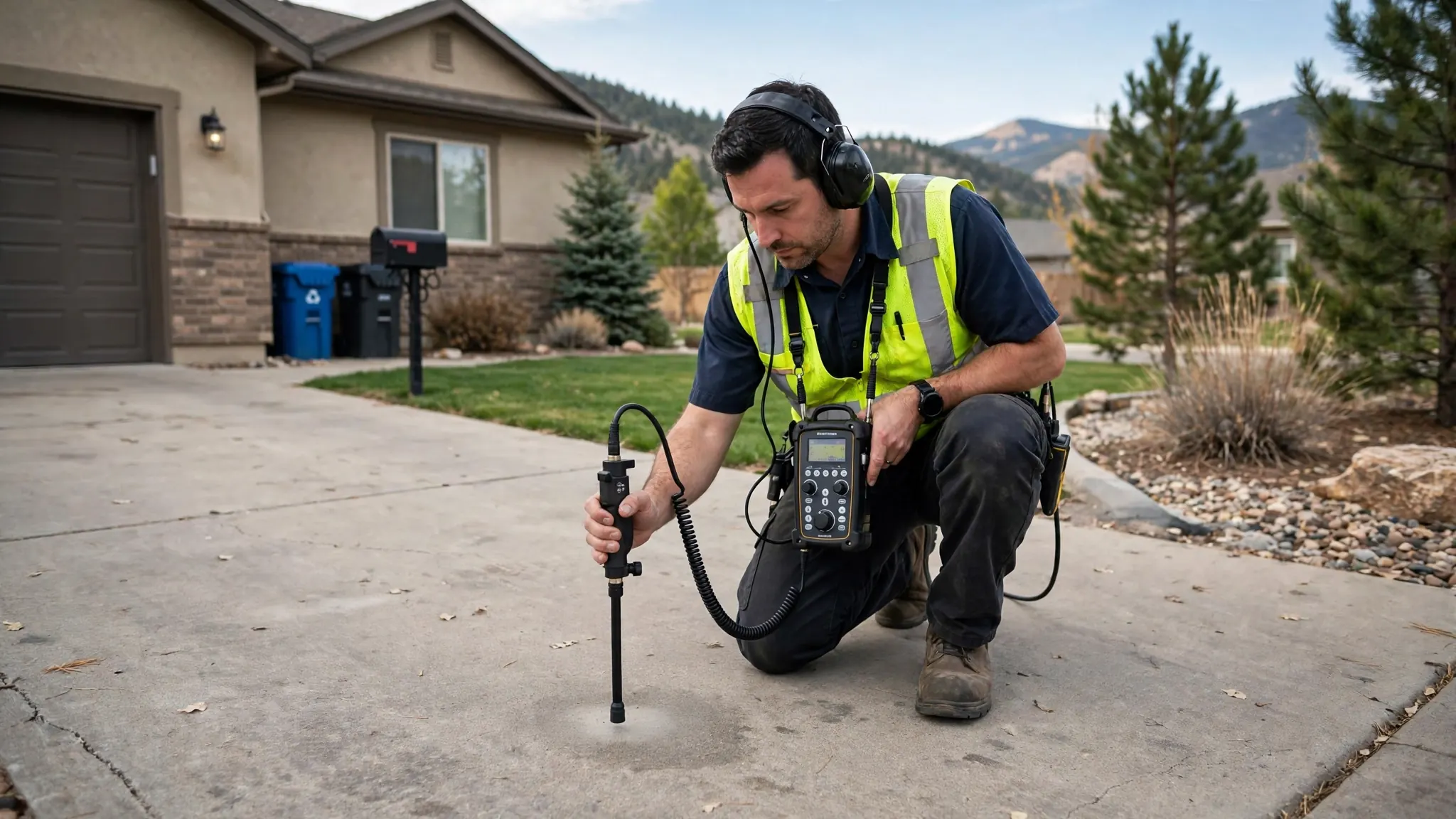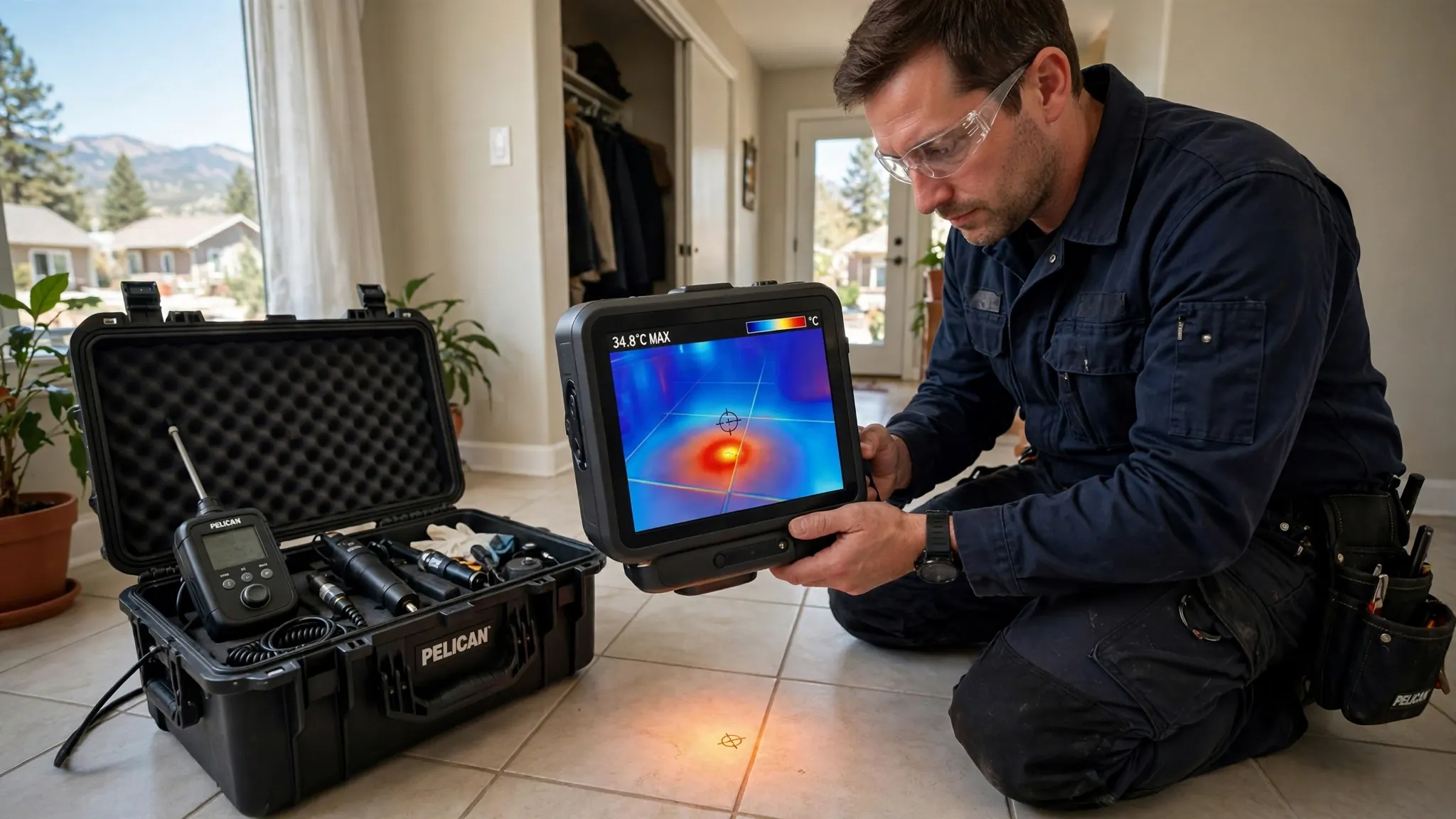
Thermal imaging finds water leaks by detecting the temperature differences that water creates. An infrared camera does not see water itself — it sees surface temperatures, and wet materials are almost always warmer or cooler than the dry materials around them. A hot water line leaking under a slab shows up as a warm patch on the floor; a cold supply leak behind drywall shows as a cool streak on the wall. The camera turns these invisible differences into a visible heat map, guiding the operator to the leak's location. Combined with acoustic listening, thermal imaging is a core tool of professional leak detection in Broomfield.
What A Thermal Camera Actually Sees
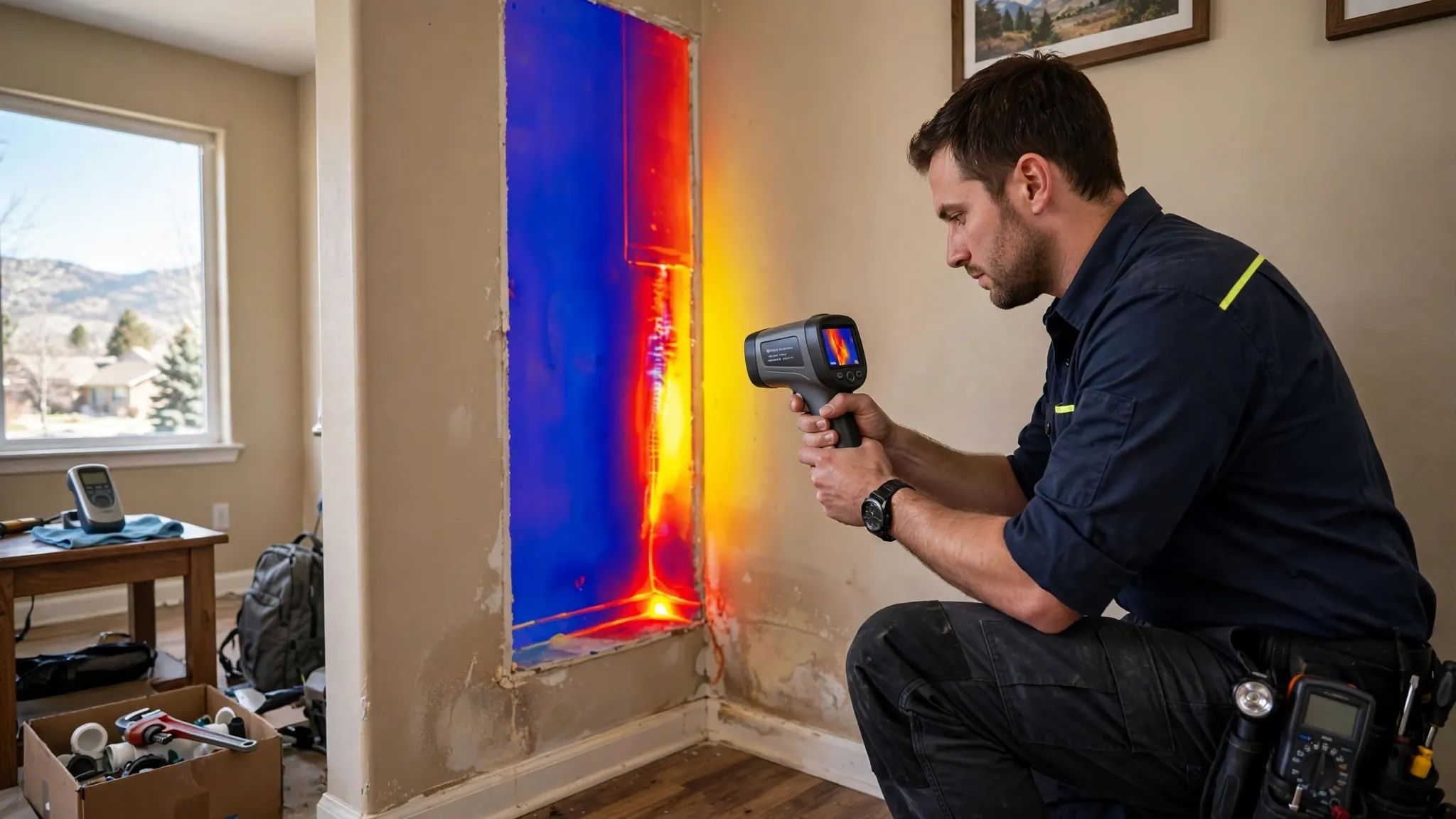
An infrared camera measures the infrared radiation emitted by surfaces and converts it into a color-coded image. Warmer areas appear in reds, oranges, and yellows; cooler areas in blues and purples. The camera is reading surface temperature only — it cannot see through walls or into pipes. What it reveals are the thermal footprints that water leaves on the surfaces it touches.
Water changes surface temperature in two ways. First, the water itself carries a temperature: hot water from a leaking supply line warms the surrounding material, while cold supply water cools it. Second, evaporation cools wet surfaces — a damp patch of drywall is cooler than the dry wall around it even when the water is at room temperature. Both effects create the contrast the camera detects.
This is why a warm spot on the floor is such a classic slab leak symptom: the hot water line beneath is heating the concrete above it, and the thermal pattern maps the leak's spread across the slab. When that warm patch appears suddenly, treat it as urgent and consider emergency slab leak help rather than waiting to see if it grows.
How Leaks Create Thermal Signatures
Different leaks paint different thermal pictures, and reading them correctly is where the operator's experience matters.
- Hot water supply leaks produce warm, often irregular patches that grow from a central point — the classic slab leak signature on a floor.
- Cold water supply leaks produce cool streaks or patches, clearest when the surrounding material is at normal room temperature.
- Slow seepage behind drywall creates diffuse cool areas with soft edges, as moisture wicks outward through the material.
- Active drips from above leave vertical cool streaks on walls or ceilings, tracing the water's path downward.
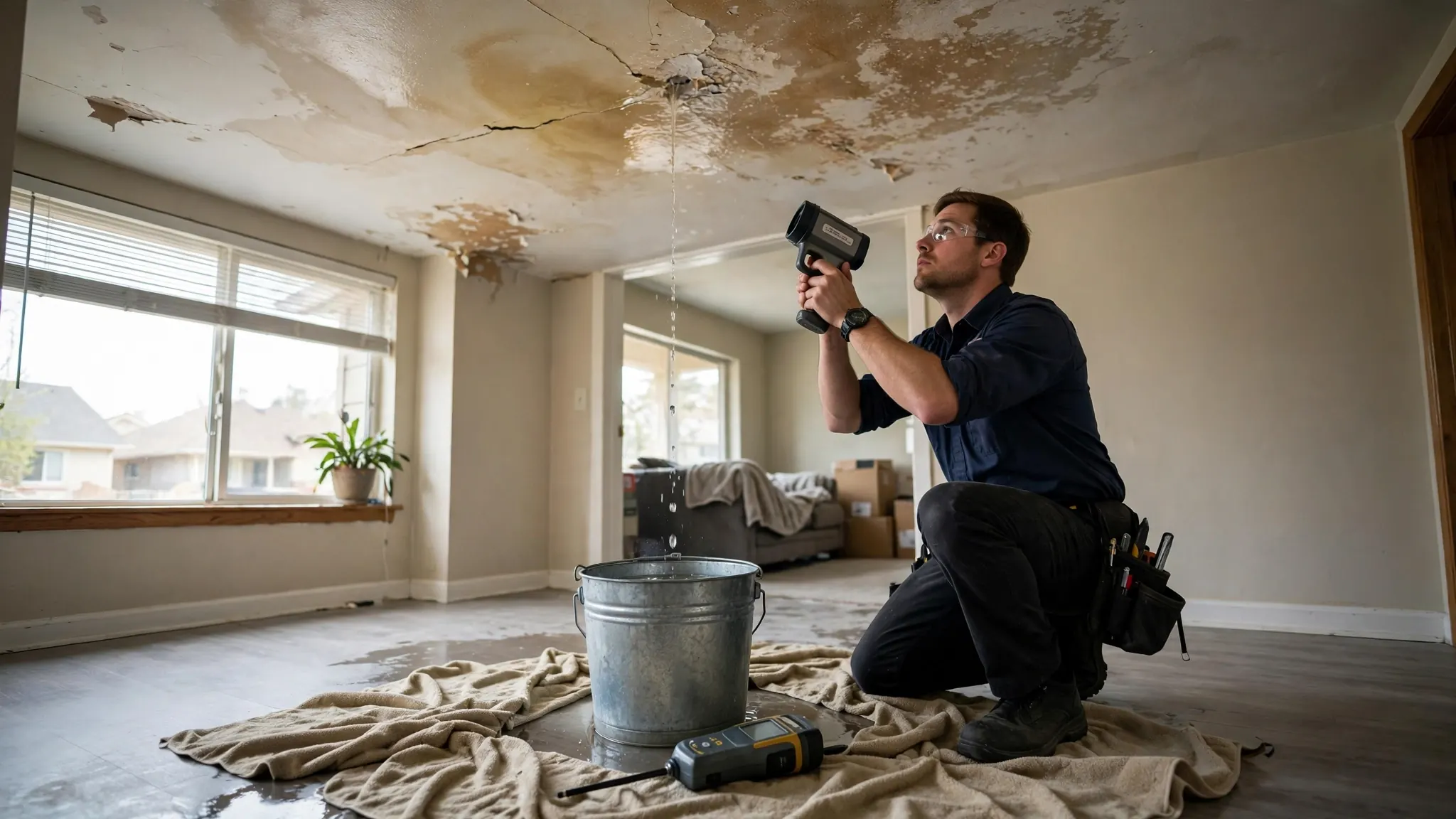
- Ceiling leaks from plumbing above show as expanding cool zones that change shape as the water spreads.
The shape and behavior of the pattern help distinguish plumbing leaks from other moisture sources. A plumbing leak pattern typically grows or holds steady over time, while condensation patterns shift with temperature and humidity cycles.
The Inspection Process
A thermal inspection is methodical. The camera alone is not enough — conditions must be right and findings must be verified.
- Stabilize the environment. Heating and cooling systems are noted because they create their own thermal patterns; the operator accounts for ducts, radiators, and sun-warmed walls.
- Scan the suspect area systematically. The operator sweeps the camera across walls, floors, and ceilings in a grid, watching for anomalous warm or cool patterns.
- Compare with dry reference areas. A pattern is only meaningful relative to the surrounding material — the operator constantly compares suspect spots with known-dry areas of the same surface.
- Mark the boundaries. The edges of the thermal anomaly are marked on the surface, mapping how far the moisture has spread.
- Verify with a moisture meter. Thermal imaging suggests where water is; a pin or pinless moisture meter confirms it, ruling out thermal illusions from air leaks or insulation gaps.
- Correlate with other methods. The thermal findings are combined with acoustic listening or pressure testing to identify the actual leak point within the wet area.
What Thermal Imaging Cannot Do
Thermal cameras have real limits, and honest operators explain them upfront. The camera reads surface temperature, so a leak deep inside a thick wall may not change the surface enough to register. Highly reflective surfaces like polished metal and glass give unreliable readings. And the method needs a temperature difference to work with — a leak of room-temperature water in a room-temperature wall on a mild day may show almost no contrast.
Thermal imaging also cannot identify the leak's exact source on its own. It shows where water has spread, not the precise break in the pipe. That is why it is paired with acoustic methods, which hear the leak itself, and pressure testing, which confirms which line is failing. The combination is what produces a true pinpoint.
Sunlight on a wall, a missing patch of insulation, or an air leak can all create thermal patterns that look like moisture. Never open a wall based on a thermal image alone — always verify with a moisture meter and a second detection method first.
Thermal Vs. Acoustic: When Each Leads
Thermal imaging and acoustic listening answer different questions. Thermal shows where water has spread across surfaces; acoustic hears where pressurized water is escaping right now. In practice, the two complement each other.
| Situation | Lead Method | Why |
|---|---|---|
| Suspected hot water slab leak | Thermal imaging | The warm patch on the floor maps the leak directly |
| Hidden pressurized leak, no surface signs | Acoustic listening | Hears the leak itself through material |
| Ceiling stain of unknown origin | Thermal imaging | Reveals the moisture pattern and its spread |
| High water bill, no visible leak | Acoustic + pressure test | Finds the leak by sound; thermal may show nothing yet |
| Confirming the full extent of damage | Thermal imaging | Maps every affected area for repair planning |
A thorough leak detection visit uses both, letting each method check the other's work. When the acoustic pinpoint sits at the center of the thermal pattern, the location is as certain as it gets without opening anything.
Common Misunderstandings
A few myths about thermal leak detection deserve clearing up. First, the camera cannot see through walls — it reads the wall's surface, and the leak is inferred from the pattern. Second, not every warm or cool spot is a leak; the operator's job is largely ruling out the many innocent causes of thermal variation. Third, a thermal camera app on a phone is not a substitute for professional equipment — phone attachments lack the sensitivity and resolution to detect the subtle differences a real leak creates.
Finally, thermal imaging does not replace the repair. It is a diagnostic tool that tells you exactly where to open and how far the damage extends, so the fix is surgical instead of exploratory. For stains spreading across a ceiling, our ceiling leak service uses the same thermal mapping to trace the moisture back to its source.