
Called them after our water bill tripled in August. They arrived right on schedule, pinpointed a hidden main water line fissure under our concrete patio, and prevented catastrophic foundation erosion.
R
Robert Chen5.0 / 5
Searching for leak detection near me in Valley View? We diagnose hidden water leaks on Broomfield’s sloped lots — where water travels downhill and surfaces far from where it actually starts. A wet patch at the bottom of a slope frequently begins as a leak near the top. Our acoustic sensors walk the sound gradient uphill, pressure tests prove which line is losing water, and moisture mapping separates traveling pipe leaks from ordinary drainage. We answer 24/7 and arrive in 30–45 minutes anywhere in Broomfield, including Valley View.
Open now — call any time. We answer calls 24/7.
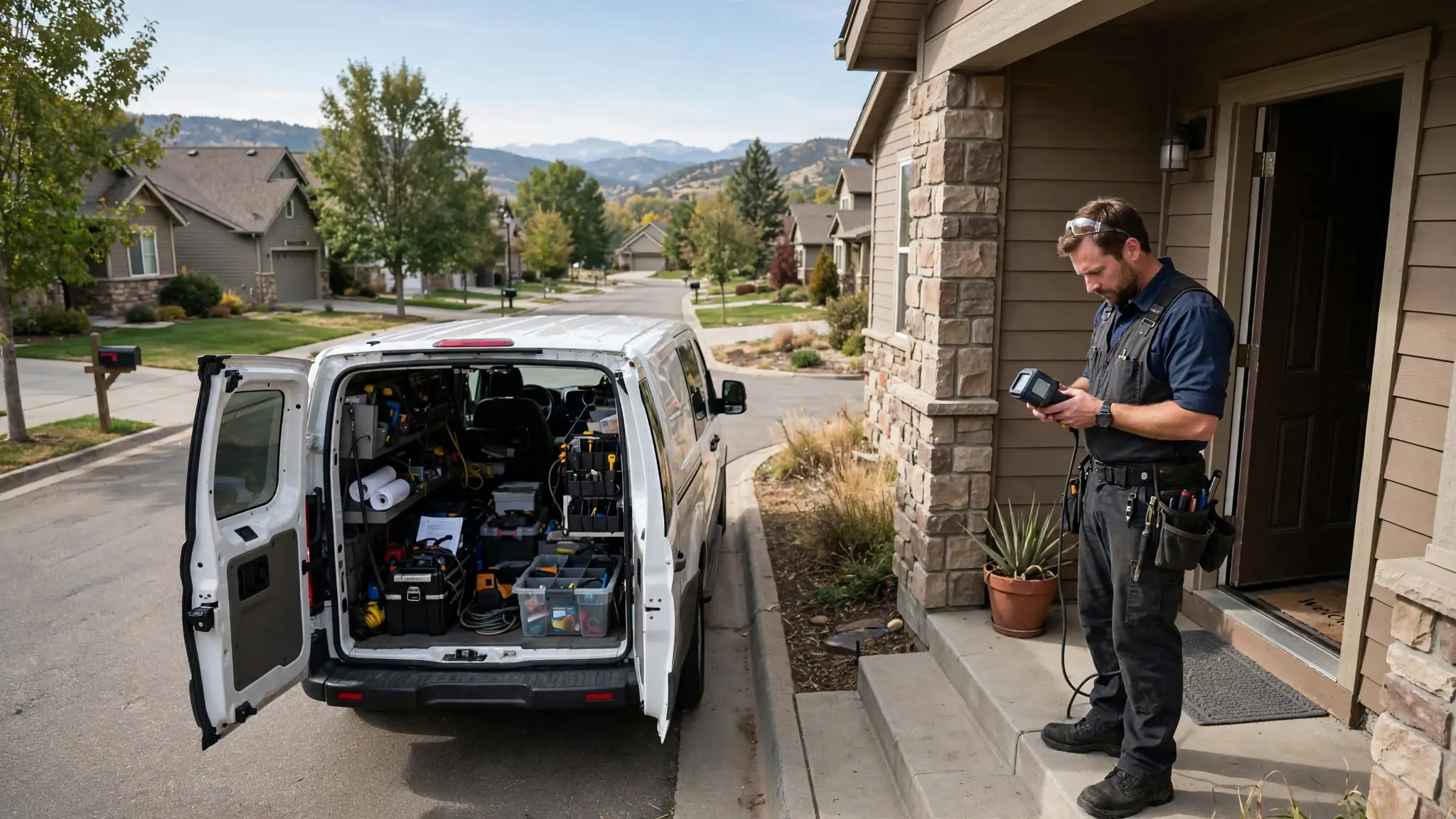
Sloped lots change leak behavior completely: water obeys gravity, so symptoms appear downhill of their source — sometimes dramatically far downhill. For typical homes in areas like Valley View, the essential diagnostic discipline is uphill tracing: finding where the water truly starts, not merely where it shows itself.
A soggy patch at the slope’s base very often originates from a service line or irrigation lateral near the top of the grade. We trace the water’s path upward with acoustic equipment instead of digging where it surfaces — because digging at the puddle misses the break.
Slopes concentrate stormwater at their lowest point, overwhelming drains and pressing water against foundations. We diagnose and clear surface drains, downspout lines, and catch basins so runoff keeps moving off the property instead of pooling.
Curb-to-house laterals running along sloped lots endure soil movement and pressure changes across their entire run. Pressure testing combined with electronic locating finds breaks anywhere along the grade — not just where water exits.
Sprinkler laterals running down slopes develop low-point failures and valve problems first. Zone-by-zone pressure tests isolate the failing lateral precisely, without excavating the hillside to search for it.
Slope erosion can convincingly mimic a leak, and a genuine leak can cause real erosion. Our pressure tests prove whether a pressurized line is feeding the water — the single verdict that decides the entire repair direction.
Valley View homeowners call us most for these services — each one applied with uphill tracing and slope-aware diagnostic methods.
Slope-loaded drainage fully diagnosed and cleared — surface drains, downspout lines, and catch basins that keep stormwater moving off the property in every season reliably.
Learn More Underground / Buried Line Leak In Broomfield CoElectronic locating maps buried pipe routes along the grade, then acoustic equipment traces the leak uphill to its true source with precision on the first visit.
Learn More Water Service Line Leak In Broomfield CoPressure testing for curb-to-house laterals on sloped runs — finding breaks anywhere along the grade, never merely where water surfaces downhill, tracing upward to the source.
Learn More Leak Detection In Broomfield CoOur flagship acoustic and thermal service with disciplined uphill tracing: symptoms at the slope’s base get traced to sources at its top, every time, without exception.
Learn More Slab Leak In Broomfield CoThermal and acoustic slab surveys for pressurized breaks beneath concrete — marked precisely regardless of where water exits downhill from the slab on your property.
Learn More Irrigation / Sprinkler Leak In Broomfield CoZone pressure tests for laterals running down slopes — isolating low-point failures and valve issues without hillside excavation at any stage of the diagnosis whatsoever.
Learn More Underground Pipe Leak In Broomfield CoTwo-sensor acoustic correlation triangulates deep leaks along sloped runs exactly where surface listening fails, delivering dependable pinpoint results on the first visit every time without fail.
Learn MoreThese are the symptoms Valley View homeowners call us about most. If you recognize your Valley View leak symptom below, the next step is a diagnostic visit — not guesswork.
Water surfacing at the bottom of a slope usually started much higher up. Digging where it appears misses the source entirely — acoustic tracing walks the sound gradient uphill to the actual break point.
Slopes funnel stormwater to the lowest drain at high speed. When drains cannot keep pace, water presses against foundations and into crawlspaces — we clear and diagnose the entire downhill path.
A spinning meter combined with a wet downhill area is the classic pressurized slope leak: a service line or irrigation lateral losing water that gravity faithfully carries downward.
Irrigation laterals on slopes fail at their low points first, creating one perpetually soggy zone. Zone pressure testing identifies the cracked lateral without digging up the hillside.
Seepage appearing at the downhill foundation edge can be a traveling slab leak or arriving drainage. Pressure testing delivers the definitive verdict before any repair decision gets made.
A faint hiss heard on a slope is pressurized water escaping from a buried line. Ground microphones follow that sound gradient uphill, step by step, to the break.
Slope diagnostics operate on one unbreakable rule: never trust where the water appears. Every step traces upward from the symptom to the true source.
We walk the entire slope first — noting where water surfaces, where soil feels soft, where erosion patterns show. The visible water is merely the end of the story; our job is locating its beginning.
The pressurized plumbing system gets tested before anything else. A system holding pressure means drainage or stormwater; a system losing pressure means a pipe is feeding the slope — the verdict deciding everything that follows.
Ground microphones and listening discs follow the leak’s sound gradient upward along the grade while thermal imaging scans structures at the top. Two independent readings must agree before we mark anything as the source.
The true source — never the puddle — receives the paint mark. Your written report includes the traced water path, pressure readings, and photos within 24 hours, so repair excavates the right spot on the first attempt.
Slopes severely punish the obvious answer: digging where water surfaces while the actual break sits fifty feet uphill. Twenty-five years of hillside diagnostics is what keeps our marks at the source.
Our trucks carry the complete slope kit — acoustic ground microphones, thermal cameras, pressure gauges, moisture meters, electronic locators — so uphill tracing begins on the very first visit, not after a failed dig elsewhere. We treat graded landscaping with genuine care, pinpointing precisely before anyone moves a shovelful of soil. Our reports document the traced water path rather than just a dot on a map, giving your excavation contractor the full picture. And when the honest verdict is drainage rather than a pipe leak, we say so plainly — with mapped evidence — saving you a plumbing repair that could never have fixed a grading problem.
Real reviews from Broomfield homeowners — shown exactly as provided.
Slope-lot water habits — learning to read downhill symptoms with uphill thinking.
A burst service line on a slope becomes a muddy torrent within minutes — water plus gravity moves fast, undermining soil, walkways, and foundations as it goes. Our emergency line is answered 24/7, and we arrive in 30–45 minutes anywhere in Valley View. We shut down the failed line first to stop the destructive flow, then trace uphill to the break and document the complete water path — so repair work and any erosion control both start from full knowledge.
Our dedicated emergency page for this area is Emergency Leak Detection In Valley View — or call now and we will dispatch immediately.
We serve every Broomfield neighborhood. Nearby areas include:
Because water faithfully obeys gravity. A break near the top of a slope sends water downhill through soil layers until it finds an exit — sometimes dozens of feet from the source. Digging at the wet spot misses the break completely; acoustic tracing walks the leak’s sound gradient uphill to where it truly starts.
With ground microphones that follow the escaping water’s hiss uphill along the grade, supported by pressure testing that proves which line is losing water. For deep buried lines, two-sensor acoustic correlation triangulates the break by time delay — no guesswork, and no hillside trenching required.
Pressure testing answers that question within the first hour. If the plumbing system holds its pressure, the water is stormwater or drainage — a grading problem, not a pipe problem. If the system loses pressure, a pipe is feeding the slope. Either verdict arrives documented with written evidence.
Yes. Detection is entirely non-invasive — no digging equipment, no heavy machinery on the slope at any stage. We mark the true source precisely so any subsequent repair excavates exactly one spot, and our traced-path report shows the excavator the complete picture.
We answer 24/7 and arrive in 30–45 minutes anywhere in Broomfield, including Valley View. A burst line on a slope receives immediate emergency dispatch — call (720) 715-9734, because water plus gravity multiplies damage with every passing minute.
Around the clock, every single day. Our line is answered 24/7 and emergency dispatch covers all of Broomfield — nights, weekends, and holidays included without exception.
Yes. All four Broomfield ZIP codes — 80020, 80021, 80023, and 80038 — form our general service area, including Valley View. Our coverage is citywide; no neighborhood is limited to one ZIP code.
If water is actively flowing, shut the main valve — on a slope, every minute of flow travels downhill and spreads damage. Stay clear of soft or visibly eroding soil, and note where water first appeared; your observations directly guide our uphill tracing.
Valley View, Broomfield, CO
Get Directions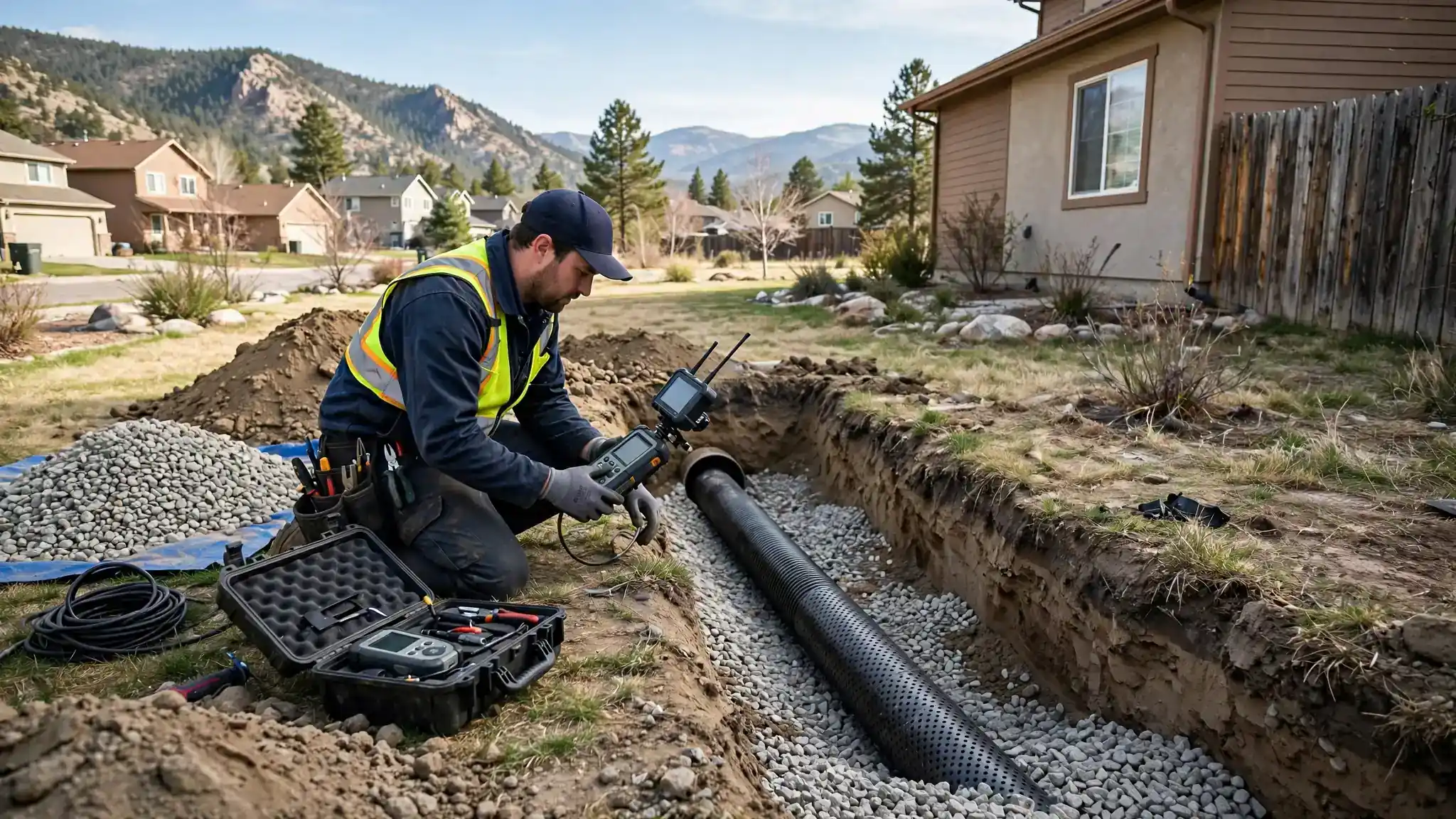
Slope stormwater needs a clear path off the property. How drains, downspouts, and grading should work together.
Read Article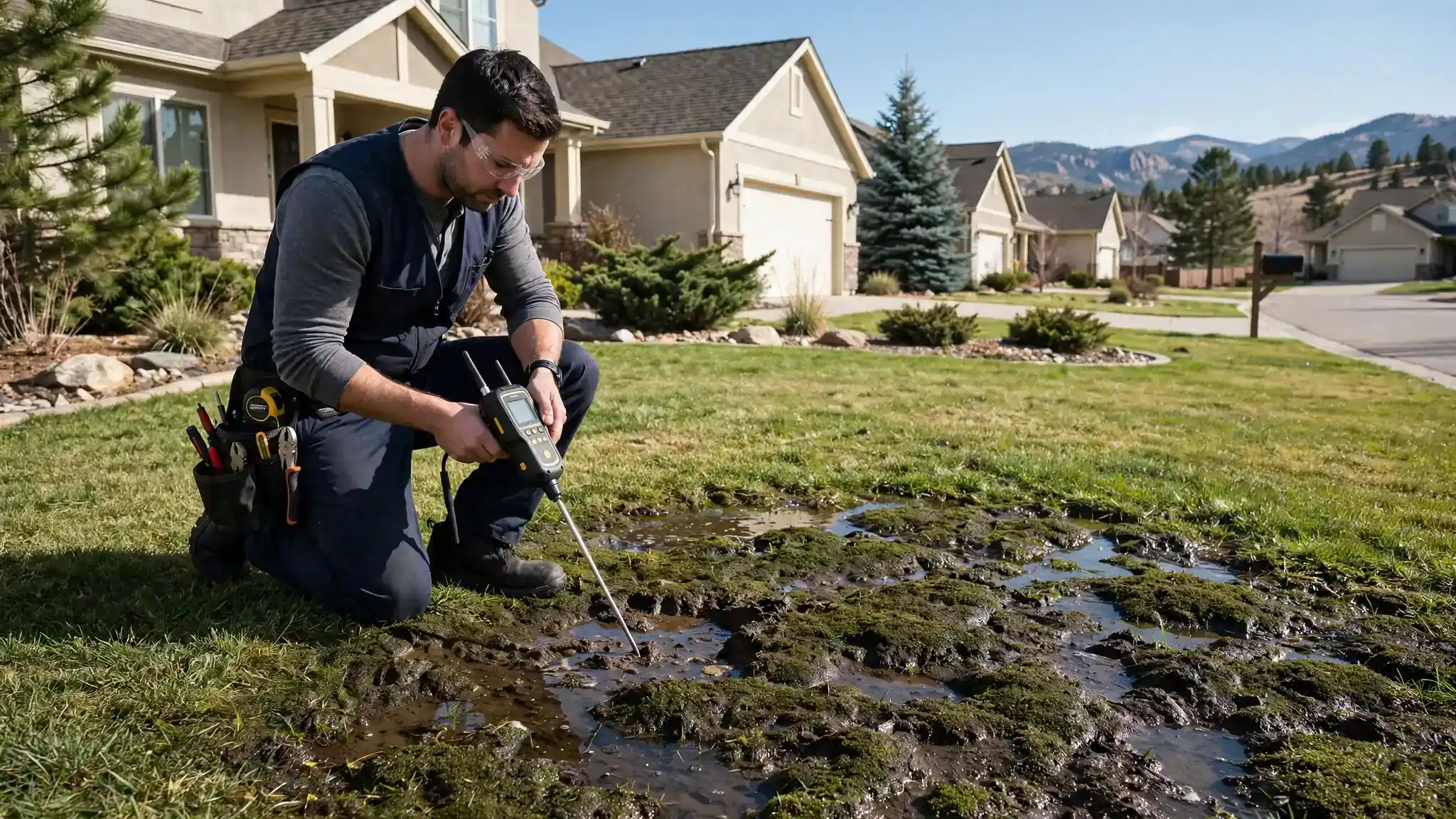
Wet at the slope’s base? Why the source is usually uphill — and how acoustic tracing finds it.
Read Article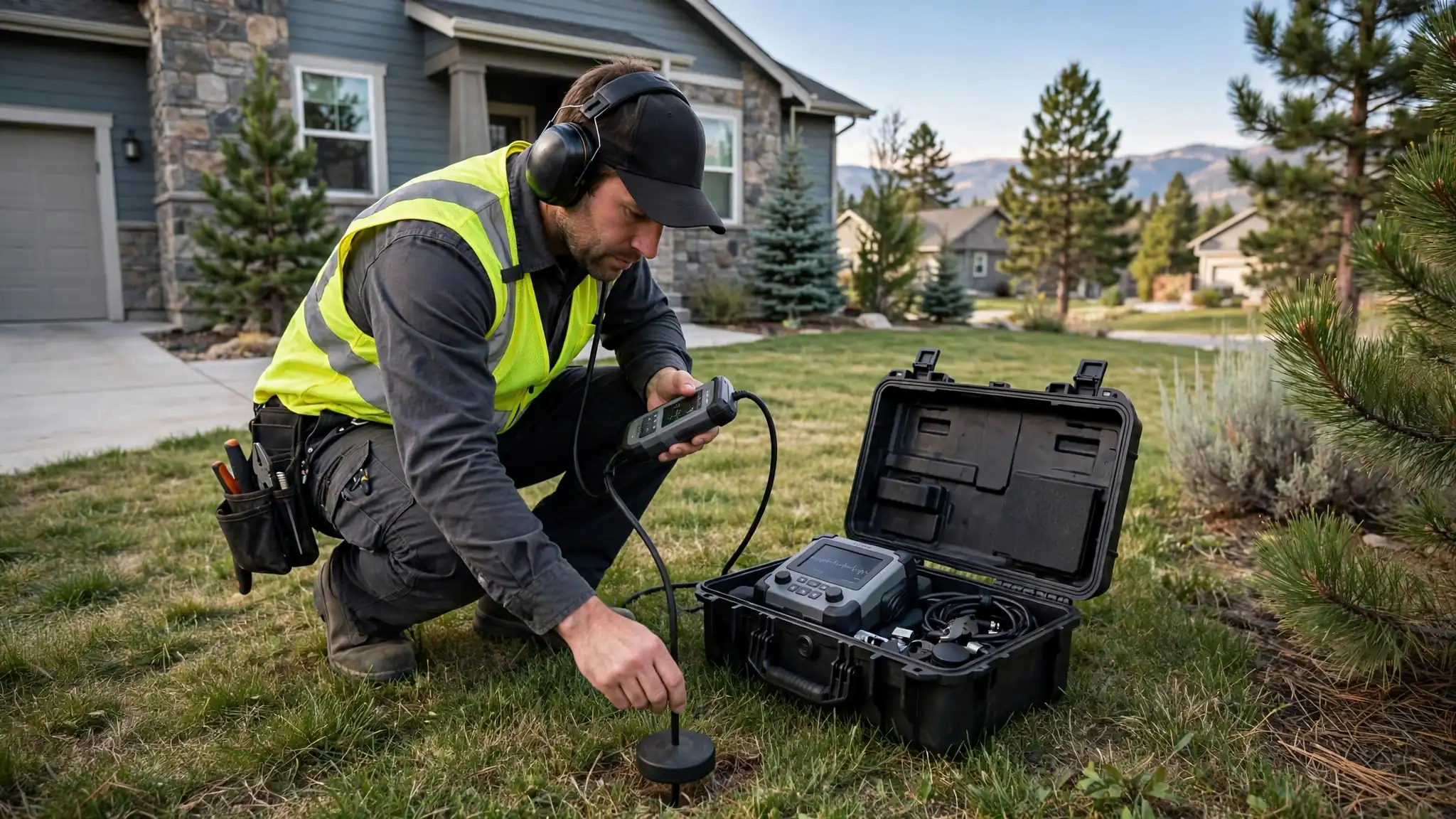
Surface listening, correlation, pressure decay — which method finds deep slope leaks, and why.
Read ArticleOne call brings 25 years of diagnostic experience to your Valley View home — acoustic and thermal instruments that find the source within inches. Open 24/7. We arrive in 30–45 minutes.