A persistently wet spot in the yard has two usual explanations: water draining to a low point, or water leaking from a buried pipe beneath it. The difference matters — drainage is a landscaping project, but a leaking supply or irrigation line wastes water continuously and erodes soil around the clock. Fortunately, a few simple observations separate the two. This guide explains the checks that tell a leak from a puddle, the common underground culprits, and when to call for professional location.
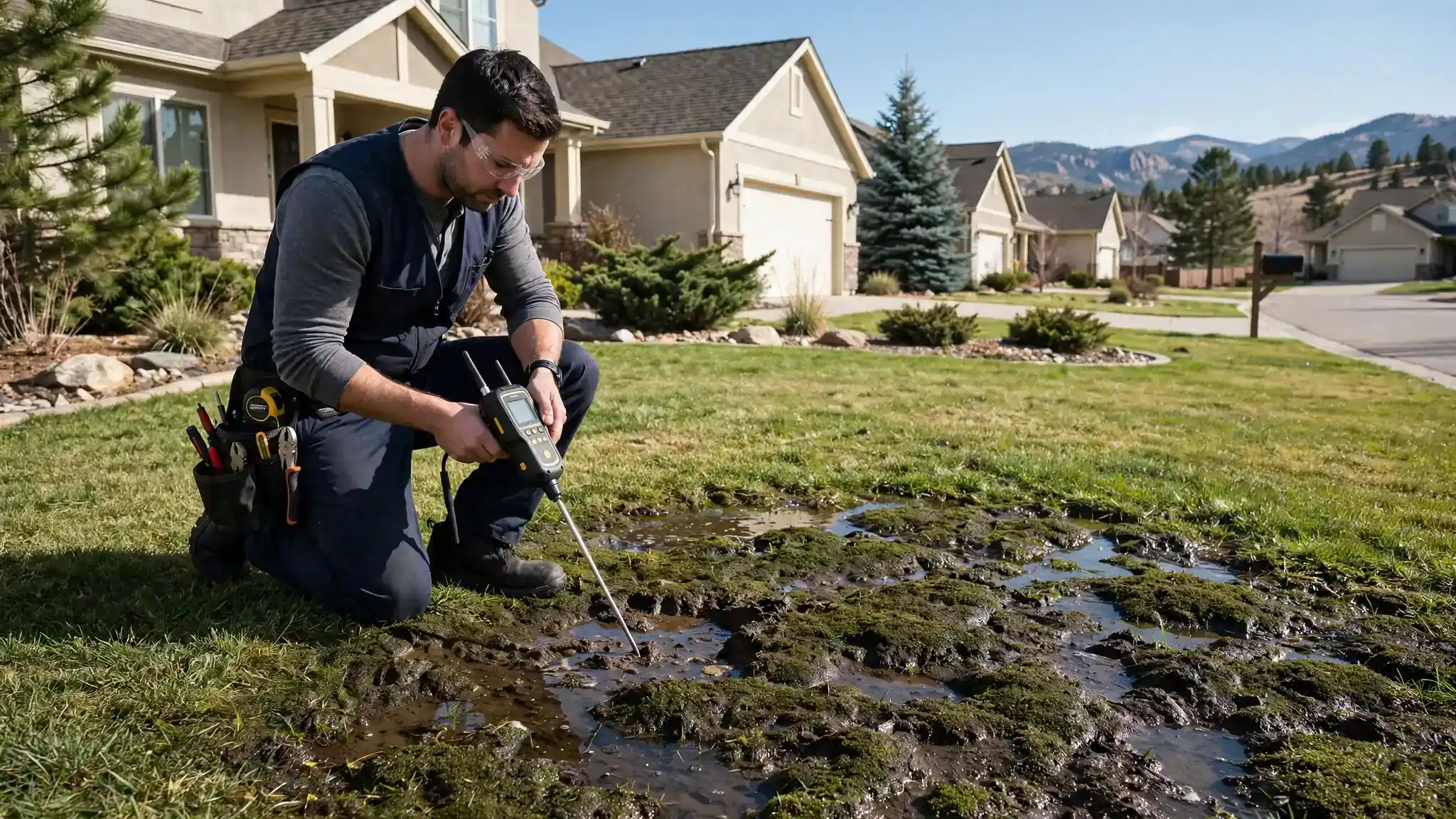
If one area stays wet while the rest of the yard dries, and it is not the obvious low point, suspect a buried leak. Turn the irrigation off for several days: a drainage puddle slowly dries, while a leak-fed spot stays wet. If it persists, a meter test confirms water loss, and underground detection pinpoints the break.
What To Do Right Now
A soggy patch is worth investigating this week — buried leaks only grow. These steps are safe and need no digging:
- Turn the irrigation off for three to five days. A drainage issue slowly dries; a leak-fed spot stays wet or even grows.
- Check whether the spot is the yard's low point. Water collects downhill naturally — a soggy low spot after rain is usually drainage, not a leak.
- Feel the water temperature and look at the grass. Constantly soggy, foul-smelling, or sewage-odored water points to a sewer issue rather than a supply leak.
- Run the meter test. Movement with everything off confirms a pressurized leak feeding the spot.
- Photograph the area from the same angle every few days. Growth proves an active source.
Do not dig into the wet area. Buried electrical, gas, and the leaking pipe itself all hide in that soil — professional location marks the exact point before any shovel work.
Signs To Look For
A buried leak leaves surface clues if you know what to watch for:
- One patch that stays wet days after watering or rain stops.
- Grass that grows dramatically faster and greener in one area.
- Soft, spongy, or sunken soil underfoot in the wet zone.
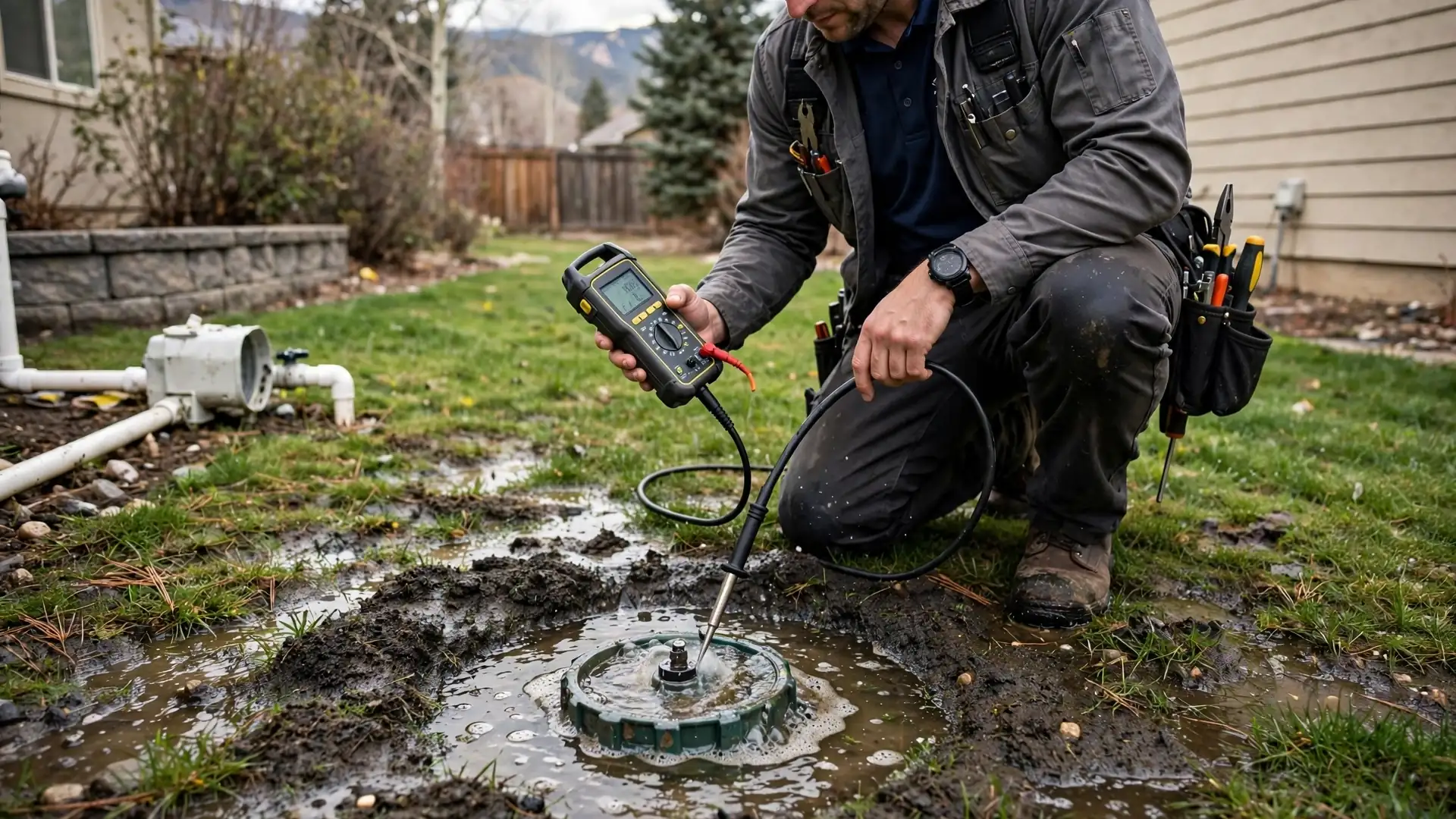
- Water bubbling or seeping up when the ground is pressed.
- A hissing sound from the ground in a quiet yard.
- The water meter moving with all fixtures and irrigation off.
Sinkholes or sudden depressions deserve immediate attention — they mean soil is washing away underground, and the area should be kept clear until it is investigated.
Common Causes
Pressurized supply lines and irrigation laterals fail underground for a handful of reasons. Soil movement from freeze-thaw cycles flexes rigid pipe until it cracks, and corrosive soil chemistry eats pinholes in metal lines over the years. Tree roots, while famous for invading sewer lines, can also displace or crush shallow supply piping.
Irrigation components fail even more often: cracked lateral lines, split funny-pipe connections at sprinkler heads, and zone valves that weep between cycles. Because laterals only pressurize during watering, their leaks can be intermittent — soggy after watering days, drier between.
- Cracked water service line from soil movement or corrosion
- Irrigation lateral break or split head connection
- Zone valve weeping between watering cycles
- Failed fitting at the yard meter box
- Root displacement crushing shallow piping
- Freeze damage to shallow outdoor lines
If the wet spot has sunken or opened into a depression, keep people and pets away. Soil washout can continue underground beyond the visible hole, and the ground around it may be unstable.
Urgent Leak? We Answer 24/7.
Ground sinking or water bubbling up? That is active soil washout — call now.
(720) 715-9734What Happens If You Wait
A buried leak is a 24-hour operation. Pressurized water jets continuously into the surrounding soil, washing fine particles away and creating voids. Over months, this undermines walkways, driveways, and even foundations near the leak path.
The water bill climbs the entire time — underground supply leaks are among the largest silent wasters because nothing visible alerts you. Irrigation leaks add a second cost: the overwatered zone drowns its own landscaping while the rest of the yard goes thirsty.
Early location means one precise excavation. Late discovery, after soil has washed out significantly, can mean structural repairs on top of the pipe repair.
Safe DIY Checks Vs. When To Call A Professional
Observation is safe; excavation is not:
| Safe For You | Call A Professional |
|---|---|
| Irrigation-off drying test | Pinpointing the break underground |
| Meter test with everything off | Acoustic tracing along the line path |
| Photographing the spot over days | Marking utilities before any digging |
| Checking the meter box for water | Excavating at the marked location |
| Noting grass growth patterns | Pressure-testing isolated sections |
Call 811 or your local utility locator before anyone digs — buried gas and electric lines share the yard with water lines, and striking one is dangerous and expensive.
How The Service Fixes It
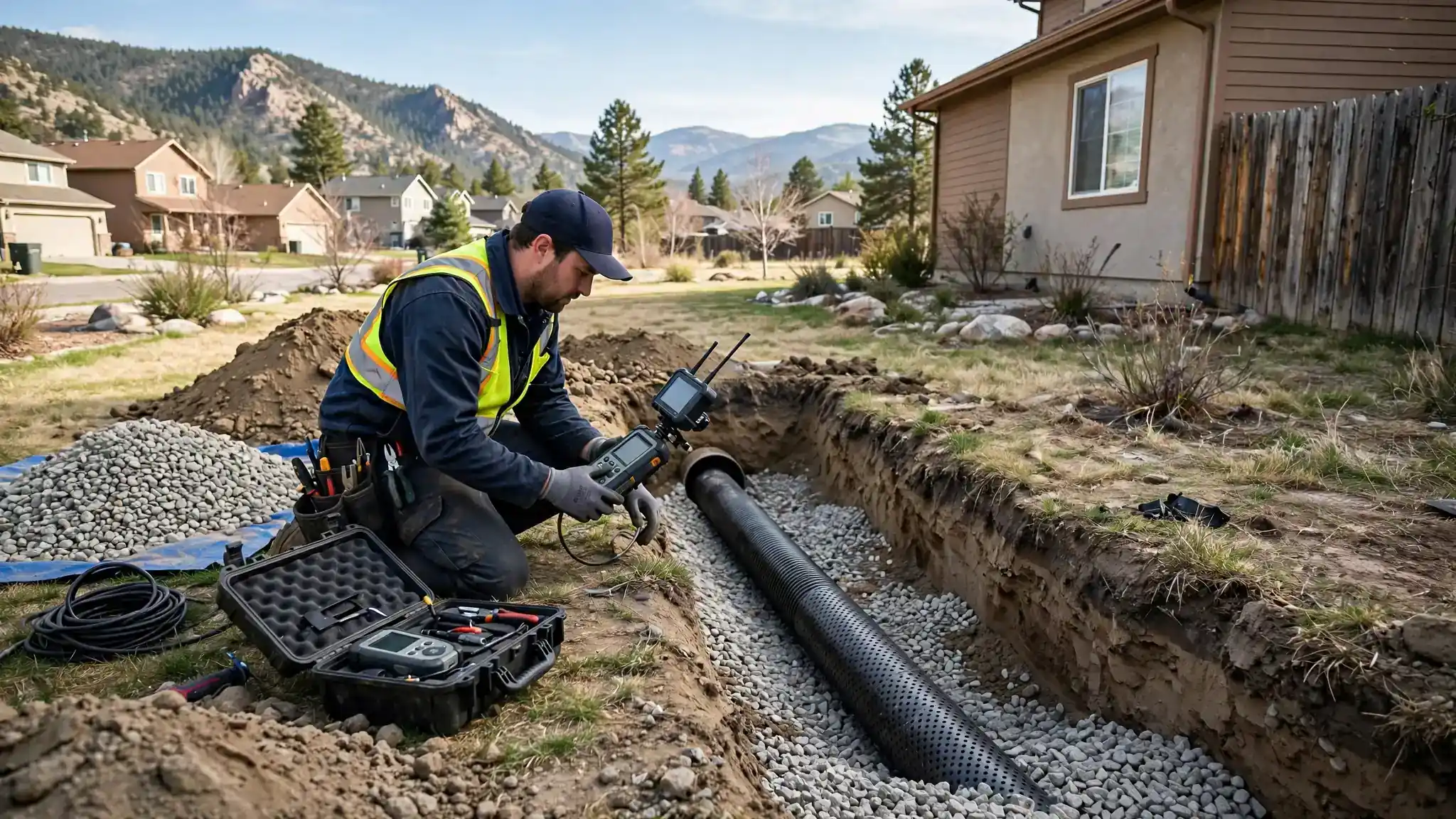
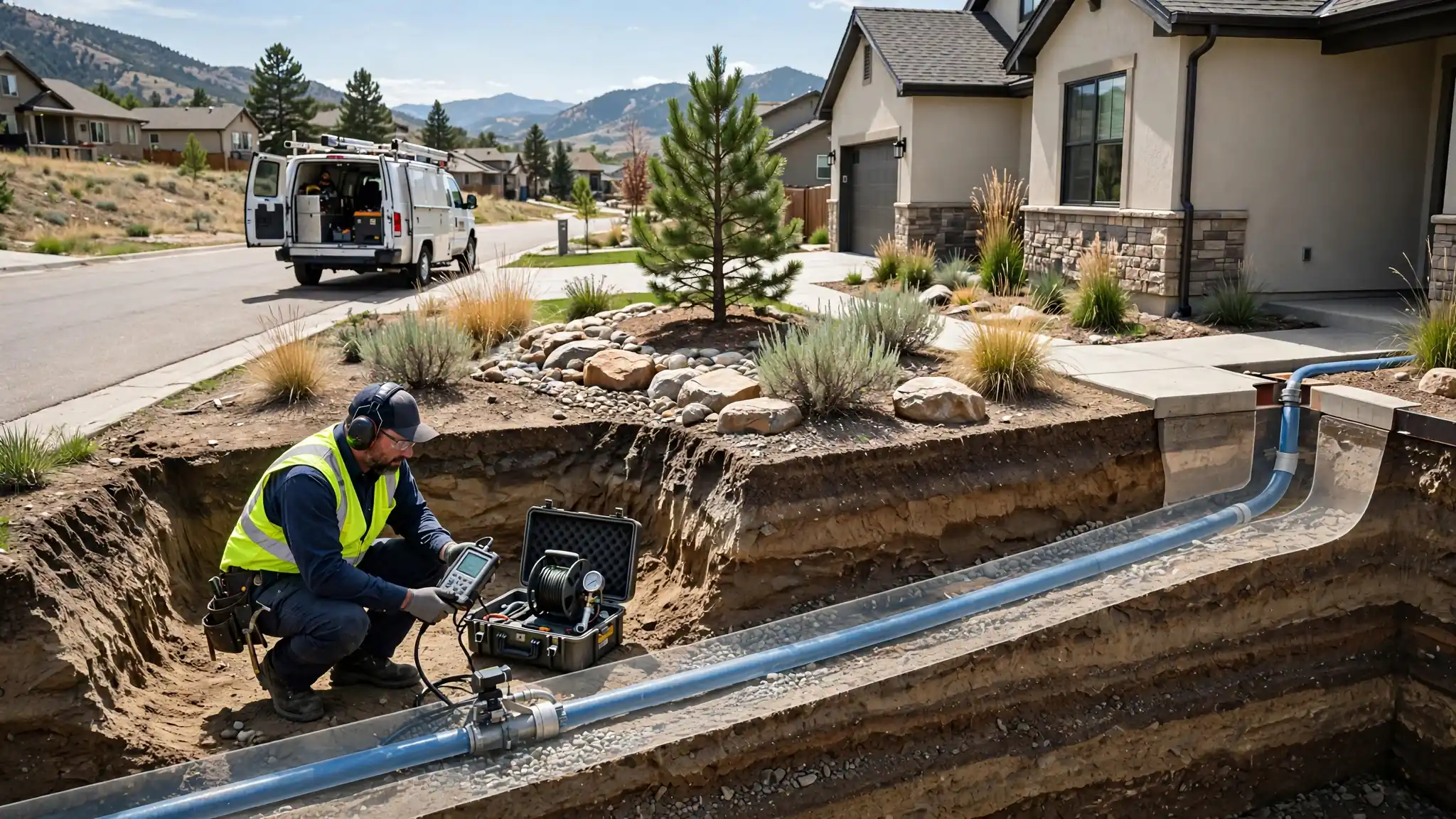
Underground leak detection traces the buried line's path and then listens along it with acoustic ground microphones, marking the break's exact location on the surface. Tracer gas or thermal methods supplement the search for deep or quiet leaks.
With the spot marked, repair means one targeted excavation instead of trenching the yard. For meter-box area leaks, the fix is often a single fitting. If the ground is sinking or water is surfacing actively, emergency leak detection is available 24/7.
We answer 24/7 and arrive in 30–45 minutes anywhere in Broomfield — and we find the break before the backhoe arrives.