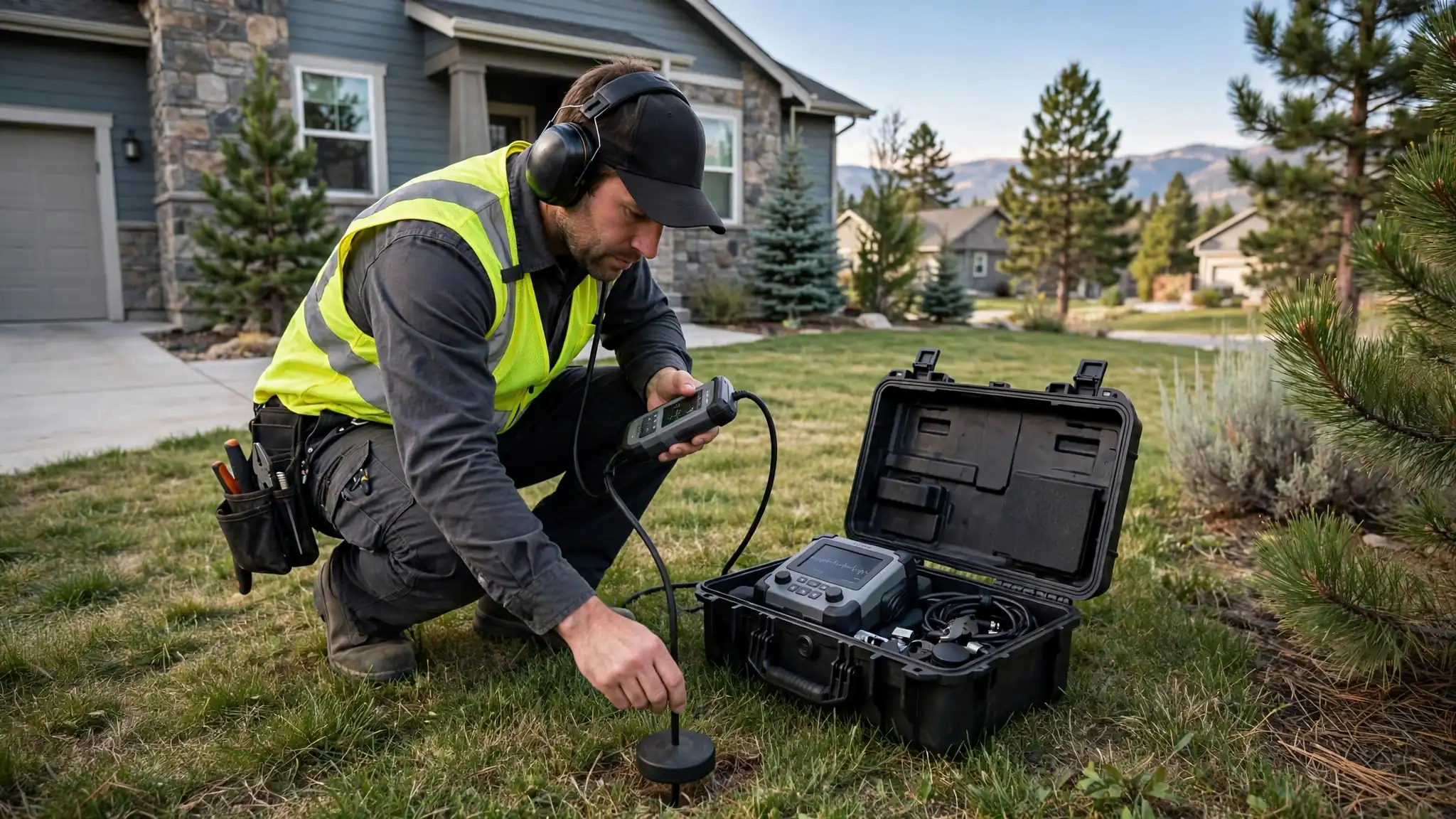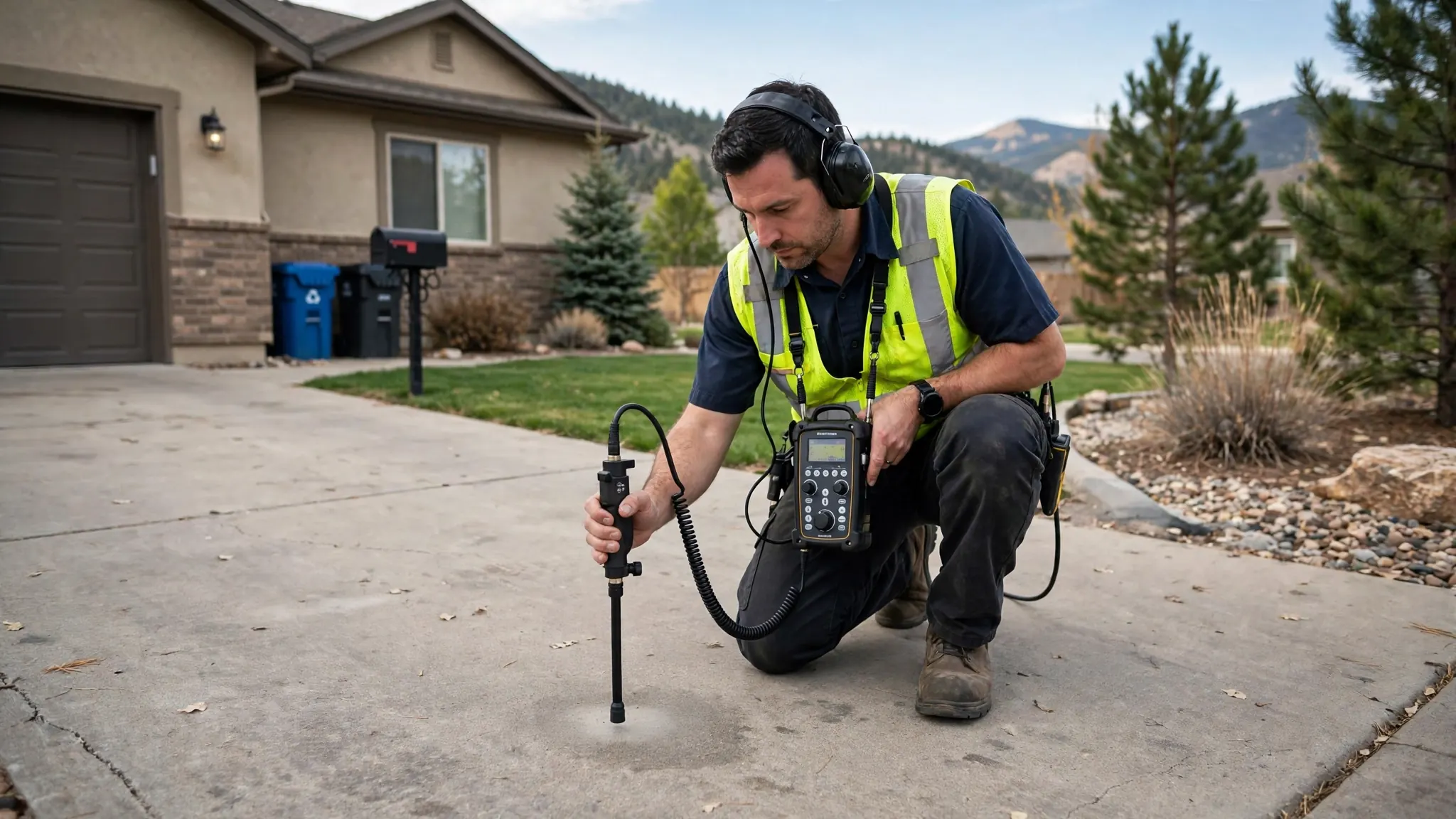
Acoustic leak detection works by amplifying the sound that pressurized water makes as it escapes through a crack or hole in a pipe. A leak in a pressurized line produces a distinct hissing or rushing noise, and sensitive ground microphones and listening sensors can pick up that sound through soil, concrete slabs, and wall materials. By comparing sound intensity at different points, a trained operator traces the noise to its loudest point — which marks the leak's location. It is one of the most reliable methods for finding slab leaks and buried line leaks without excavation, and it forms the backbone of professional leak detection in Broomfield.
What Acoustic Leak Detection Is
Acoustic leak detection is the practice of finding water leaks by their sound signature. Every leak in a pressurized pipe generates noise: water forced through a small opening vibrates the pipe wall and the surrounding material, creating sound waves that travel outward through soil, concrete, and building materials. The human ear cannot hear most of this — the frequencies are too faint and the materials too dense — but electronic sensors can.
The method is non-invasive, which is its defining advantage. Instead of cutting into walls or jackhammering a slab to look for water, the operator listens from the surface and narrows the search to a small area. Only that pinpointed spot needs to be opened for the repair. This is why acoustic detection is the first tool professionals reach for when a leak is suspected but its location is unknown.
How Sound Travels Through Water And Pipe
Sound behaves predictably in a pressurized system, and that predictability is what makes the method work. The leak itself is the sound source: escaping water creates turbulence at the break, and that turbulence vibrates both the water column and the pipe wall. These vibrations propagate in two directions — along the pipe and outward into the surrounding material.
Different materials carry sound differently. Metal pipes transmit leak noise over long distances because they are rigid and resonant; plastic pipes absorb more sound, so the listening range is shorter. Dense, compacted soil carries sound better than loose, dry fill. Concrete slabs transmit surprisingly well, which is why acoustic detection excels at slab leak location. Water pressure matters too: higher pressure makes a louder, more distinctive leak signature.
Background noise is the main challenge. Traffic, appliances, wind, and even water running elsewhere in the building can mask the leak's sound. Experienced operators listen during quiet periods, use filters to isolate the leak's frequency range, and compare readings from multiple points to separate the leak signal from ambient noise.
The Equipment Professionals Use
Professional acoustic detection uses several specialized tools, each suited to a different part of the job.
- Ground microphones: highly sensitive sensors placed on the ground or slab surface that amplify subsurface sounds. The operator moves them in a grid pattern, listening for where the leak noise peaks.
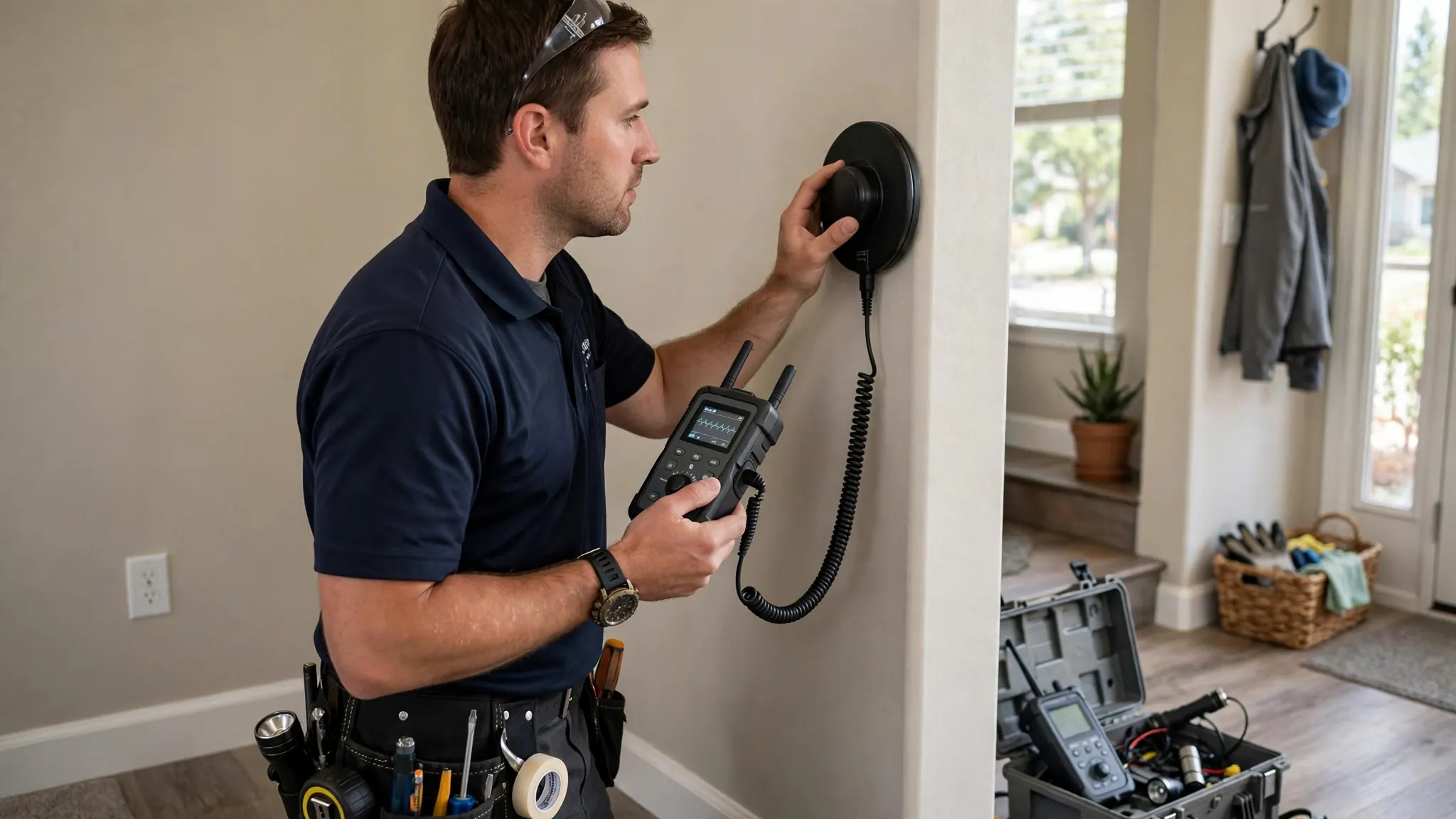
- Listening discs and contact sensors: placed directly on pipes, valves, or hydrants to pick up sound traveling along the pipe wall itself.
- Electronic listening sticks: probe-style sensors that reach into soil, valve boxes, or wall cavities to get closer to the suspected leak.
- Correlators: pairs of sensors attached at two points on a pipe that measure the tiny time difference of the leak sound reaching each one, then calculate the leak's position between them.
- Frequency filters and amplifiers: electronics that isolate the leak's characteristic frequencies from background noise so the operator hears the signal clearly.
If you have ever noticed a hissing sound inside a wall on your own, you have heard a leak the same way this equipment does — the professional version simply hears it through far more material, far more precisely.
The Process Step By Step
A professional acoustic survey follows a logical sequence that narrows the search from the whole property to a single point.
- Confirm the leak exists. Before listening begins, the operator verifies water is actually escaping — usually with a pressure test or a water meter check — so the survey is not chasing a false lead.
- Quiet the environment. Unnecessary water use stops, appliances are silenced where possible, and the survey is timed for the quietest available conditions.
- Survey the pipe route. Contact sensors on accessible valves and fixtures identify which section of pipe carries the leak sound, narrowing the search to one run.
- Grid-listen the surface. The ground microphone moves across the suspected area in a pattern, and the operator marks where the sound is loudest.
- Pinpoint with correlation. On straight pipe runs, a correlator calculates the exact position between two sensor points, often within inches.
- Verify before digging. The operator re-checks the pinpoint from multiple angles to confirm the location, so excavation opens only the necessary spot.
What It Can And Cannot Find
Acoustic detection is powerful but not universal. Understanding its limits explains why professionals combine it with other methods.
It excels at pressurized supply-line leaks: the escaping water under pressure is exactly the sound source the equipment is designed to hear. Slab leaks, buried service lines, and wall supply lines are ideal targets. It also works well on long pipe runs where the listening range of the equipment covers the distance.
It struggles with non-pressurized leaks. Drain lines, sewer pipes, and irrigation laterals at rest do not produce the hissing signature, so acoustic methods are the wrong tool for those — camera inspection and other techniques take over. Very small weeps under low pressure can also be too quiet to isolate, and extremely noisy environments can defeat even good filtering.
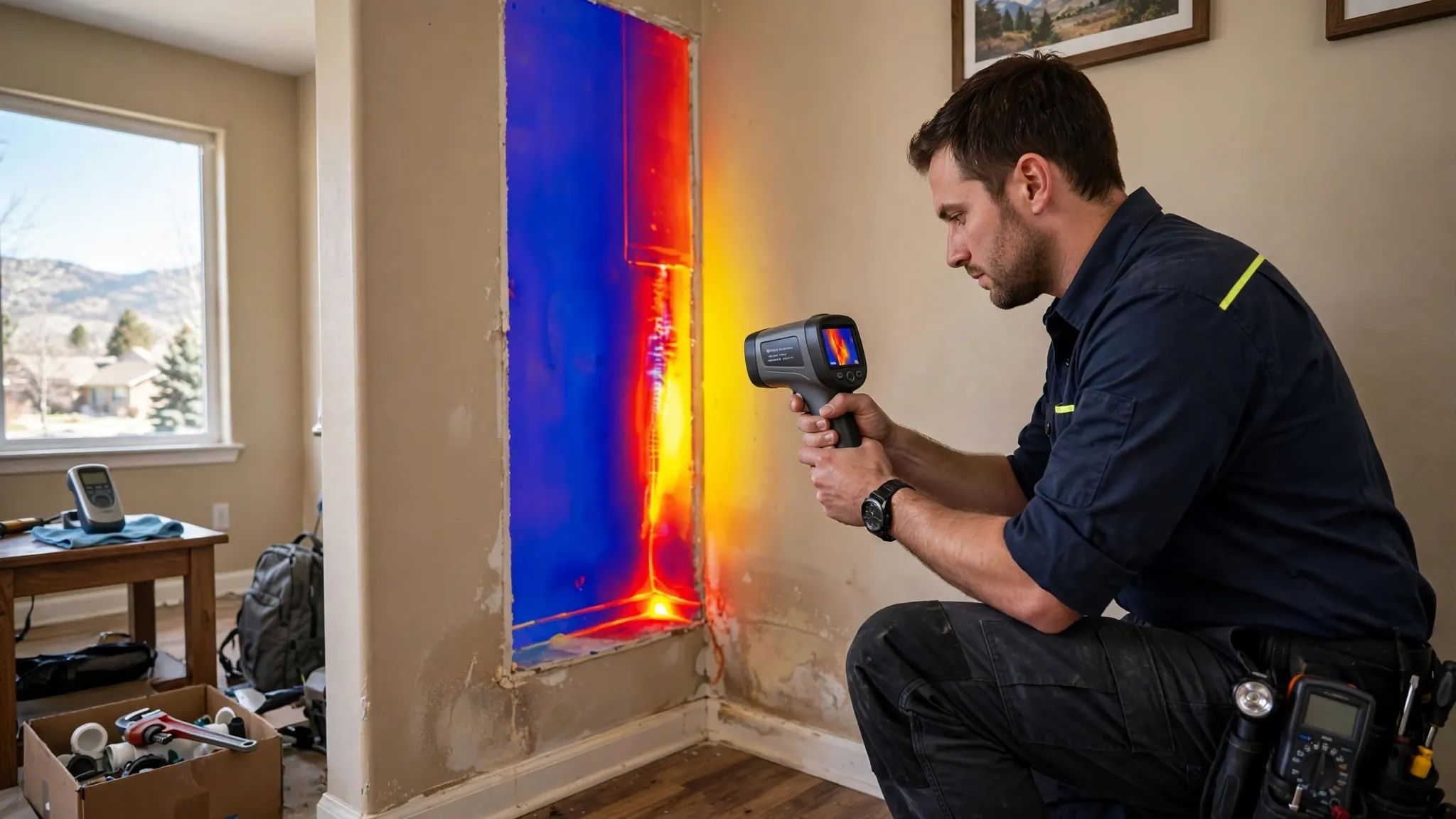
No single technique finds every leak. Professionals pair acoustic listening with thermal imaging, moisture meters, and pressure testing, choosing the combination that fits the suspected leak type. Each method covers the others' blind spots.
Acoustic Vs. Other Detection Methods
How does listening compare with the other tools in a leak detection kit? Each has a role.
| Method | Best For | Limitation |
|---|---|---|
| Acoustic listening | Pressurized supply leaks under slabs, soil, and walls | Needs pressure; poor on drains and sewers |
| Thermal imaging | Hot water leaks, moisture patterns behind surfaces | Reads surface temperature only; less useful on cold lines |
| Moisture meters | Confirming dampness and mapping its extent | Shows where water is, not where it comes from |
| Pressure testing | Proving a line is losing water; isolating zones | Confirms a leak exists but not its location |
| Camera inspection | Drain and sewer line interiors | Requires pipe access; not for supply lines |
When Acoustic Detection Is The Right Choice
If your water bill has climbed with no visible cause, if you hear water running when everything is off, or if a warm spot has appeared on your floor, an acoustic survey is likely the right first step. These are all classic signs of a pressurized leak hiding where eyes cannot reach.
It is also the right choice before any excavation. A buried line leak located by ear can be repaired through a single small dig instead of a trench across the yard. The cost of the survey is repaid many times over in avoided demolition.
For a deeper comparison of how listening stacks up against other approaches for buried lines specifically, see our guide to underground water line leak detection methods compared.