Another plumber suggested cutting open two entire sections of kitchen drywall just to explore where a hissing sound was coming from. Broomfield Leak Detection came out and pinpointed the exact pinhole copper leak within inches using acoustic equipment. Saved us thousands.
Wall Leak In Broomfield Co
A hissing sound inside the wall, a damp patch blooming on drywall, paint bubbling for no reason — in-wall pipe leaks hide in the narrowest space in your home and cause some of the most expensive exploratory damage when guessed at. Our wall leak service traces the leak to the exact stud bay using acoustic listening discs pressed to the wall surface, thermal imaging that shows the moisture’s spread, and moisture meters that map the damp edge. We mark the spot within inches, so repair opens one small section of drywall instead of entire walls. Call any hour. Our dispatchers answer around the clock and wall-leak calls get 30–45 minute arrival in Broomfield.
Open now — calls answered 24/7, every day of the year.
What Our Wall Leak Service Covers
Walls hide supply lines, fittings, and joints in dark, tight cavities. These methods find failures there without opening anything to look.
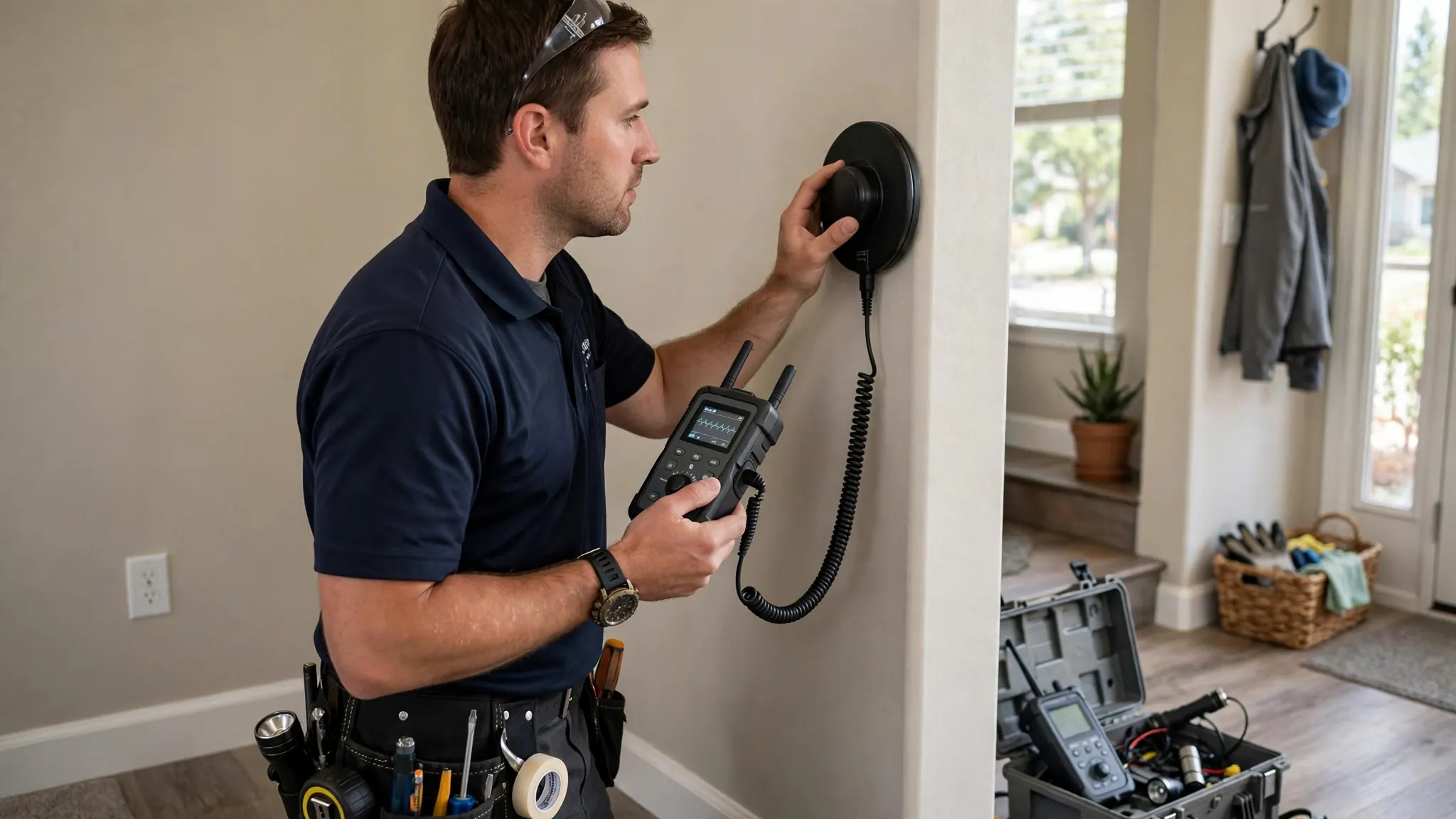
Listening discs move along the wall surface, following the hiss of pressurized water through drywall to the exact bay — and the exact height — where the pipe is failing.
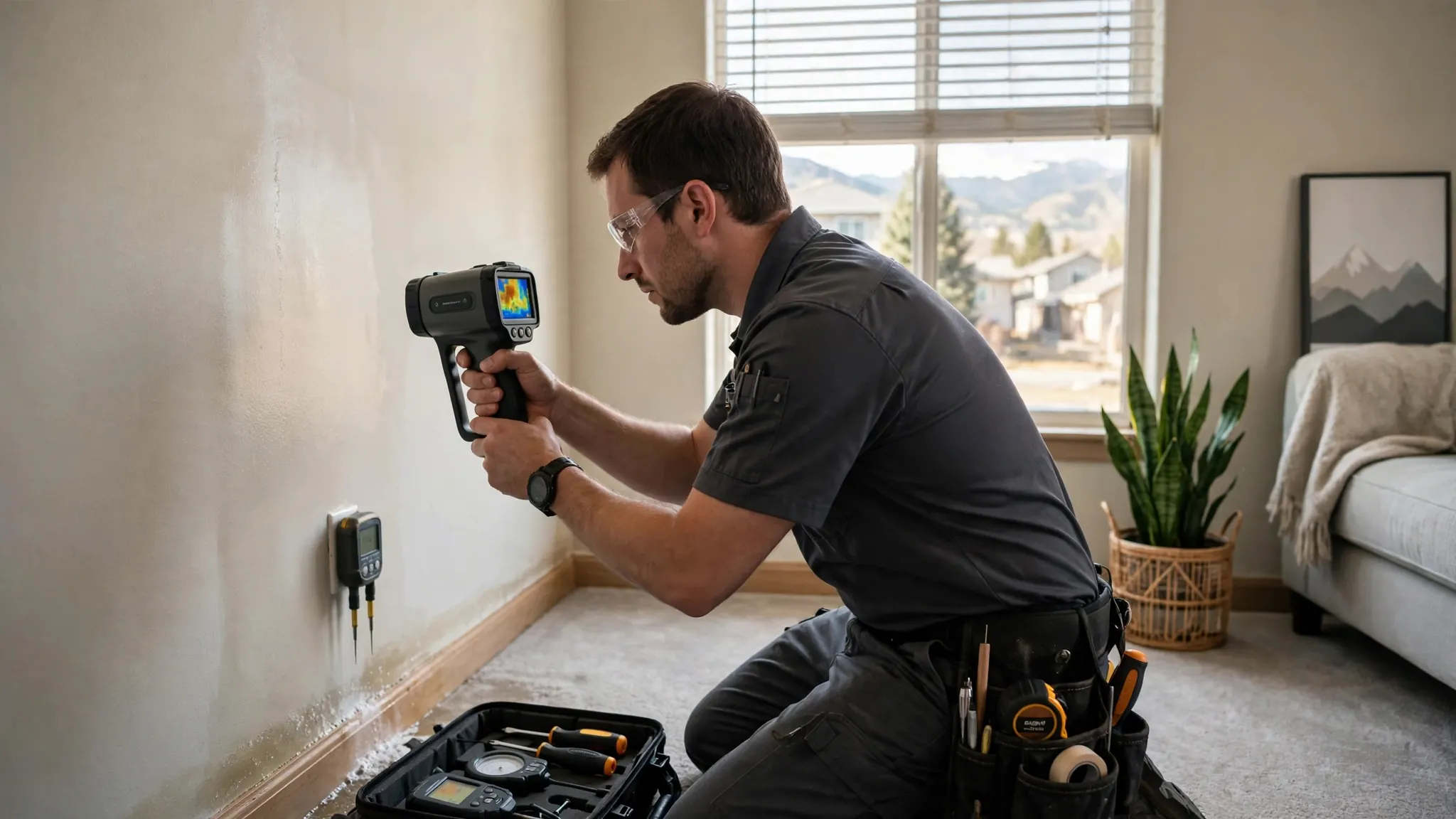
Pin and pinless meters map the damp area’s boundaries behind the paint. The map separates the leak’s origin point from where water has merely traveled.
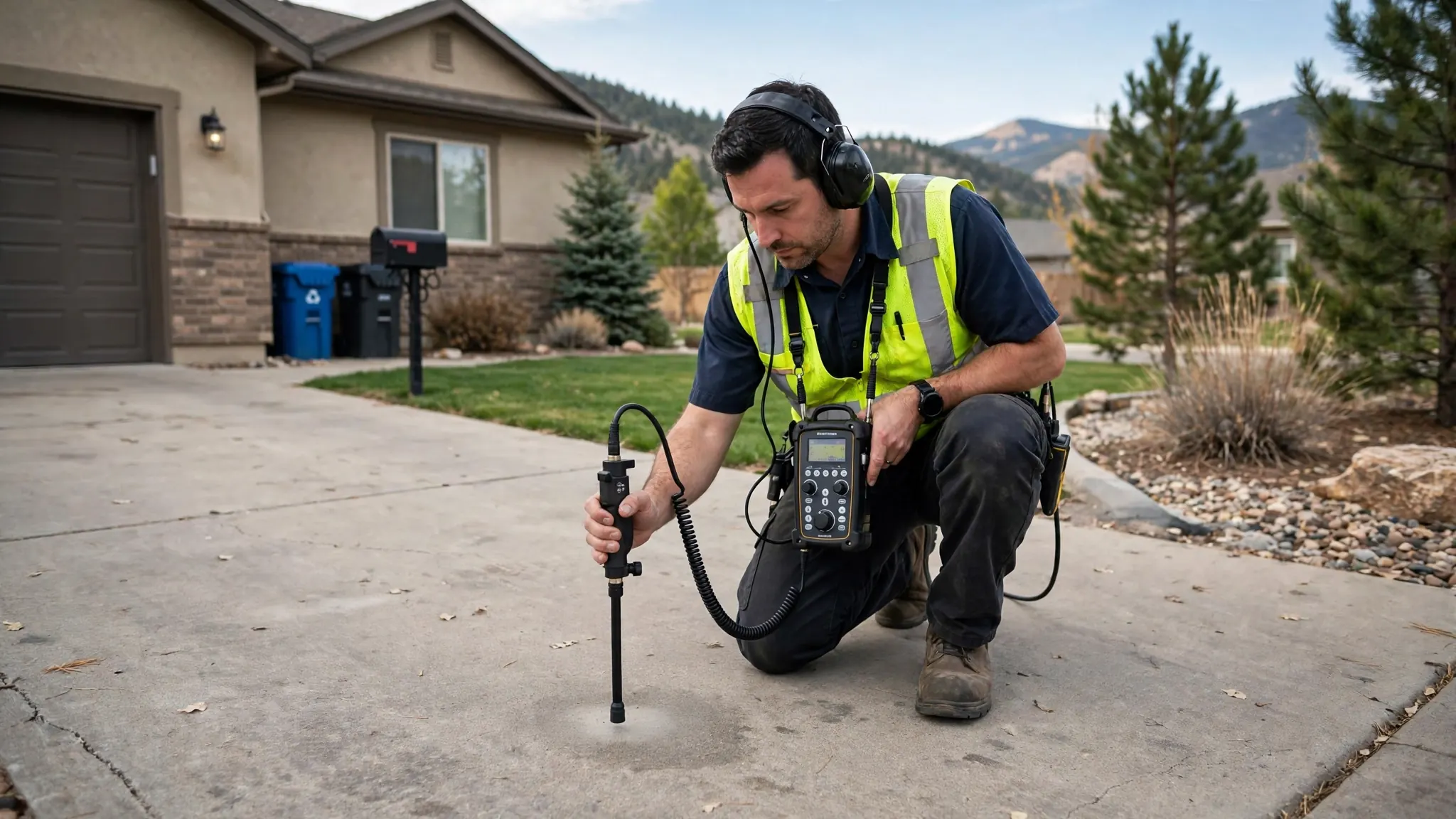
Pinhole leaks in copper lines make a distinct high-frequency hiss. Our acoustic equipment isolates that signature from background noise and marks the pinhole’s position.
Elbows, tees, and couplings fail differently than straight pipe — often at the joint itself. Targeted listening at fitting locations confirms whether the joint or the pipe is the culprit.
Before any wall is opened, we verify with a second instrument — thermal or moisture — so the repair cut lands on the leak the first time, not the third.
Related services: Ceiling Leak · Leak Detection · Attic Leak.
Related guides: Hissing Sound Inside Walls: Hidden Pipe Leak Signs · What To Do When You Find A Ceiling Leak: First Steps.
Problems That Point To Wall Leak
Each of these wall leak symptoms has a specific cause our instruments can confirm. If you recognize your wall leak symptom below, the next step is a diagnostic visit — not guesswork.
A faint but persistent hiss behind drywall is pressurized water escaping — the clearest audible signature of an in-wall leak, and the easiest for our discs to trace.
Paint that bubbles, peels, or discolors in one area means moisture is pushing through from behind. The visible patch is usually larger than the leak point itself.
A persistent musty smell along a wall signals moisture trapped in the cavity — often weeks old by the time noses notice. Moisture meters find what noses only suspect.
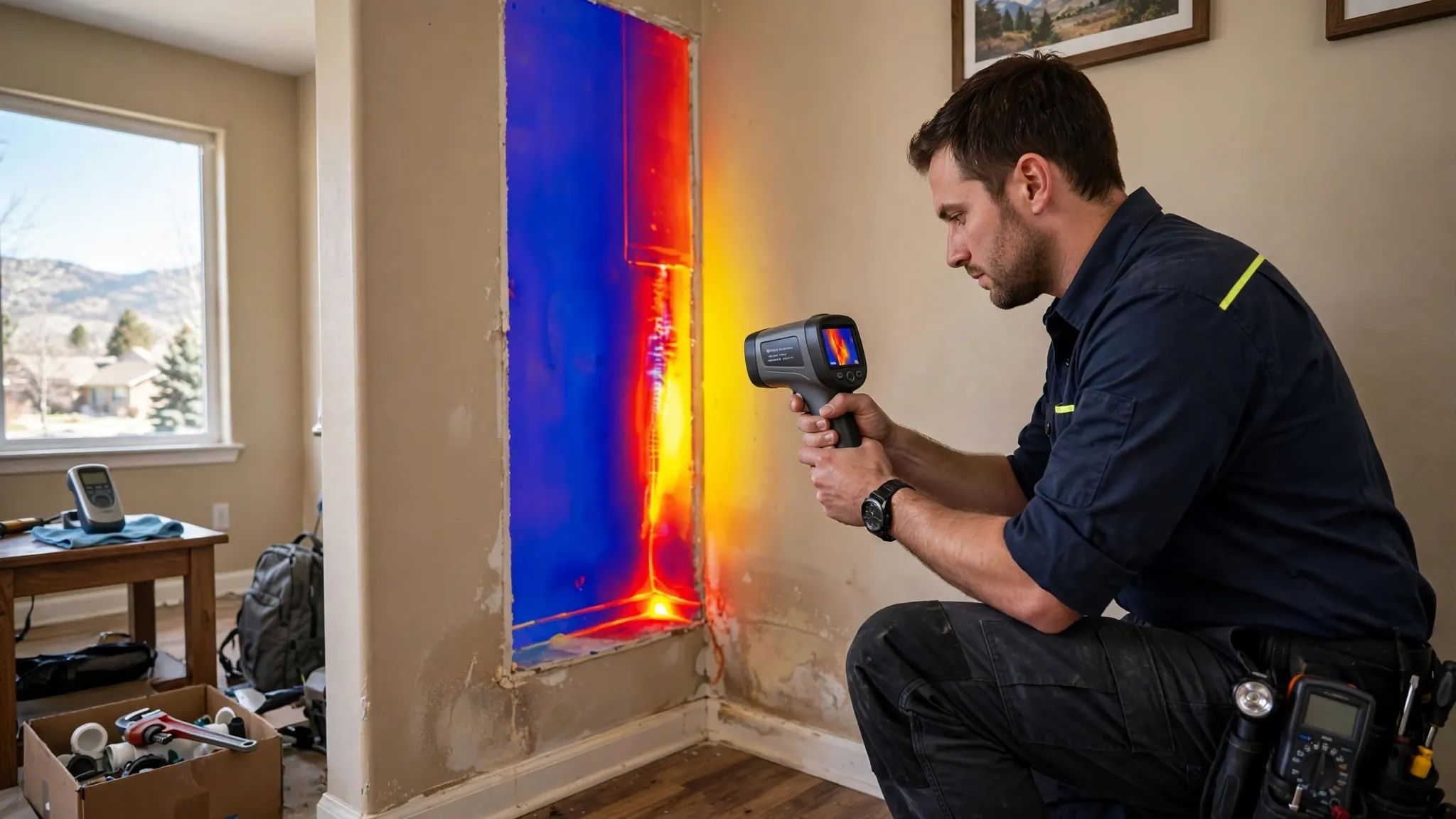
A warm vertical stripe on drywall traces a hot-water line leaking inside the cavity. Thermal imaging makes the stripe — and the break — visible.
A stain that starts high and creeps down the wall is water traveling inside the cavity from a leak above. We trace upward to the true source.
Not every wall leak announces itself audibly. A climbing bill with no visible symptoms still warrants acoustic wall surveys — pinholes can run silently for months.
How We Pinpoint It, Step By Step
Wall work is surgical by necessity: listen, map, verify, then mark one small target for the repair cut.
Acoustic Sweep Of Suspect Walls
Listening discs press to the drywall in a grid pattern, mapping sound intensity across the surface. The hiss peaks directly over the failing pipe or fitting.
Moisture Boundary Mapping
Meters trace the damp area’s edges behind the paint, revealing how far water has traveled and — critically — where the wettest point sits. The origin hides at the wettest point.
Thermal Cross-Check
The infrared camera scans the same wall: hot-line leaks glow, cold-line leaks show as cool spreads. Agreement between sound, moisture, and heat confirms the target.
Marking The Repair Cut
We mark the exact bay and height with tape, photograph it with measurements, and note the pipe’s likely position — so the drywall cut is inches, not feet, and lands on the leak first try.
Why Broomfield Trusts Us With Wall Leak
Walls are where guesswork does its worst damage — we have seen entire rooms opened to find a pinhole. After 25 years of in-wall tracing across Broomfield, our marks are trusted because repair cuts land on the leak the first time.
The discipline is simple: no wall gets marked on a single reading. Acoustic sound, moisture boundaries, and thermal patterns must all point to the same bay before we commit — which is why our wall pinpoints hold up when the drywall comes down. We work clean and quiet inside living spaces, and our documentation gives your repair contractor the pipe’s position, the fitting type if identifiable, and the moisture map — everything needed for a minimal, confident repair. When the honest finding is condensation or exterior intrusion rather than a pipe leak, we say so and save you the cut entirely.
25 Reviews
What Your Neighbors Say
Real reviews from Broomfield customers, shown exactly as provided.
Tips From Working Leak Specialists
Walls talk before they fail — if you know how to listen and look.
In a quiet house, press your ear to the wall near plumbing runs. A faint hiss or trickle with nothing running is worth a professional listen.
Date-stamped photos of any wall discoloration build a growth timeline — the single most useful thing you can hand a leak specialist.
Fresh paint over a damp patch hides the symptom while the leak continues. Investigate first; decorate after the wall tests dry.
Leaks often start where supply lines meet fixtures — behind bathroom vanities, under sinks, behind the washing machine. Look there first.
Run your hand along walls near bathrooms and kitchens. Unexplained temperature stripes trace the pipe runs — and their failures.
Bubbling paint means water is already pushing through. The leak is older than the symptom — call while the repair is still one small cut.
Urgent Wall Leak Problem? We Arrive In 30–45 Minutes.
Water visibly streaming from inside a wall, drywall bulging or collapsing, or a burst pipe audibly gushing in the cavity — shut your main valve immediately and call our 24/7 line. We arrive in 30–45 minutes, confirm the break’s exact position with acoustic and thermal tools, and mark a minimal repair cut so the emergency fix opens inches of drywall instead of demolishing the room. See our emergency wall leak service.
Wall Leak Across All Of Broomfield
In-wall leaks look the same in every Broomfield neighborhood — from the homes near Flatiron Crossing to the streets by the Broadlands — because copper pinholes and tired fittings do not care about zip codes. What differs is how fast help arrives: our technicians reach any corner of the city in 30–45 minutes, discs and thermal cameras in hand. If you searched for wall leak help near you after hearing that hiss, call the local team that marks the bay within inches before anyone touches your drywall.
Wall Leak Questions, Answered
We press acoustic listening discs against the drywall and follow the hiss of pressurized water to the exact bay. Thermal imaging shows the moisture’s spread as a temperature difference, and moisture meters map the damp boundary. When all three agree on one spot, we mark it — usually within inches, with nothing opened during detection.
A persistent hiss behind drywall with fixtures off is the classic signature of pressurized water escaping — usually a pinhole or a failing fitting. Other sounds, like ticking as pipes cool or water hammer bangs, have different causes. Our acoustic equipment distinguishes the leak’s continuous hiss from normal plumbing noises.
With a verified pinpoint, typically one small drywall section — often just enough to expose the fitting or pipe segment. That is the entire point of pinpointing first: the alternative is exploratory demolition, opening wall after wall hoping to find the leak. Our marks keep the cut minimal and on target.
Yes, and the distinction matters. A pressurized leak shows continuous acoustic signal plus a defined moisture boundary; condensation shows diffuse dampness with no sound signature and often correlates with temperature swings. We name the true cause — and if it is not a pipe leak, we say so rather than marking a cut you do not need.
Yes. The phone is answered 24 hours a day, every day, and our wall-leak techs arrive in 30–45 minutes across Broomfield. If water is actively coming through a wall, shut your main valve first, then call (720) 715-9734 — stopping the flow early limits the damage dramatically.
Yes. Wall-leak calls come from every Broomfield ZIP — 80020, 80021, 80023, and 80038. Wall-leak tracing runs the same disc-thermal-moisture process in every neighborhood.
Get a pinpoint first. Exploratory demolition is how simple pinholes become thousand-dollar drywall projects. Our acoustic tracing finds the exact bay before any cutting, and customers regularly tell us it saved them from unnecessary demolition.
Most single-leak wall visits take one to two hours: acoustic sweep, moisture mapping, thermal cross-check, and marking. Multi-wall or multi-story tracing takes longer, but we explain findings as we go so you always know what we are learning.
1798 W 6th Ave, Broomfield, CO 80020
Get DirectionsLearn More About Wall Leak
Hissing Sound Inside Walls: Hidden Pipe Leak Signs
That faint hiss behind drywall is pressurized water escaping. What the sound means and how discs trace it.
Read Article
How Acoustic Leak Detection Works
The hiss inside your wall has a signature. How listening discs tell a pinhole leak from ordinary pipe noise.
Read Article
Thermal Imaging For Water Leaks: How It Works
Infrared cameras see moisture’s temperature signature through paint. How thermal surveys map wall leaks.
Read ArticleGet Your Wall Leak Pinpointed Today
One call brings 25 years of diagnostic experience to your door — acoustic and thermal instruments that find the source within inches, with no unnecessary demolition. Open 24/7. We arrive in 30–45 minutes.