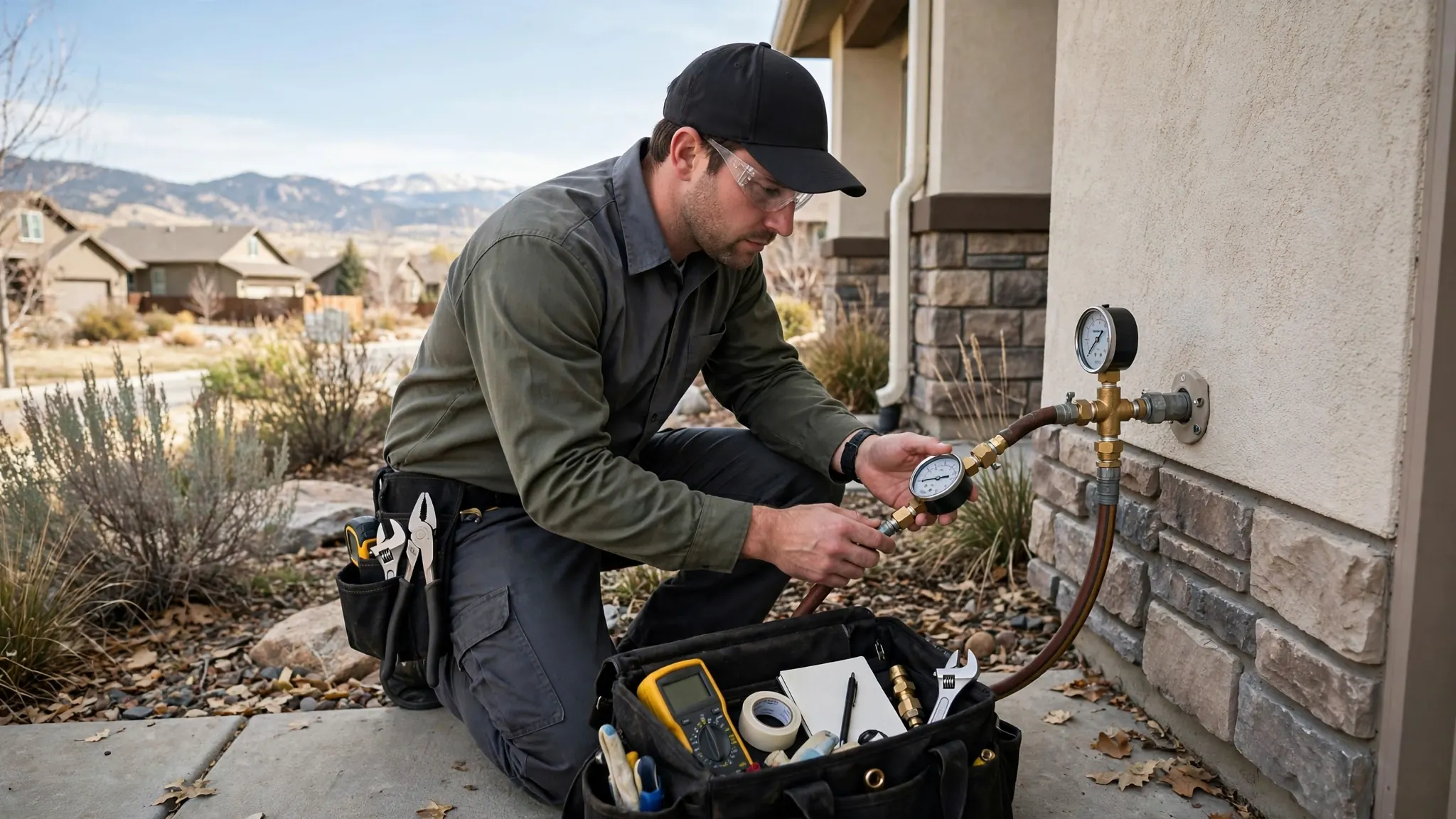
A water service line is the buried pipe that carries water from the public water main — usually under the street — to your home. It typically runs from the main to your water meter, then from the meter into the house. Here is the part that surprises most homeowners: in most areas, you own and are responsible for the portion of the service line on your property, generally from the meter to the house, while the utility maintains the main and often the meter itself. Exact responsibility lines vary by utility, so confirm with yours. When this buried line leaks, the signs are subtle — which is why water service line leak detection exists as a specialty. Many homeowners first notice the problem as a high water bill leak with no visible cause.
What The Service Line Is And How It Works
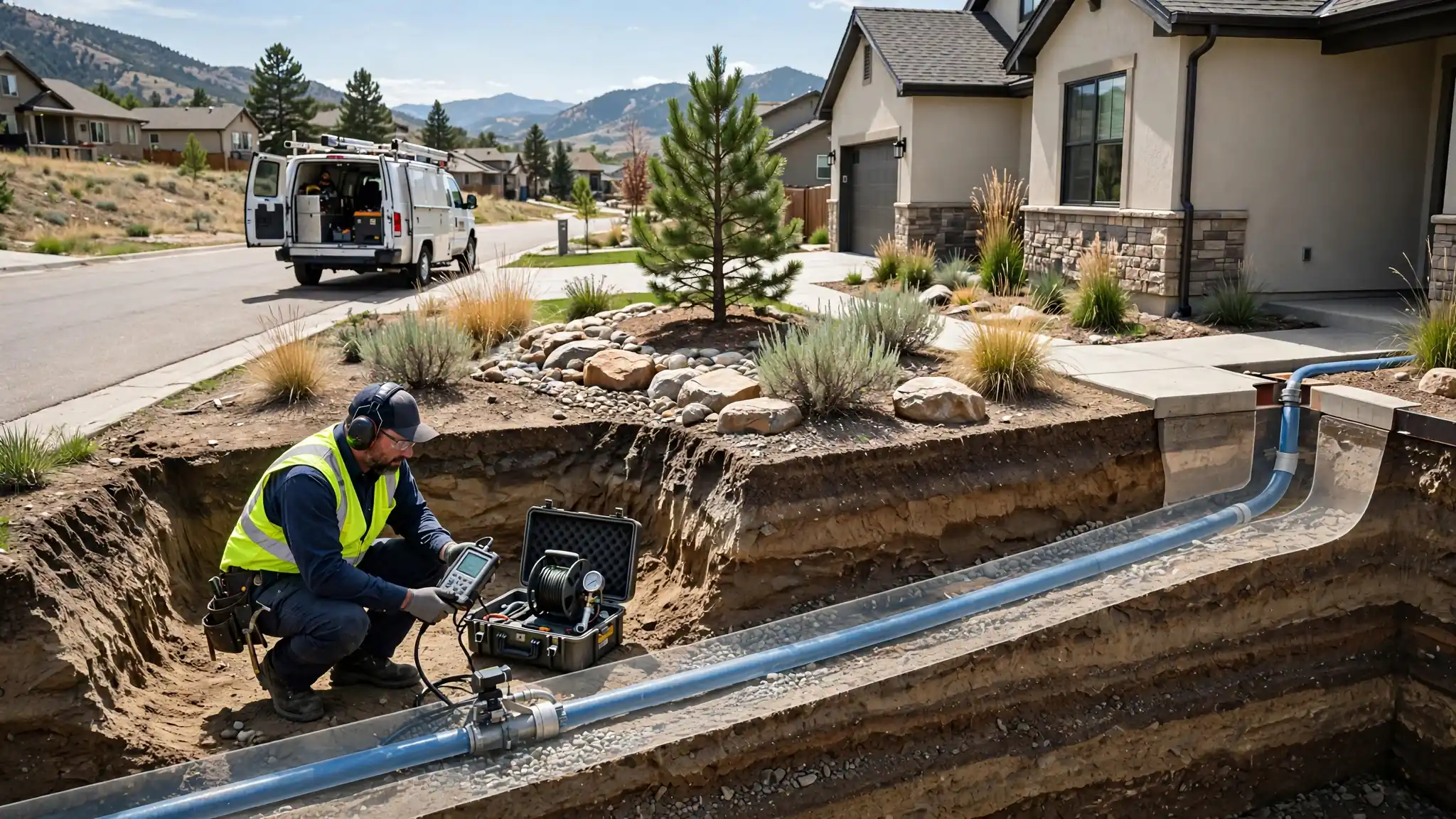
The service line is a single continuous pipe, usually between three-quarters of an inch and one inch in diameter for a typical home, buried below the frost line to protect it from freezing. Water flows through it under the same pressure the utility maintains in the main — which means a break in this line leaks continuously, twenty-four hours a day, until it is fixed.
The line's path is simple: from the water main under the street, to a corporation stop at the connection, along your yard to the meter (usually near the property line), then from the meter to where it enters your house. The meter measures everything passing through it, so a leak anywhere past the meter shows up on your bill. A leak between the main and the meter typically does not — which is one reason meter placement matters.
Common service line materials include copper, galvanized steel in older installations, and various plastics in newer ones. Each ages differently: copper can develop pinhole leaks from corrosive soil or water chemistry, galvanized steel corrodes from the inside out over decades, and plastic lines are vulnerable at joints and to damage from digging or ground movement.
Who Owns Which Part
Ownership of the service line is split, and the split point matters enormously when a leak appears. The most common arrangement in the United States works like this: the water utility owns and maintains the water main under the street and the connection up to and including the water meter. The homeowner owns and maintains the service line from the meter to the house — the entire buried run across your yard.
This is a general pattern, not a universal rule. Some utilities maintain the line all the way to the house; others consider the homeowner responsible from the property line or curb stop rather than the meter. The only authoritative answer for your home comes from your water utility — check their website or call and ask where their responsibility ends. Do this before you have a leak, not during one.
Why does it matter? Because when the line on your side leaks, the repair is yours to arrange and yours to pay for. Knowing this in advance means you act fast instead of spending days assuming the utility will handle it. It also affects insurance: many homeowners' policies treat the service line as your property, and some offer optional service line coverage worth knowing about.
Responsibility boundaries vary by water provider and sometimes by neighborhood. A five-minute call to your utility now — asking exactly where their maintenance responsibility ends — prevents expensive confusion when a leak appears.
Signs Of A Service Line Leak
A leaking service line rarely announces itself dramatically. The water escapes underground, so the symptoms are indirect — but they form a recognizable pattern.
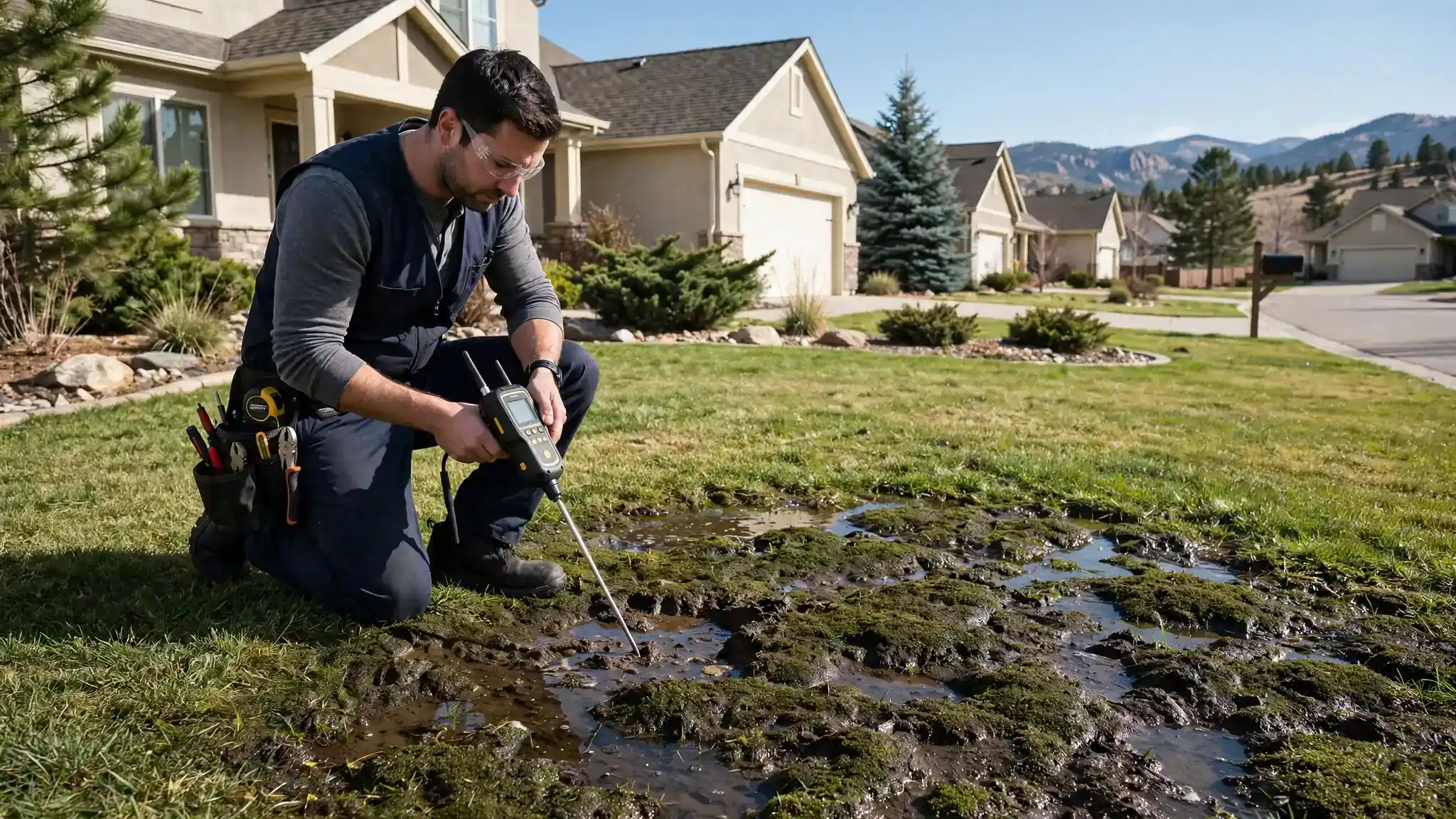
- A wet spot in the yard that never dries, especially along the straight path between the meter and the house.
- An unexplained jump in your water bill with no change in household usage.
- A water meter that moves during the no-water-running test even with the house shut-off valve closed.
- Soggy or sunken ground along the service line route, or grass that grows greener and faster in one strip.
- Low water pressure throughout the house, caused by water escaping before it reaches your fixtures.
- The sound of running water when everything is off, sometimes audible near the meter box or where the line enters the house.
How A Service Line Leak Is Found
Locating a leak in a buried line follows the same professional process as other hidden leaks, adapted for the outdoors. It starts with confirmation: a meter test and the house-valve isolation test prove the leak is in the service line rather than inside the home.
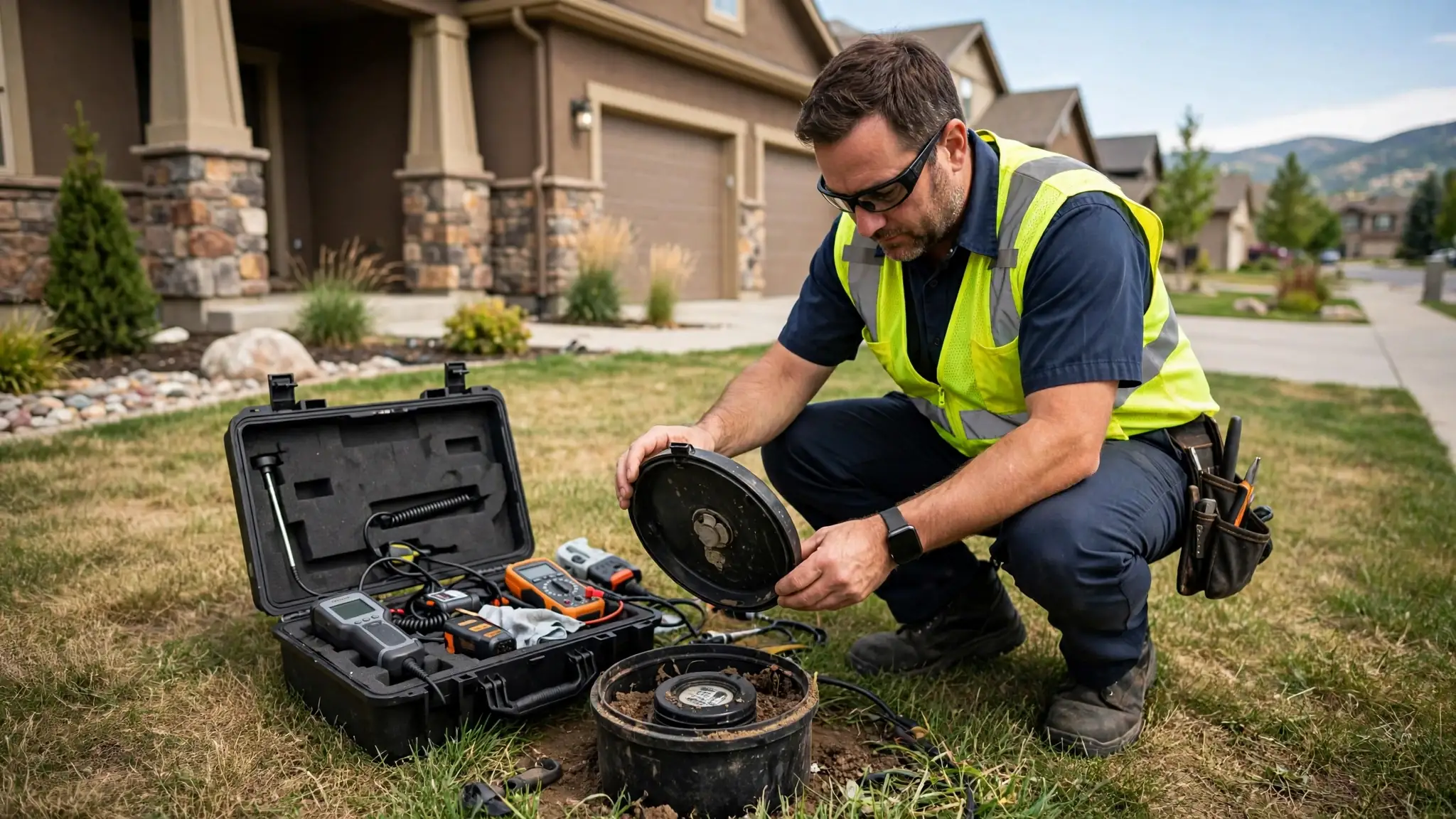
Then comes location. Acoustic listening equipment traces the leak's sound along the buried pipe run — the operator listens at the ground surface, following the noise to its loudest point. On longer runs, a correlator with sensors at the meter and the house calculates the leak's position between them. The goal is the same as indoors: mark one spot, dig one hole.
What does not work is guessing. The line's exact route is not always where you assume — it may angle around obstacles or follow an old path from a previous installation. Professional location avoids digging up the yard on a hunch. Once found, a written leak detection report documents the diagnosis for insurance and repair planning.
Repair And Replacement Options
Once located, a service line leak is typically repaired by excavating at the leak point and replacing the damaged section — or, if the line is aging throughout, replacing the entire run from meter to house in one project. Full replacement costs more upfront but ends the cycle of recurring failures on an old line.
Trenchless options exist for some situations: pipe bursting pulls a new line through the old one's path with minimal digging, and in certain cases a new line can be directionally bored underground. The right method depends on soil, obstacles, local code, and the old pipe's condition — a professional assesses these on site.
If water is actively surfacing or the leak is large, treat it as urgent: shut off water at the meter if you can do so safely, and call our emergency water service line response — we answer 24/7 and arrive in 30–45 minutes.
Protecting Your Service Line
You cannot see your service line, but you can reduce its risks. Know where it runs and mark the route before any digging — most utility location services mark public lines, but the private run from meter to house is your responsibility to identify. Avoid planting deep-rooted trees over the line, since roots seek out the moisture around tiny leaks and can worsen them.
Watch your water bill for unexplained increases and run the meter test a couple of times a year. Early detection is the difference between a planned repair and an emergency excavation. And if your line is decades old and showing its age, a proactive replacement on your schedule beats a reactive one on the leak's schedule.