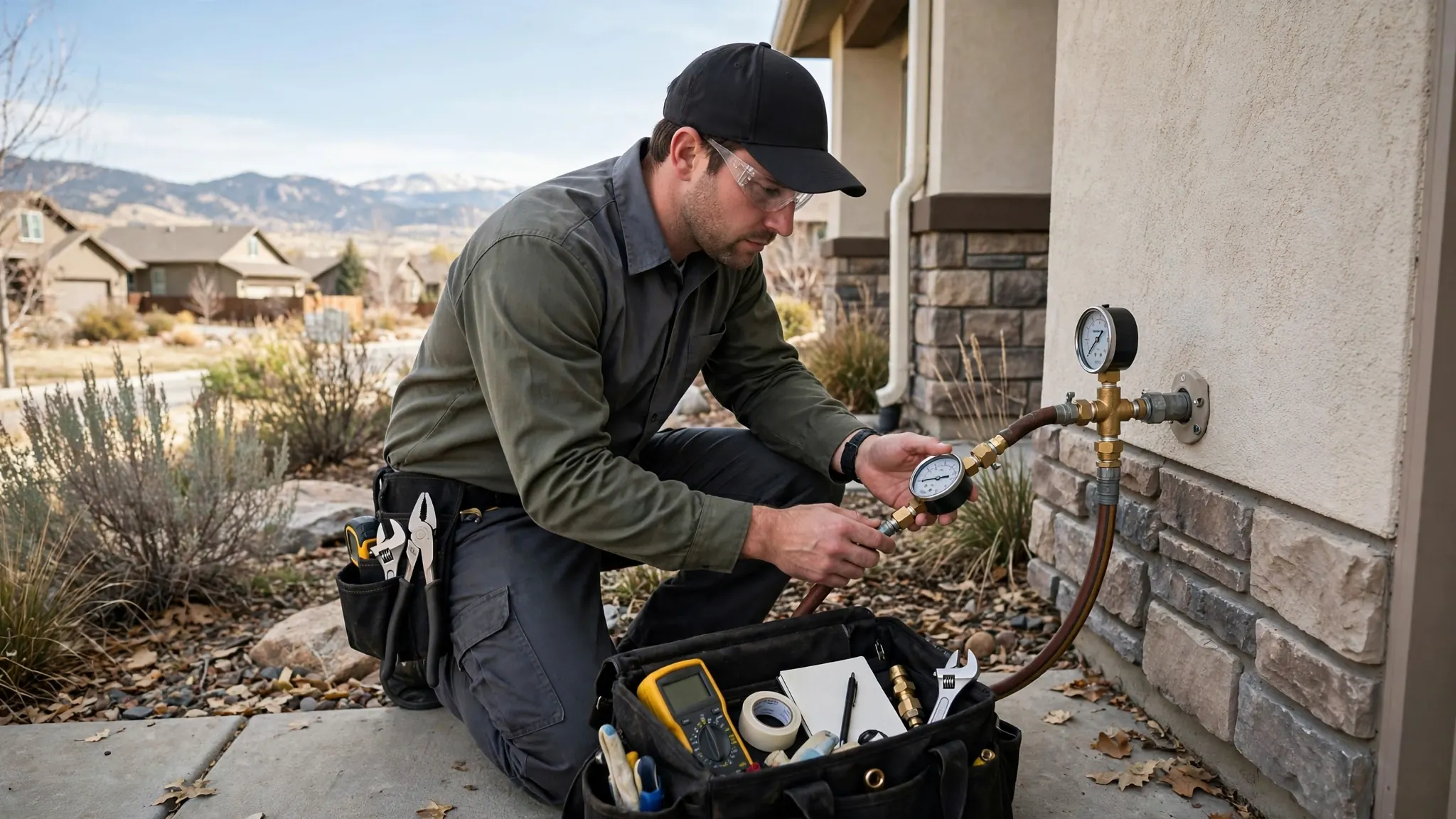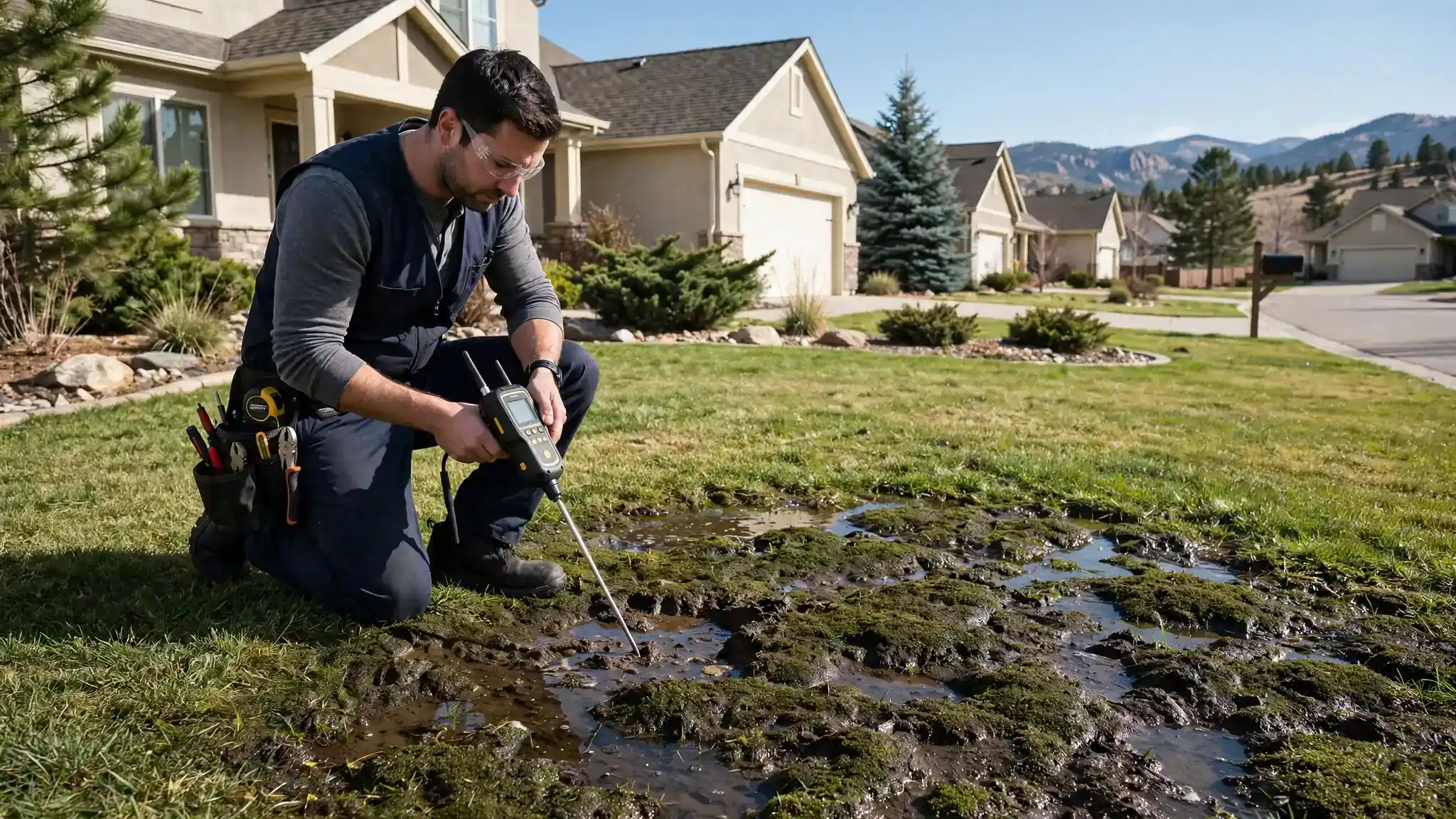
Water was bubbling up near our front walkway close to the water meter box near McKay Lake. They pressure-tested the main supply line, identified the subterranean fracture, and marked the exact spot so our excavation contractor only had to dig a small two-foot hole.
Underground Pipe Leak In Broomfield Co
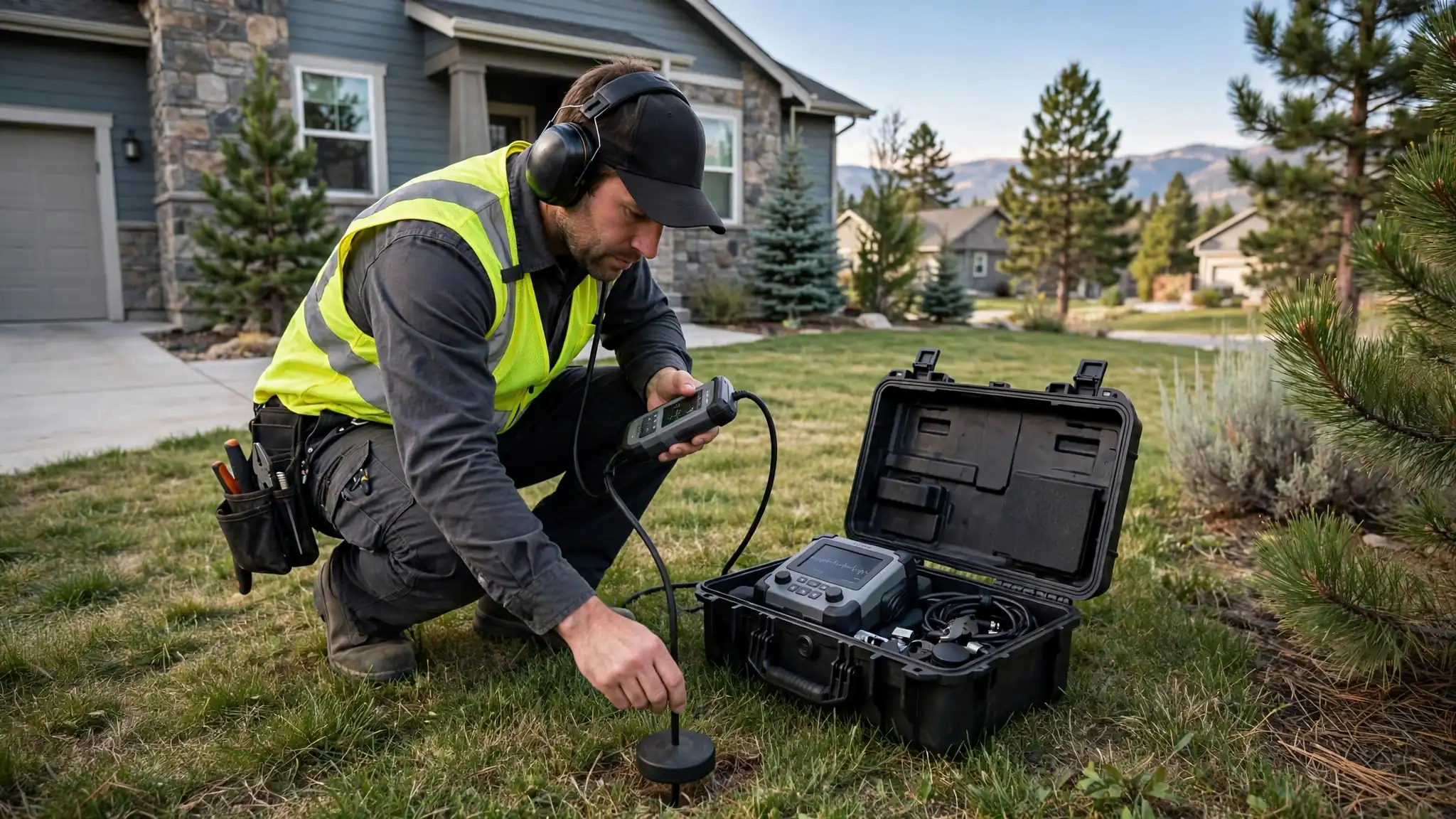
Some leaks hide too deep for a listening disc pressed to the soil — several feet down, under driveways or landscaping, where sound spreads and weakens. Our underground pipe leak service finds them with acoustic correlation: sensors placed at two contact points on the pipe listen to the same leak, and the time delay between the sounds triangulates the break’s position mathematically. Paired with pressure decay testing that proves which line is losing water, correlation pinpoints deep leaks to a marked spot without exploratory trenching. The technology does the digging — we just mark where. Our dispatchers answer 24 hours a day; expect us in 30–45 minutes anywhere in Broomfield.
Open now — calls answered 24/7, every day of the year.
What Our Underground Pipe Leak Service Covers
Deep pipe leaks demand instruments that work at depth. This is the technology stack we deploy when a leak sits feet underground and conventional listening cannot isolate it.
High-sensitivity ground microphones and contact sensors detect leak noise through feet of soil, concrete, and asphalt — the first pass that confirms a deep leak exists.
Two sensors bracket the suspect section and a correlator compares arrival times of the leak’s sound. The time difference pinpoints the break between them with mathematical precision.
Electromagnetic locating traces the pipe’s path and measures its depth, so the correlated position converts into a marked dig point with a known depth.
Isolating the underground section and monitoring pressure over time proves the line is losing water — and quantifies how badly — before any ground is opened.
Correlation results, locator readings, and pressure data converge on one surface mark. Your excavation contractor digs one hole at a known depth, not a trench of exploration.
Related services: Underground / Buried Line Leak · Water Service Line Leak · Yard / Meter-Box Leak.
Related guides: Underground Water Line Leaks: Detection Methods Compared · Trenchless Sewer Repair And Epoxy Lining Explained.
Problems That Point To Underground Pipe Leak
Each of these underground pipe leak symptoms has a specific cause our instruments can confirm. If you recognize your underground pipe leak symptom below, the next step is a diagnostic visit — not guesswork.
A persistently damp patch of soil or pavement with no irrigation source often sits directly above a deep pipe break. Correlation confirms whether the moisture is a leak or just drainage.
Continuous meter movement proves water is leaving the system somewhere. When the house shows no signs, the loss is usually underground — pressure decay isolates the section.
A deep break bleeds pressure from the whole system. When every fixture runs weak and no visible leak exists, the failure is buried.
On quiet nights, a deep leak’s hiss can reach the surface as a faint rushing sound. Contact sensors amplify it and correlation measures exactly where it originates.
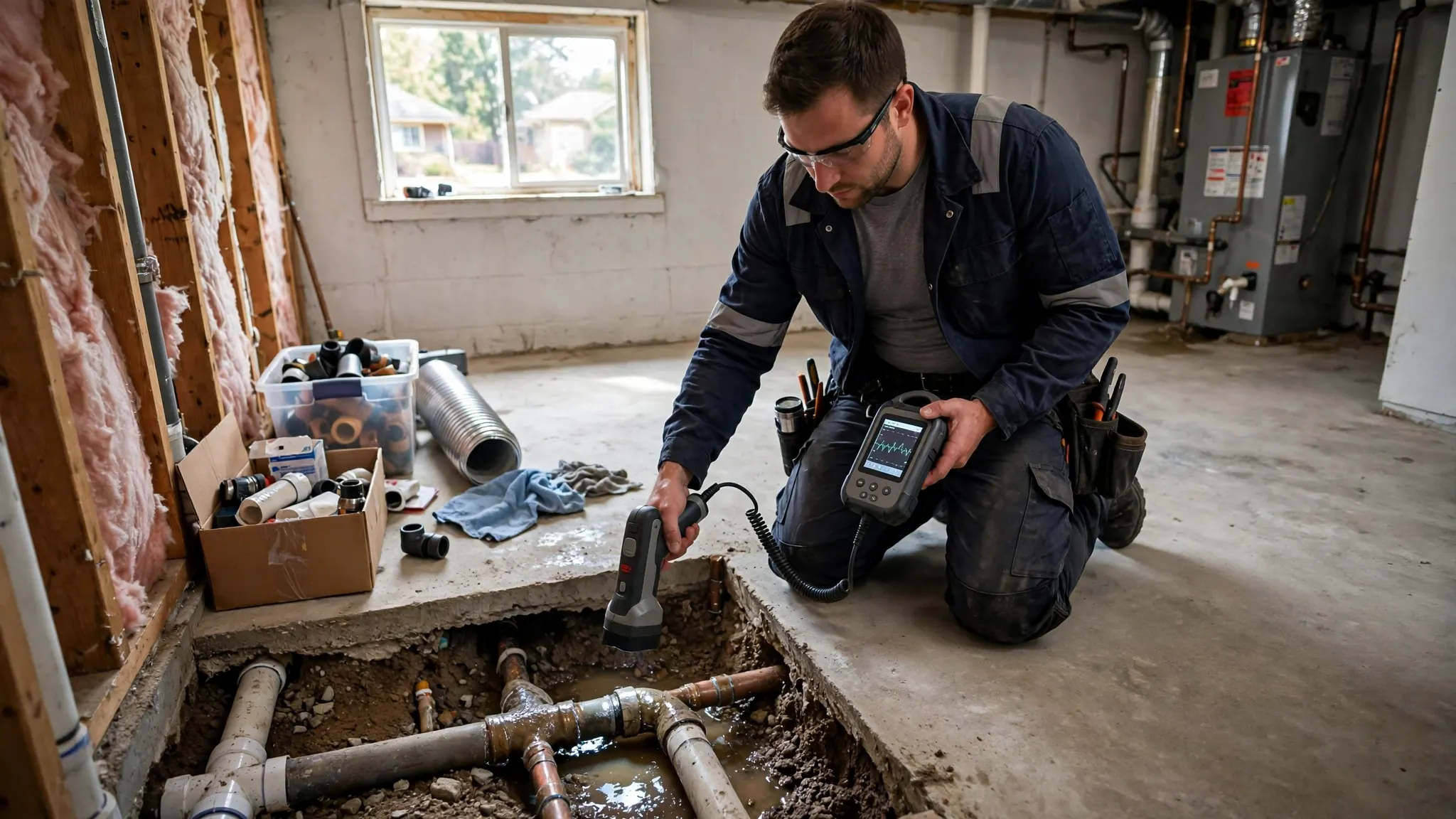
Water migrating from a deep exterior break can reach foundation walls far from the pipe. Tracing the leak to its origin stops treating the symptom.
A deep leak wastes water around the clock with zero visible evidence. The bill is often the only symptom — pressure testing turns suspicion into a marked location.
How We Pinpoint It, Step By Step
Correlation is applied physics: two sensors, one leak sound, and a time delay that reveals distance. Our process builds the conditions for it to work.
Isolate The Underground Section
Valves and shutoffs divide the system so the suspect underground run stands alone. A pressure decay test then proves this section — and only this section — is losing water.
Deploy The Correlators
Contact sensors attach to the pipe at two accessible points bracketing the suspect area — meter box and house entry, for example. Both listen to the same leak simultaneously.
Triangulate The Break
The correlator measures the microsecond delay between the leak sound reaching each sensor. Combined with the pipe’s length and material, the delay converts to a distance from each sensor — the break’s position.
Verify And Mark
A locator confirms the pipe’s path and depth at the correlated point, and we paint the surface mark with depth noted. One position, one depth, one dig.
Why Broomfield Trusts Us With Underground Pipe Leak
Acoustic correlation is the same principle used to locate leaks in municipal water mains — we bring that utility-grade technology to residential and commercial properties. Twenty-five years of underground work teaches when correlation will succeed and how to set it up so it does.
Correlation fails when sensors cannot make solid pipe contact or when background noise overwhelms the leak — so our first job is creating the right conditions: quiet hours, firm contact points, and an isolated test section. We cross-check every correlation with a pressure decay test, because two independent methods agreeing is our standard before anyone digs. The result is a marked spot with a known depth, which turns excavation from exploration into a single planned hole.
25 Reviews
What Your Neighbors Say
Real reviews from Broomfield customers, shown exactly as provided.
Tips From Working Leak Specialists
Deep leaks hide well. These habits surface them before the bill — or the ground — tells you.
A one-hour no-use meter test each season catches deep leaks early. Underground breaks waste water silently for months before any surface sign appears.
Rain masks leak moisture — instead, look during dry spells for the one patch that stays damp. That contrast is the deep leak revealing itself.
A gradual whole-house pressure decline often precedes any visible symptom of a deep break. Mention it early; it is diagnostic gold.
Correlation needs two pipe contact points, usually at valves or the meter. Buried or painted-shut valves slow the whole process — keep them accessible.
A dated photo series of a damp area shows whether it grows, migrates, or correlates with usage — all useful context for the technician.
Exploratory trenching across a suspected area costs more than a correlation survey and often misses. Pinpoint first, dig once.
Urgent Underground Pipe Leak Problem? We Arrive In 30–45 Minutes.
A deep pipe break can undermine soil under driveways, walkways, and foundations — and a major rupture can flood a yard in hours. If water is surfacing, pressure has collapsed, or the meter is spinning freely, call any time: our emergency line is answered 24/7, we arrive in 30–45 minutes, and correlation equipment rides on every truck so diagnosis starts immediately. See our emergency underground pipe leak service.
Underground Pipe Leak Across All Of Broomfield
Broomfield’s long service laterals and deep-buried lines — common on the larger lots near the Broadlands and the commercial parcels by Interlocken — are exactly where correlation earns its keep. Shallow listening cannot isolate a break four feet down under asphalt; two-sensor triangulation can. Wherever your property sits, we mark one dig point at a known depth. If you are searching for underground pipe leak detection near you, this is the technology-first team.
Underground Pipe Leak Questions, Answered
Two sensors attach to the pipe at separate points and listen to the same leak simultaneously. Because sound reaches the nearer sensor first, the time delay between arrivals — combined with pipe length and material — calculates the leak’s exact position between them. It is the standard method water utilities use on their own mains.
Correlation works through several feet of soil, and under concrete and asphalt where surface listening fails. Depth itself is measured separately with our pipe locator, so the marked dig point includes how far down the crew needs to go.
Standard acoustic listening finds the loudest point at the surface, which works well for shallow leaks. Correlation triangulates mathematically between two sensors, which stays accurate at depths where surface sound spreads too wide to trust. Deep lines get correlation; shallow lines get listening.
No — sensors attach at existing contact points like the meter box, valves, or hose bibs. The entire survey happens at the surface; digging only happens once, at the marked spot, by your excavation contractor.
That is precisely the scenario correlation was built for. Sensors bracket the driveway section from accessible points on either side, and the break is triangulated beneath the concrete — one cut, one repair, no exploratory demolition of the slab.
24/7 answering and 30–45 minute emergency arrival across Broomfield. A suspected deep break with active water loss jumps the queue — call (720) 715-9734.
Yes — we serve all of Broomfield including the 80020, 80021, 80023, and 80038 ZIP codes, with correlation equipment on every truck.
Yes. The correlator gives position along the pipe; our locator independently measures the pipe’s depth at that point. The surface mark carries both, so the excavation plan is complete before a shovel lifts.
1798 W 6th Ave, Broomfield, CO 80020
Get DirectionsLearn More About Underground Pipe Leak
Underground Water Line Leaks: Detection Methods Compared
Listening, correlation, and pressure testing each suit different depths. Which method fits which leak.
Read Article
Low Water Pressure All Over The House
Whole-house pressure loss often means a buried break. How to confirm it before anyone digs.
Read Article
Wet Spot In The Yard That Never Dries
A damp patch with no irrigation source deserves investigation. What it can mean and what to do next.
Read ArticleGet Your Underground Pipe Leak Pinpointed Today
One call brings 25 years of diagnostic experience to your door — acoustic and thermal instruments that find the source within inches, with no unnecessary demolition. Open 24/7. We arrive in 30–45 minutes.