Pressurized water escaping through a pinhole makes a distinct hissing or shushing sound as it jets into the wall cavity. Unlike drain gurgles or pipe expansion ticks, this hiss continues even when the whole house is silent — because the leak never stops. Catching it early matters: a wall leak soaks insulation and drywall from the inside, and by the time a stain appears, the damage is well underway. This guide explains how to confirm what you are hearing, the signs that accompany a wall leak, and the safe steps to take.
A hiss behind a wall with all fixtures off usually means a pressurized supply line is leaking inside the cavity. Confirm it by listening at night when the house is quiet, checking the water meter for movement, and feeling the wall for cool dampness or warmth. Do not open the wall yourself — professional detection pinpoints the break so only a small section needs opening.
What To Do Right Now
A hissing wall deserves same-week attention — water inside a wall cavity spreads silently. Work through these safe steps:
- Listen at night. Turn everything off and press your ear to the wall in a quiet house. A leak hiss is steady and localized; normal pipe noise stops.
- Locate the hiss precisely. Move along the wall and mark where the sound is loudest with painter's tape.
- Check the meter. Any movement with fixtures off confirms water is escaping somewhere.
- Feel the wall surface. Cool dampness, warmth, or a slight bulge all corroborate a leak behind the drywall.
- Look below and beside the spot. Check baseboards, flooring, and the room below for dampness or staining.
Resist the urge to cut into the drywall. The sound travels, and the actual break is often a foot or more from where it sounds loudest — acoustic pinpointing finds it exactly.
Signs To Look For
Wall leaks announce themselves gradually. Watch for:
- A steady hiss or shush audible only when the house is quiet.
- Paint bubbling, peeling, or discoloring in one area.
- Drywall that feels soft, cool, or slightly bowed.
- A musty odor near the wall, especially after the heat runs.
- Baseboards pulling away or flooring damp at the wall's base.
- The water meter creeping with nothing running.
Stains are a late symptom, not an early one. By the time discoloration shows, insulation behind the drywall is usually saturated — which is why the hiss itself is the valuable early warning.
Common Causes
Most wall leaks start at connections: a solder joint that finally gives way, a push-fit or compression fitting that loosens over years of pressure cycling, or a nail or screw from original construction that nicked a pipe and took years to corrode through.
Pinhole corrosion in copper lines is the other classic cause — chemistry between the water, the pipe, and sometimes the surrounding materials eats a tiny hole that hisses under full pressure. In cold snaps, pipes in exterior walls can freeze and split, announcing themselves with a hiss when they thaw.
- Failed solder joints or loosened compression fittings
- Pinhole corrosion in copper supply lines
- Nails or screws nicking pipes during construction or remodeling
- Freeze-split pipes in exterior or poorly insulated walls
- Worn shutoff valves weeping inside the cavity
If the hissing wall also contains outlets or switches, or if you see water near electrical fixtures, do not touch the area. Shut off the breaker for that wall and call a professional immediately.
Urgent Leak? We Answer 24/7.
Hiss getting louder or wall starting to bulge? Shut the main valve and call now.
(720) 715-9734What Happens If You Wait
A wall cavity is a perfect hidden reservoir: insulation soaks up the leak, drywall wicks it outward, and the wooden framing stays wet. Mold can establish itself inside the cavity within days in warm conditions, long before any surface stain appears.
Structurally, prolonged soaking softens drywall until it sags or crumbles, rots base plates, and can short electrical wiring in the same bay. What starts as a pinhole repair becomes a mold-remediation and drywall-replacement project.
Because the hiss gives you early warning, acting on it now is the difference between opening one small drywall section and rebuilding an entire wall.
Safe DIY Checks Vs. When To Call A Professional
Listening and observing are safe; opening walls is not a DIY job:
| Safe For You | Call A Professional |
|---|---|
| Nighttime listening to locate the hiss | Pinpointing the break behind drywall |
| Meter test with fixtures off | Moisture mapping inside the cavity |
| Feeling walls for dampness or warmth | Opening drywall at the exact point |
| Checking baseboards and nearby flooring | Repairing pressurized supply lines |
| Shutting off the breaker near wet wiring | Any work involving electrical fixtures |
If water is actively dripping from the wall or ceiling below, shut the main water valve and call immediately — that has moved past the investigation stage.
How The Service Fixes It
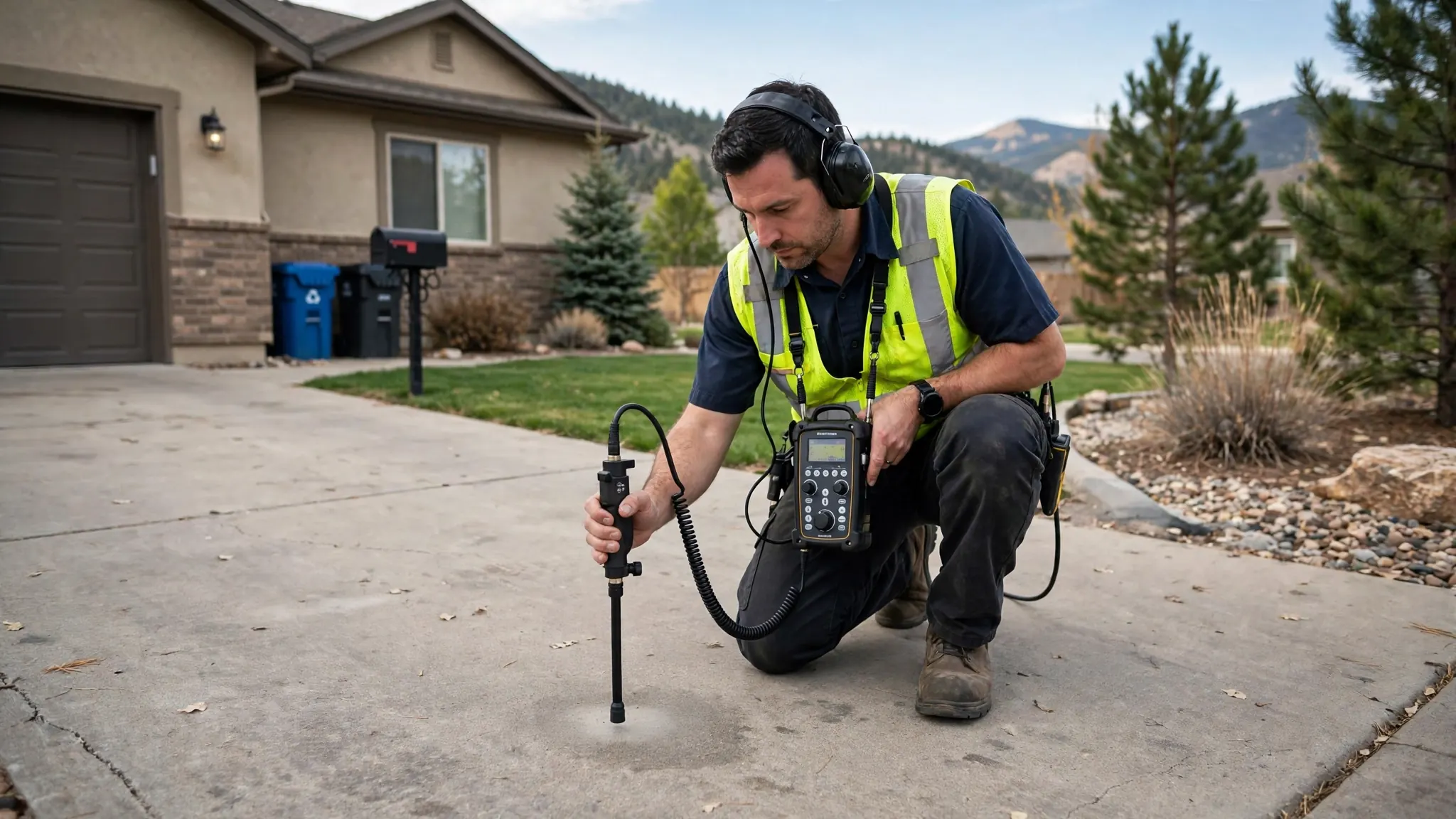
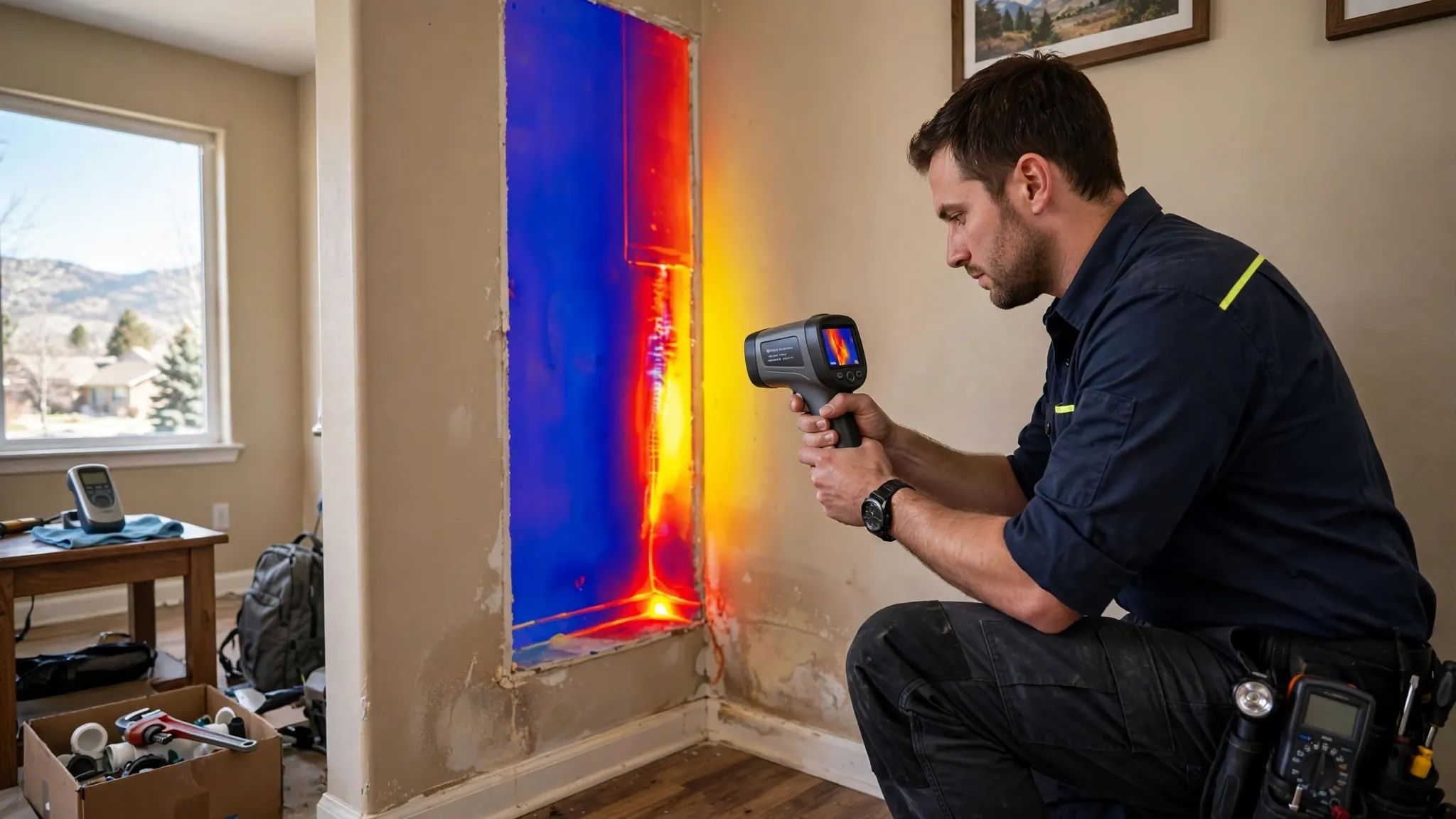
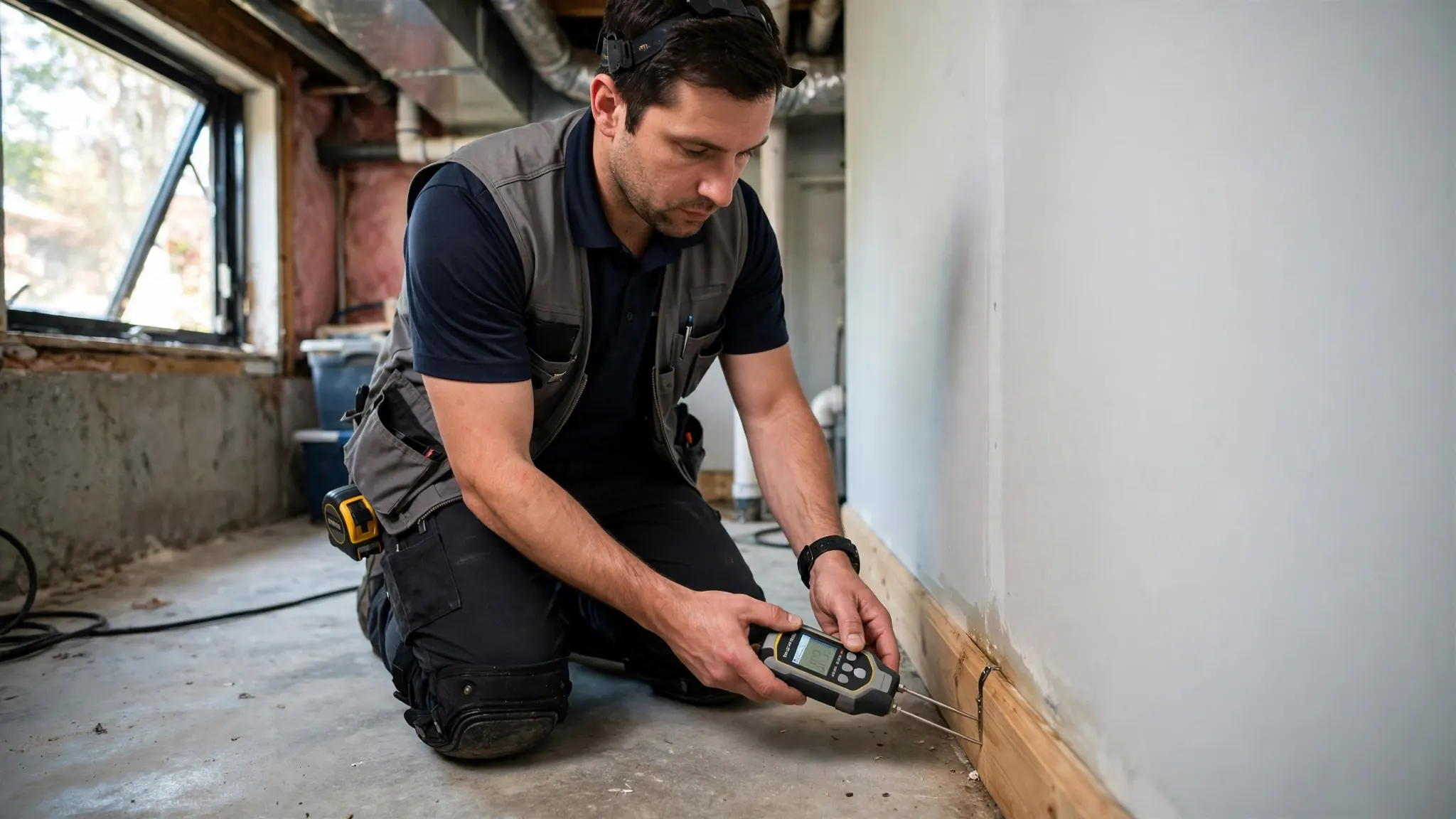
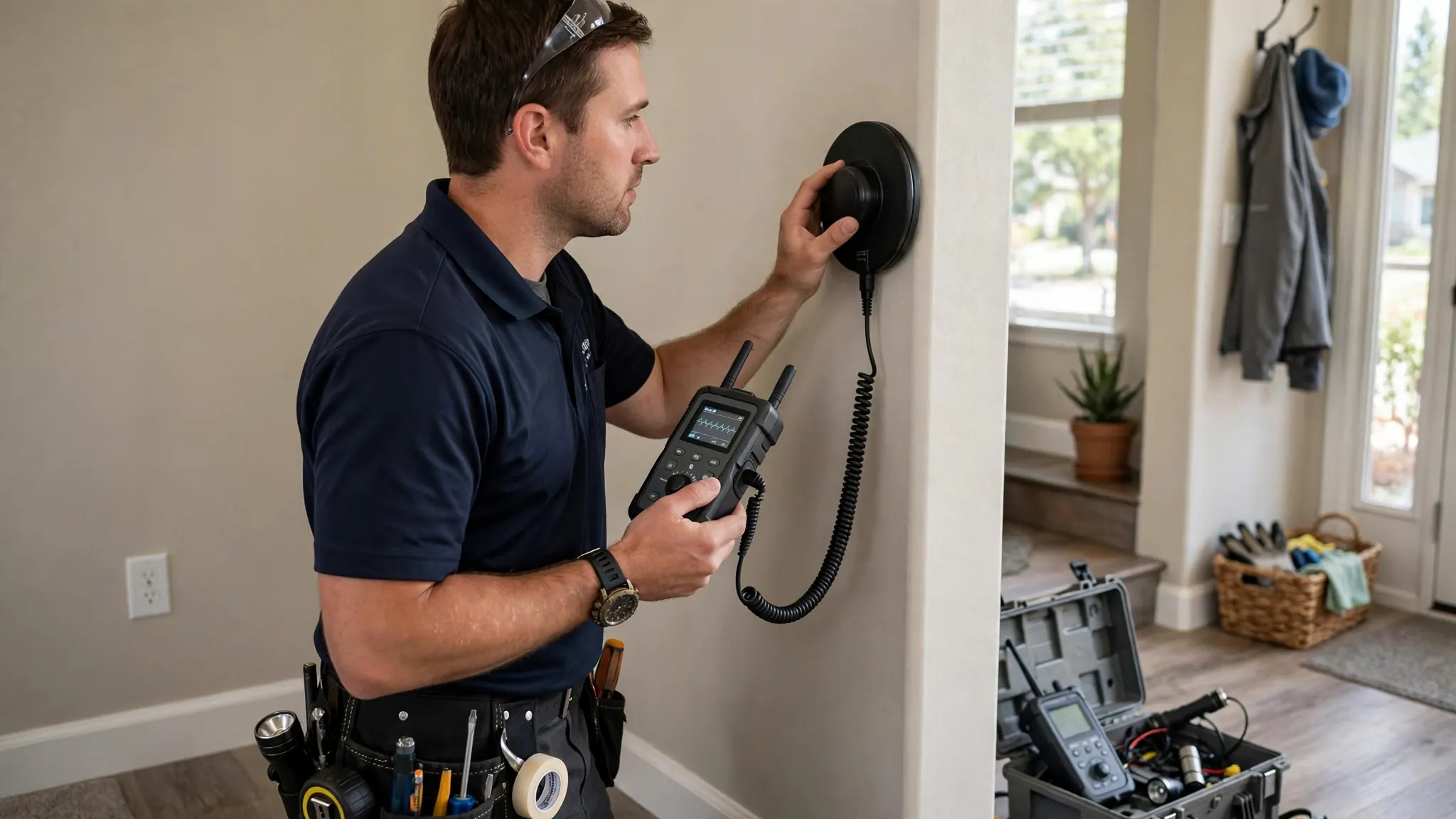
Wall leak detection uses acoustic sensors to follow the hiss to its precise origin and moisture meters to map how far the water has spread inside the cavity. The result is a marked spot — usually a single drywall cut instead of exploratory demolition across the wall.
The repair itself is typically a single fitting or short pipe section replacement, followed by drying the cavity before the drywall is patched.
If the hiss is loud, the wall is bulging, or water is spreading, emergency wall leak service is available 24/7.
With 25 years of experience, we answer 24/7 and arrive in 30–45 minutes anywhere in Broomfield — and we find the hiss before it becomes a hole.