When a water line beneath your concrete slab starts leaking, the repair generally takes one of three forms. A spot repair opens the slab at the leak and fixes that section of pipe. A reroute abandons the under-slab line entirely and runs a new line through walls or the attic. Epoxy lining coats the inside of the existing pipe, sealing the leak from within. Each approach has situations where it shines and situations where it does not fit. The right choice depends on the pipe's age and condition, the leak's location, and how many problems the line has had. Before any repair decision, the leak must be precisely located — see our slab leak detection guide for how that works. If water is actively damaging your home, our emergency slab leak response is available around the clock.
Spot Repair: Fixing The Leak Where It Is
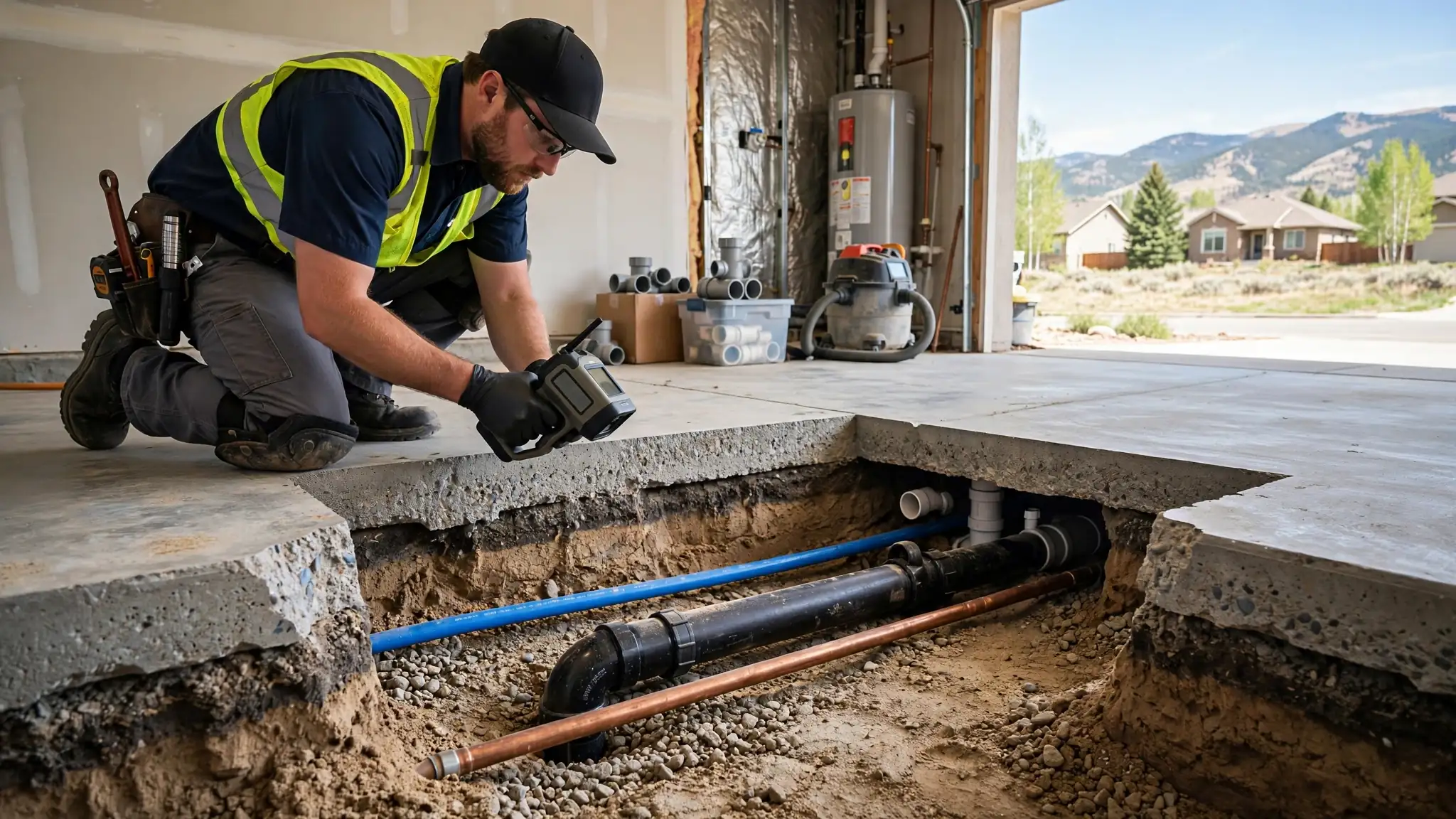
A spot repair is the most direct approach: open the concrete at the pinpointed leak location, expose the damaged section of pipe, cut it out, and install new pipe and fittings. The slab is then patched and the flooring restored over the repair area.
This option makes the most sense when the pipe is otherwise in good condition and the leak is an isolated failure — a single bad joint, one corroded spot, or damage from a specific event. It is the least disruptive of the three in terms of plumbing system changes, because the rest of the line stays exactly as it was.
The trade-off is that a spot repair fixes only the spot. If the pipe is aging throughout its run, another section can fail months later, and each new failure means opening the slab again. Spot repairs also require breaking concrete and repairing flooring, so the restoration work is concentrated in one area but still real.
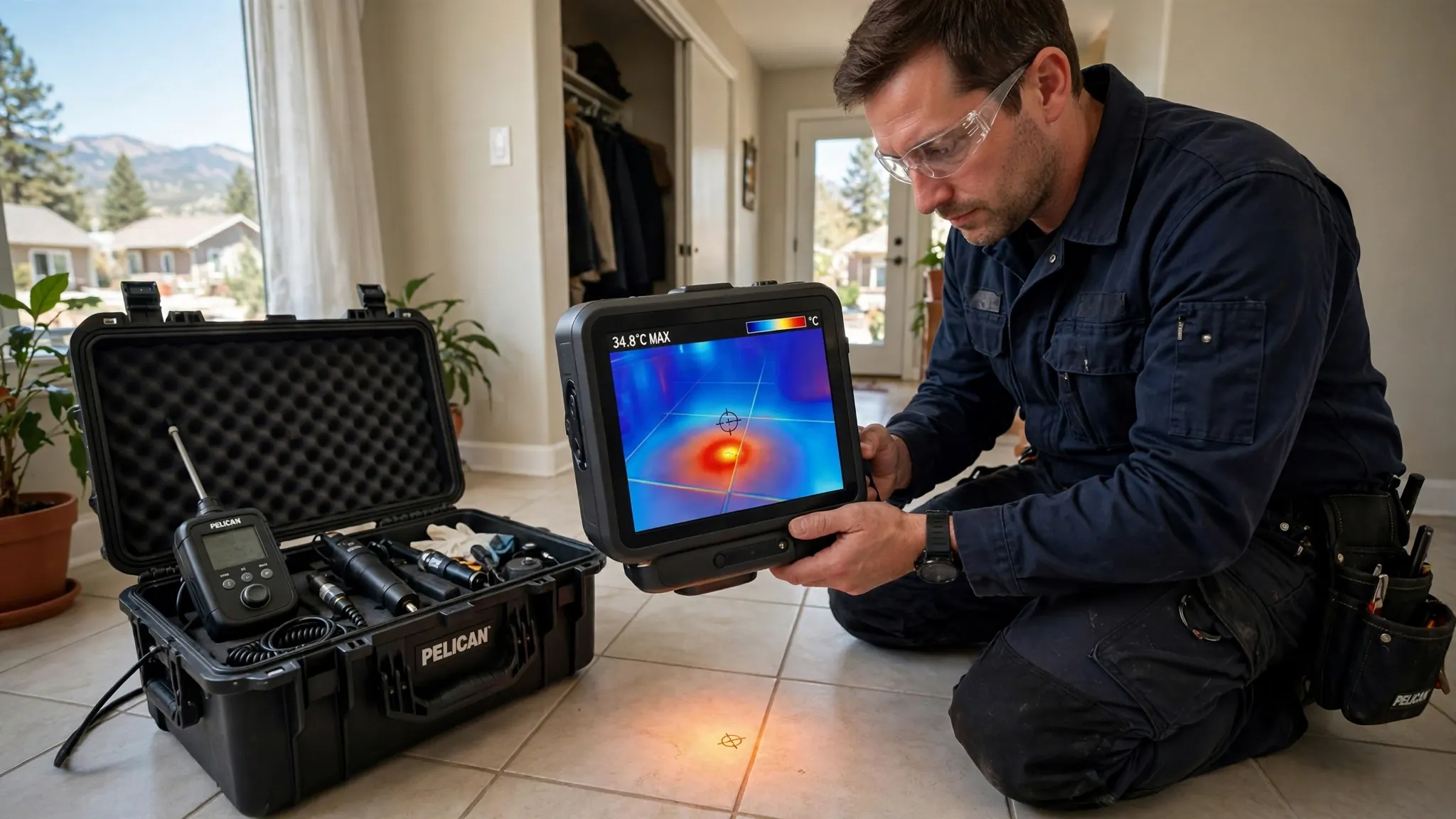
A spot repair lives or dies on location accuracy. Opening the slab in the wrong place means breaking concrete twice. This is why precise leak detection with acoustic and thermal methods comes before any repair decision.
Reroute: Bypassing The Slab Entirely
A reroute leaves the failed under-slab line in place, permanently abandoned, and installs a brand-new line along a different path — typically through walls, ceilings, or the attic. The new line connects the same two endpoints the old line served, but it travels where it can be reached.
Rerouting is often the best answer for aging pipe systems. When a slab line has leaked once, the rest of it is the same age and the same material, living in the same corrosive soil. A reroute replaces the entire vulnerable run with new pipe in an accessible location, which effectively resets the clock on that section of plumbing.
The new line's accessibility is the lasting benefit: if anything ever needs service in the future, it happens in a wall or attic, not under concrete. The trade-off is a larger installation project — running pipe through finished spaces means opening and patching drywall along the new route, and attic runs in cold climates need proper insulation and freeze protection.
Epoxy Lining: Sealing The Pipe From Inside
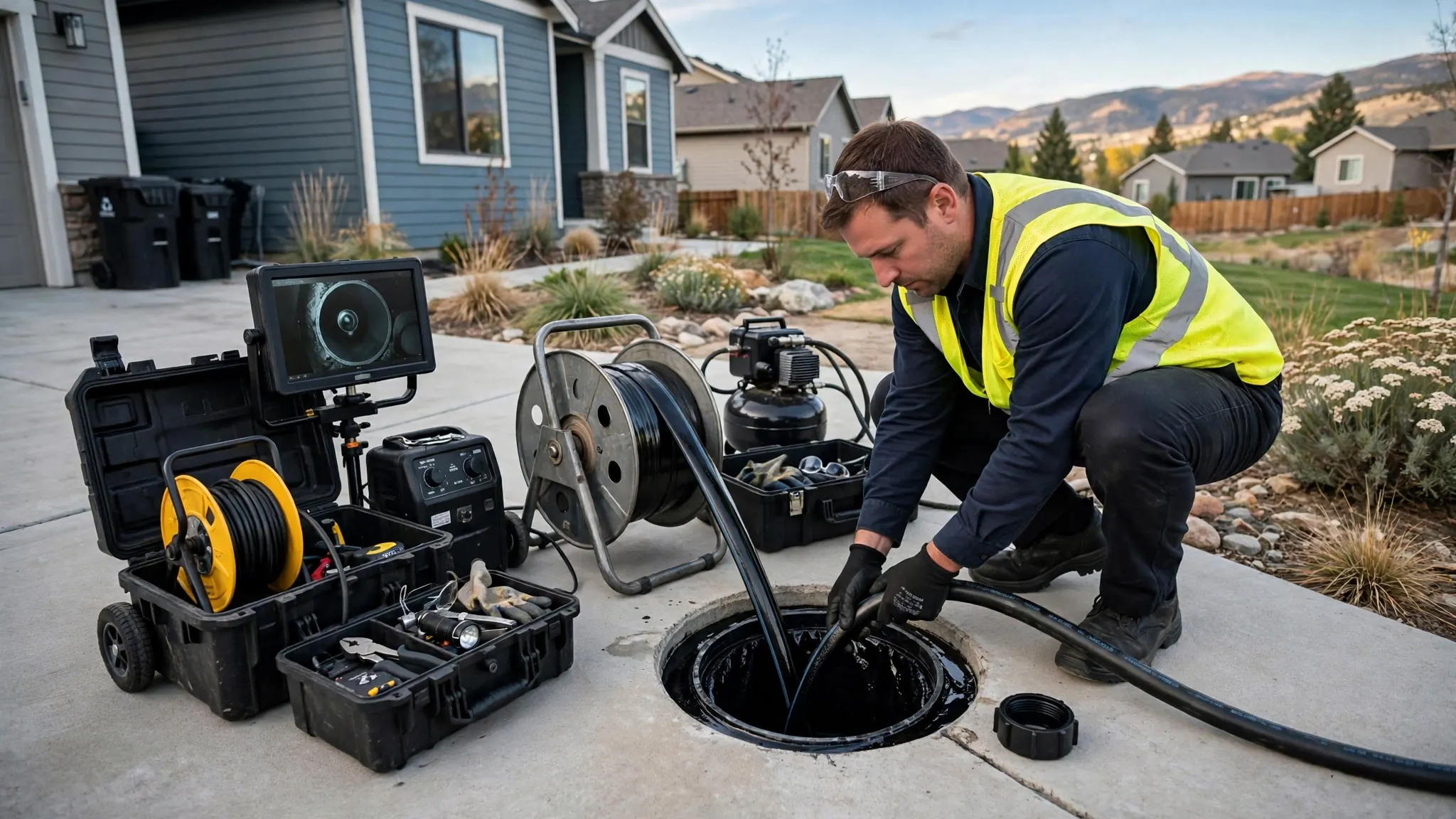
Epoxy lining rehabilitates the existing pipe without removing it. After the line is cleaned, an epoxy coating is applied to the pipe's interior, curing into a smooth new surface that seals leaks and covers corroded areas. The pipe stays exactly where it is — under the slab — but its interior is renewed.
This approach fits best when the pipe's overall structure is sound but its interior is deteriorating: pinhole leaks from corrosion, rough scale buildup, or a line with multiple small failures along its length. Because there is no excavation, flooring and finishes stay untouched, which matters when the leak sits under expensive tile or hardwood.
Epoxy is not a fit for every pipe. Lines that are collapsed, severely deformed, or broken apart cannot be lined — the coating needs an intact pipe to bond to. Proper cleaning before lining is critical, and the work requires specialized equipment and curing time. Our sewer line epoxy lining page explains how the same principle applies to drain lines under slabs.
For a deeper look at the trenchless approach specifically, see our guide to trenchless sewer repair and epoxy lining explained.
Comparing The Three Options
Side by side, the differences come down to what each option disturbs, what it solves, and what it leaves behind.
| Factor | Spot Repair | Reroute | Epoxy Lining |
|---|---|---|---|
| What gets opened | Slab at one location | Walls/ceiling along new route | Nothing structural |
| Pipe replaced or renewed | One section | Entire run, new path | Interior of existing pipe |
| Best when | Isolated failure, pipe otherwise sound | Aging system, repeat leaks | Multiple small failures, intact pipe |
| Flooring impact | Patch at repair area | None on slab; drywall patching | None |
| Future access | Still under slab | Fully accessible new line | Still under slab |
| Not suitable when | Pipe failing in multiple spots | No viable overhead route | Pipe collapsed or broken apart |
How To Decide: Questions To Ask
The right choice starts with information. Before committing to any repair, make sure you have answers to these questions.
- How old is the pipe, and what is it made of? A young copper line with one bad joint is a different situation from a decades-old line showing corrosion throughout.
- Is this the first leak or one of several? Repeat failures on the same run point toward system-wide deterioration, which favors rerouting or lining over another spot fix.
- Where exactly is the leak, and what sits above it? A leak under a closet is a simpler spot repair than one under a custom-tiled bathroom.
- What is the pipe's interior condition? A camera inspection of accessible sections can reveal whether corrosion is localized or widespread.
- Is the rest of the line accessible for a reroute? Attic and wall paths need to exist and need freeze protection in cold climates.
A reputable professional will explain which options fit your specific situation and why — and will have located the leak precisely before recommending anything. If someone proposes breaking your slab without a pinpointed location, get a second opinion. A sudden jump in usage on your bill is often the first clue — see our guide to a water bill suddenly high for how to confirm the leak before the repair conversation.
What Happens Before The Repair
Every good slab leak repair starts the same way: with detection, not demolition. The leak is confirmed with a pressure test, located with acoustic listening and thermal imaging, and its extent is mapped. Only then does the repair conversation begin.
This sequence matters because the repair options assume you know exactly what you are dealing with. Listen for the classic symptom — a hissing sound inside walls often marks a pressurized leak announcing itself. A spot repair needs an exact point. A reroute needs to know which run failed. Epoxy lining needs to know the pipe is a candidate. Skipping detection and going straight to demolition is how simple leaks become expensive ordeals.
If you are weighing repair options after a new diagnosis, our article on what a leak detection report includes for insurance claims explains the documentation you will want in hand before work begins.