A damp crawlspace is never just a damp crawlspace. The moisture is either a plumbing leak adding water continuously, condensation forming when humid air meets cool surfaces, or groundwater pushing in from the soil — and the fix for one does nothing for the others. Waterproofing a crawlspace with an active plumbing leak wastes the investment; sealing air leaks does nothing for groundwater. Getting the diagnosis right first is everything. This guide explains the three sources, how to distinguish them, and what crawlspace leak investigation actually involves.
The Three Sources Of Crawlspace Moisture
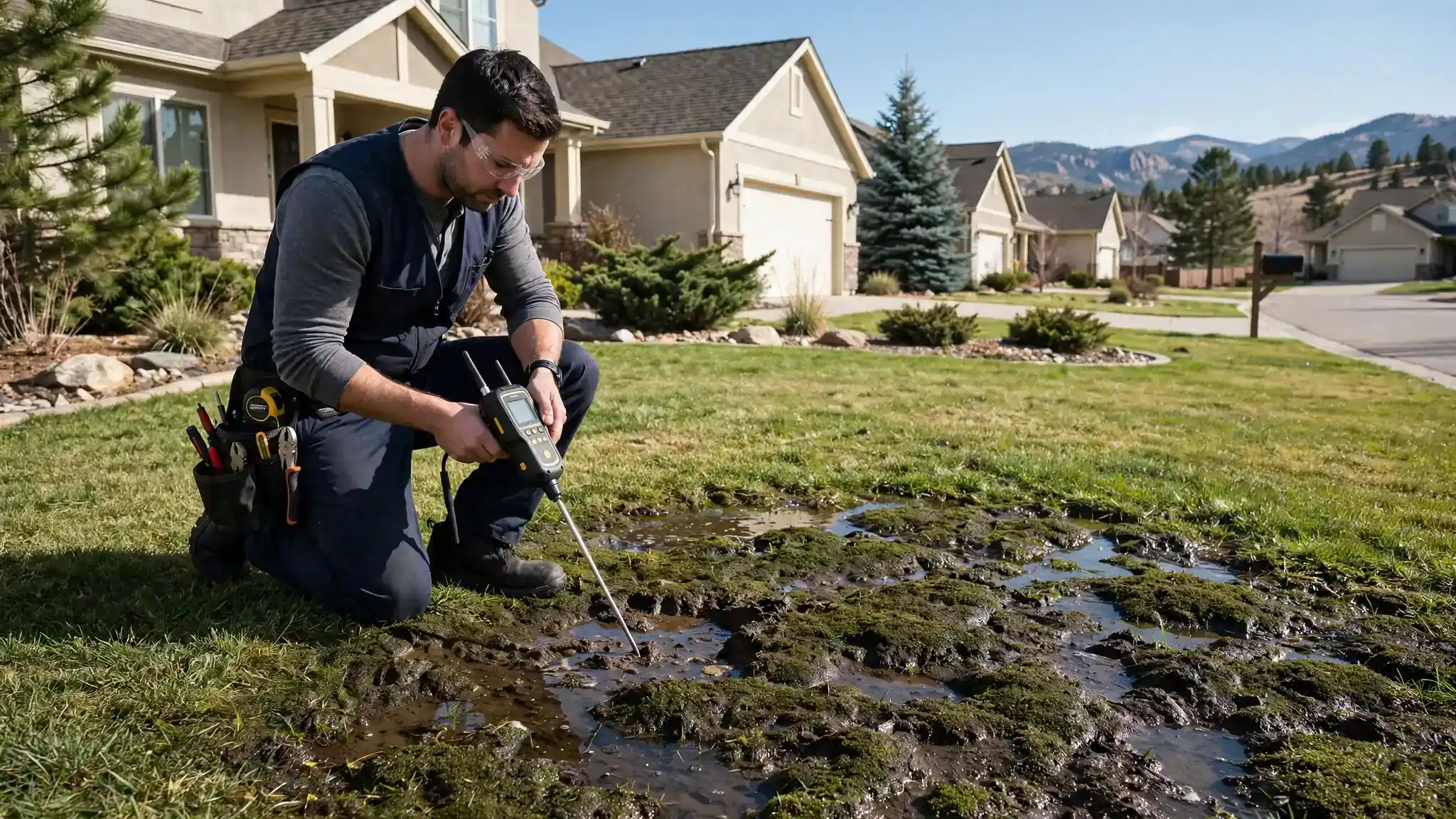
A plumbing leak is pressurized water escaping from a supply line, drain line, or fixture connection in or above the crawlspace. It is active, continuous, and local — the wettest spot sits near the source, and the water does not care about weather or season. Condensation is airborne moisture condensing on cool surfaces: warm humid air enters the crawlspace, meets the cool ductwork, pipes, or ground cover, and water beads form. It is seasonal and weather-linked, worst in humid months. Groundwater is water from the soil itself — a high water table, poor exterior drainage, or grading that slopes toward the house pushes moisture through the ground and foundation walls. A wet spot in the yard that never dries above the crawlspace can signal the same groundwater pressure.
Each source behaves differently over time, and that behavior is the diagnostic key. Leak moisture is constant. Condensation moisture follows temperature and humidity. Groundwater moisture follows rain and snowmelt. Watching when the crawlspace is wettest tells you more than any single inspection.
Telling Them Apart
| Clue | Plumbing Leak | Condensation | Groundwater |
|---|---|---|---|
| Timing | Constant, regardless of weather | Worst in warm humid months | Follows rain and snowmelt |
| Wettest location | Near a pipe run or fixture | On cool surfaces: ducts, pipes | Along foundation walls, low spots |
| Water appearance | Clean water, possibly warm | Beading and dripping on surfaces | Seepage through walls and floor |
| Water bill | Often elevated | Normal | Normal |
| Smell | Usually none | Musty over time | Musty, earthy |
| Dries between events | No — always wet | Yes, in dry cool weather | Yes, between wet periods |
The water bill check is the fastest differentiator. A supply-line leak adds water to your meter; condensation and groundwater do not. If the crawlspace is wet and the bill is up, suspect plumbing first. If the bill is normal and the moisture follows weather, look at condensation and groundwater. Our article on musty basement smells covers similar detective work for below-grade spaces generally.
Why The Distinction Matters
Real consequences follow a wrong diagnosis. An active plumbing leak left running while the homeowner installs a dehumidifier wastes water continuously and can saturate structural wood, leading to rot. Condensation treated as a plumbing problem sends a leak detection technician on a fruitless search while the actual fix — air sealing and humidity control — goes undone. Groundwater handled as condensation leads to endless dehumidifier running against water that keeps coming through the walls.
The costs diverge too. Finding and fixing a plumbing leak is usually a contained project. Groundwater solutions — exterior drainage, interior perimeter drains, sump systems — are bigger investments. Spending the bigger money without confirming the source is the expensive mistake this guide exists to prevent. Diagnose first, in the right order: rule out the active leak, then evaluate the passive sources.
Safe Checks You Can Do
- Check your water bill and run the meter test — a spinning meter with no water running points to a supply leak.
- Visit the crawlspace during and after rain to see whether moisture follows weather.
- Look at where water sits: beading on ducts and pipes suggests condensation; pooling near a pipe run suggests a leak.
- Feel foundation walls for dampness that worsens after storms — a groundwater sign.
- Note any warm spots in the water or on the ground, which suggest a hot supply line leak.
- Photograph everything with dates — the pattern over weeks is the diagnosis.
Crawlspaces demand caution. Wear a mask — disturbed insulation, rodent droppings, and mold are common. Watch for exposed wiring and do not touch anything electrical in a wet crawlspace. If the space is very wet, has standing water near electrical components, or smells strongly of sewage, stay out and call a professional. Your safety is worth more than a look around.
Never enter a crawlspace with standing water near electrical panels, wiring, or equipment. Turn off the relevant breaker from outside the space if you safely can, and call for professional help. Water and electricity in an enclosed space is a genuine hazard.
How Professional Diagnosis Works
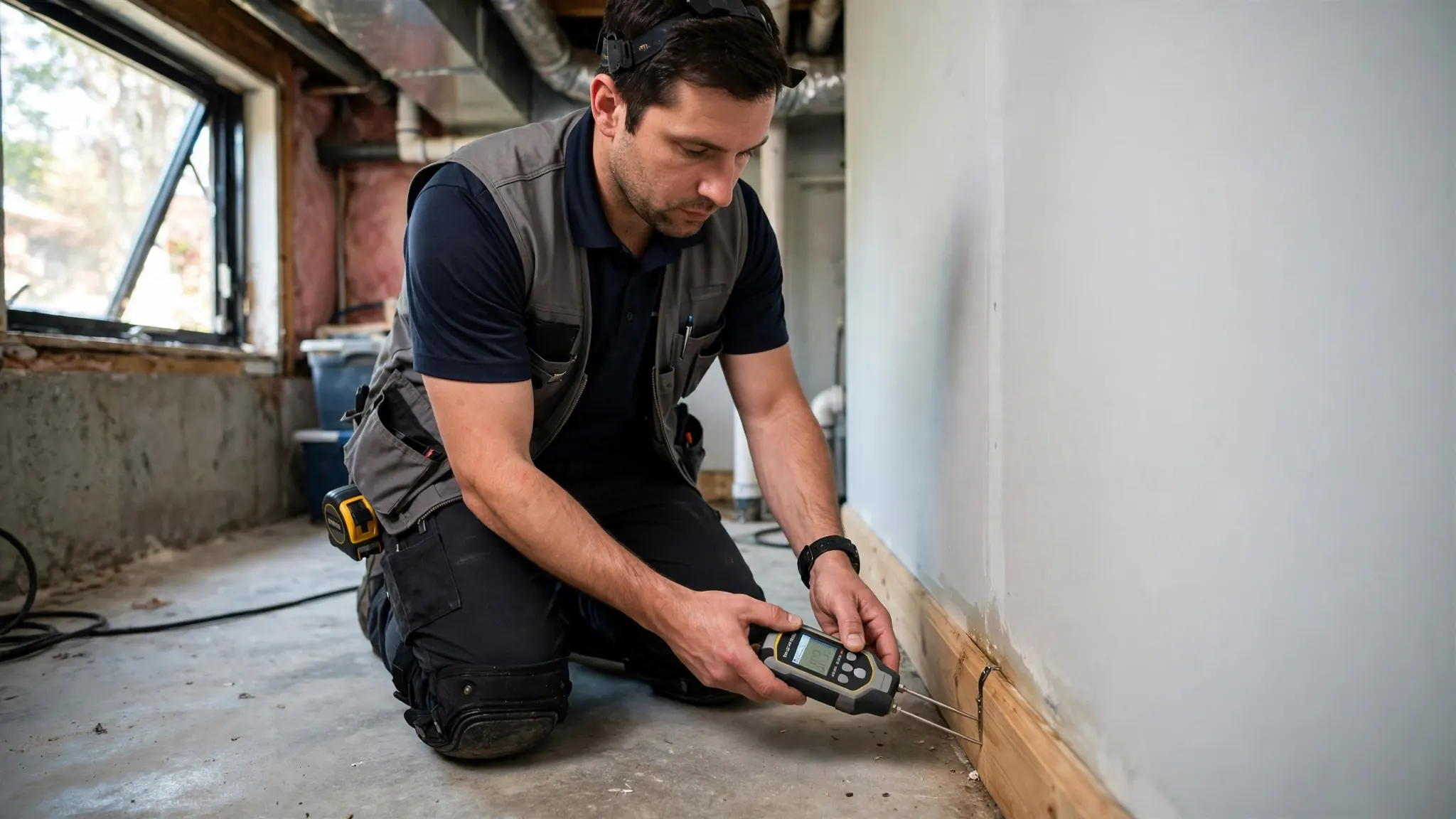
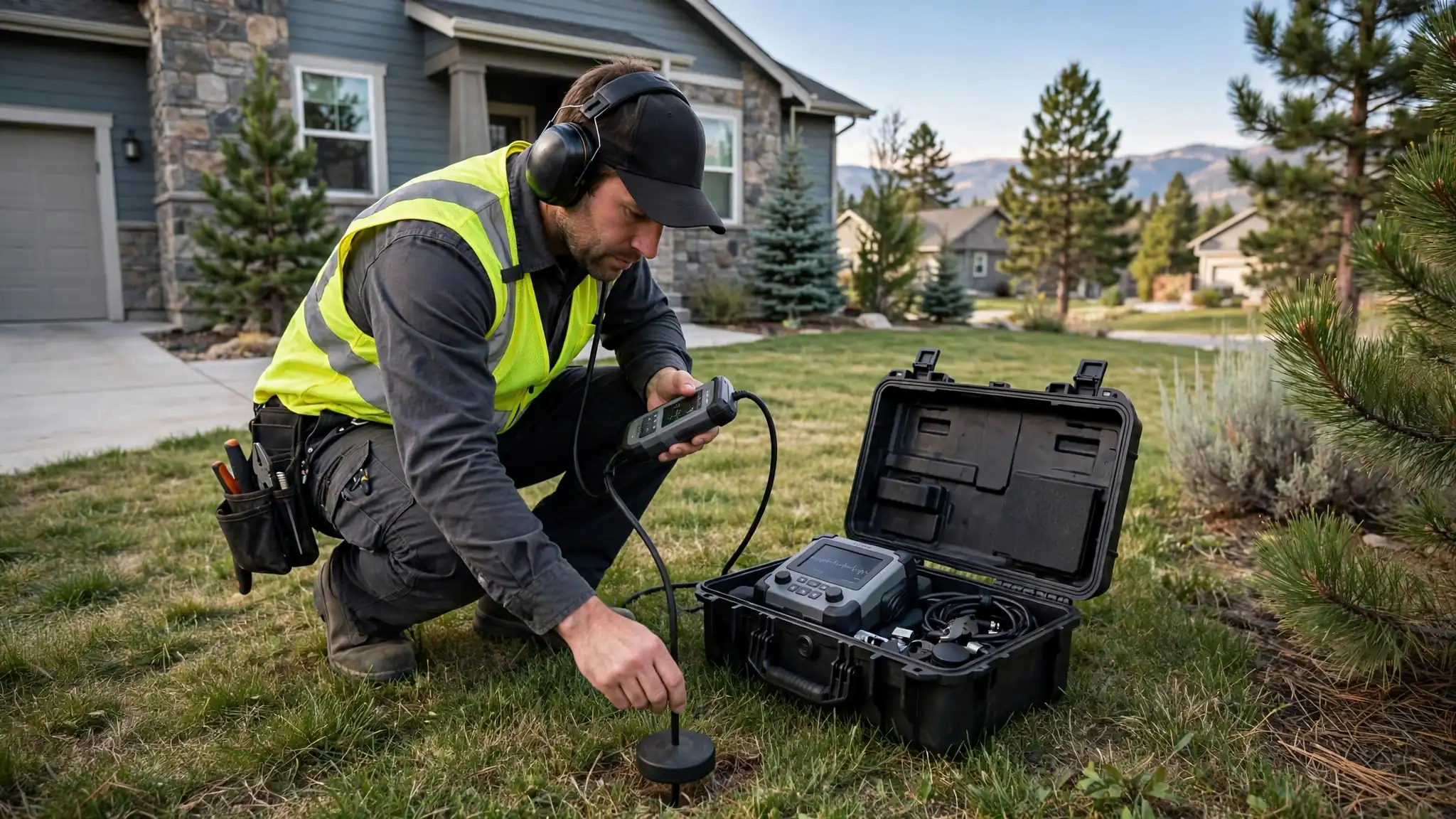
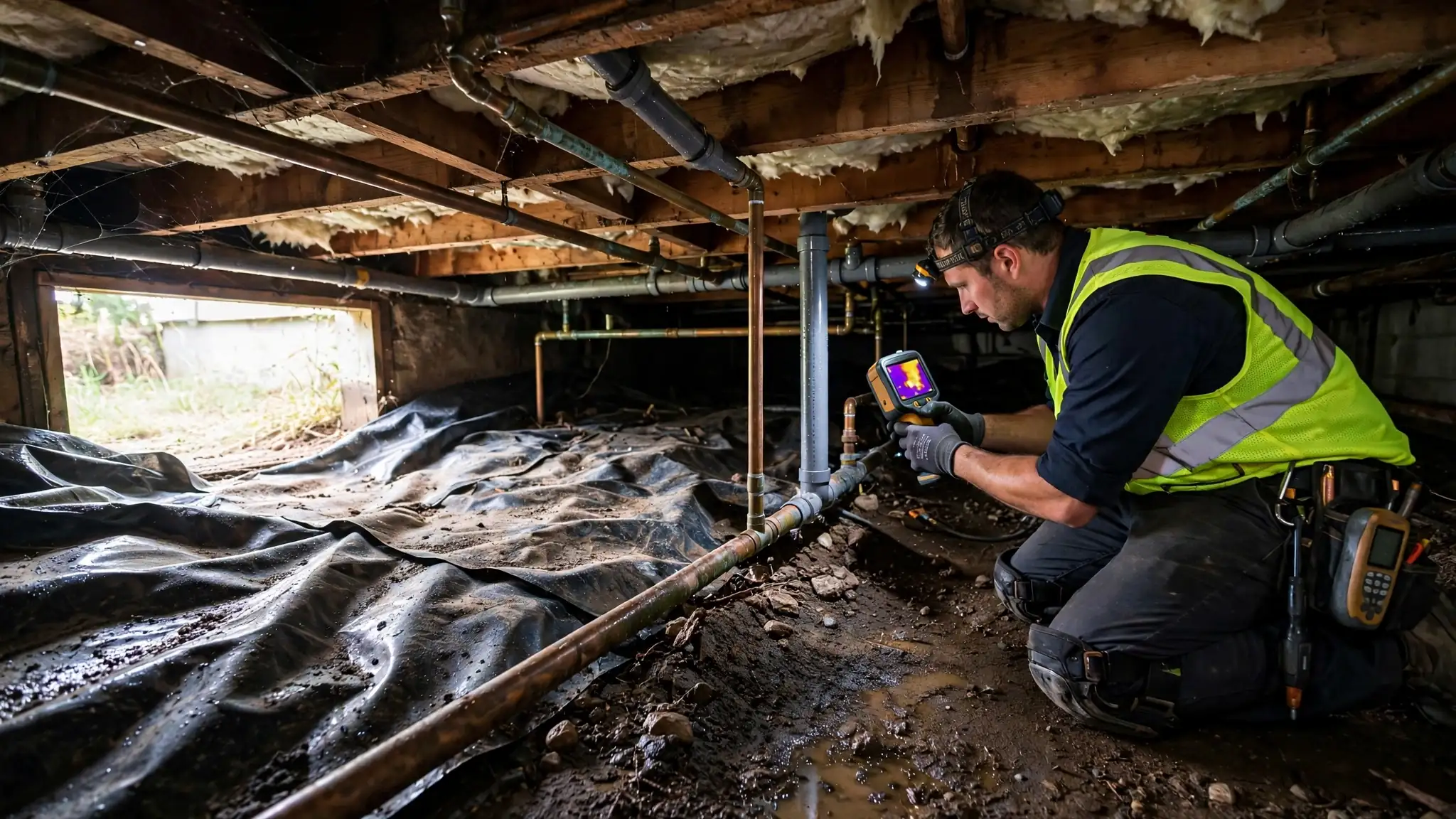
A professional starts where you did — with the timing and the water bill — then adds tools. Acoustic listening along pipe runs finds pressurized leaks through the crawlspace — see how acoustic leak detection works. Thermal imaging spots the cool tracks of active water and the temperature patterns of condensation. Moisture meters map which areas are wet and how wet, distinguishing a localized leak plume from broad condensation dampness.
The systematic approach matters because mixed sources are common. A crawlspace can have a small plumbing leak and a condensation problem simultaneously, and fixing only one leaves the space damp. A thorough leak detection visit identifies the active water first — because active water is the one causing ongoing damage — then advises on the passive sources. If the evidence points to groundwater rather than plumbing, an honest technician says so instead of selling detection you do not need.
Fixes By Source
A confirmed plumbing leak gets repaired at the source — the failed fitting, cracked pipe, or worn connection is fixed, and the area dries out. Condensation responds to humidity control: sealing air leaks from the house and vents, ensuring dryer vents exhaust outside, adding a vapor barrier over exposed soil, and in persistent cases running a dehumidifier sized for the space. Groundwater needs water management: improving exterior grading and downspout discharge, and where water tables are high, interior perimeter drainage with a sump pump.
Notice that none of these fixes substitute for another. A vapor barrier does not stop a pipe leak. A sump pump does not fix condensation. Matching the fix to the diagnosed source is the entire game — and it is why the diagnostic step, whether DIY observation or professional detection, comes before any contractor's proposal.
When To Call
Call for professional leak detection when the water bill is elevated, when moisture is constant regardless of weather, or when you find an active drip you cannot source. If sewage odors or standing wastewater are involved, treat it as urgent and limit water use until help arrives — our emergency crawlspace service covers exactly that. For condensation or groundwater patterns, a waterproofing or HVAC contractor may be the right specialist once plumbing is ruled out.
We answer 24/7 across Broomfield. A detection visit either finds your leak or rules plumbing out — and ruling it out is valuable information that directs your money to the right fix.