Musty odors come from microbial growth, which needs sustained moisture — and a hidden plumbing leak is one reliable way to supply it. But basements also smell musty from condensation, poor ventilation, or groundwater seepage with no plumbing involved at all. Telling the difference matters, because a plumbing leak keeps feeding the problem while a dehumidifier alone never fixes it. This guide explains the checks that separate a leak from ambient dampness, the signs that point to plumbing, and the safe steps to take.
A musty smell that is strongest in one area, paired with damp drywall, a rising water bill, or the sound of running water, suggests a plumbing leak rather than general dampness. General basement mustiness with no localized wet spot and a still water meter usually means humidity or seepage. When the clues point to plumbing, leak detection finds the moisture's source.
What To Do Right Now
A musty smell is a symptom worth investigating within days — microbial growth spreads in continuously damp materials. Start here:
- Locate the strongest odor. Walk the basement slowly; a leak-driven smell concentrates near its source, while humidity smells uniform.
- Feel walls and baseboards for dampness, especially behind stored items and under windows.
- Check the water heater, laundry connections, and any visible plumbing for drips or corrosion.
- Run the meter test. A still meter with a musty basement points away from plumbing and toward humidity or seepage.
- Improve air movement temporarily — open vents, run a fan — but treat this as diagnostic, not a fix.
Do not seal the smell behind paint or air fresheners. Covering the odor while moisture continues lets hidden growth spread further into framing and finishes.
Signs To Look For
Leak-driven mustiness usually brings companions:
- Odor concentrated in one zone rather than the whole basement.
- Drywall that feels soft, cool, or shows staining near the floor.
- Efflorescence — white mineral crust — on concrete walls or floors.
- Baseboards pulling away or carpet tack strips showing rust.
- A water bill that rose alongside the odor.
- Condensation on cold-water pipes that never seems to dry.
Uniform mustiness with visible condensation on windows and ducts, but dry walls and a still meter, leans toward a humidity and ventilation issue rather than a plumbing leak.
Common Causes
On the plumbing side, slow supply-line weeps inside walls, dripping shutoff valves, water-heater relief discharge, and condensation-sweating cold lines all keep materials damp enough for microbial growth. A crawlspace leak beneath the basement can also push moist air upward.
Non-plumbing causes are equally common: groundwater seeping through foundation walls or floor joints, poor exterior grading directing water toward the foundation, missing or failed vapor barriers, and simple high indoor humidity in a poorly ventilated basement.
- Slow supply-line weep inside a basement wall
- Dripping valve, laundry, or water-heater connection
- Cold-water pipe condensation dripping continuously
- Groundwater seepage through foundation walls or joints
- Poor exterior grading pooling water at the foundation
- High indoor humidity with little ventilation
If you find visible mold growth, avoid disturbing it — scrubbing or tearing out moldy material releases spores into the air. Ventilate the area and consider professional remediation for anything beyond a small surface patch.
Urgent Leak? We Answer 24/7.
Active dripping or a wall starting to bulge? Shut the main valve and call now.
(720) 715-9734What Happens If You Wait
If the moisture source is plumbing, waiting guarantees spread: the wet zone expands behind finishes, microbial growth colonizes framing, and what began as an odor becomes a remediation project involving drywall removal.
Even non-plumbing dampness worsens with neglect — efflorescence signals ongoing water movement through concrete, and chronic humidity rusts mechanical equipment and degrades stored belongings.
The key insight: odor-masking products and dehumidifiers manage symptoms. Only finding and stopping the moisture source ends the problem.
Safe DIY Checks Vs. When To Call A Professional
You can narrow the field safely before calling:
| Safe For You | Call A Professional |
|---|---|
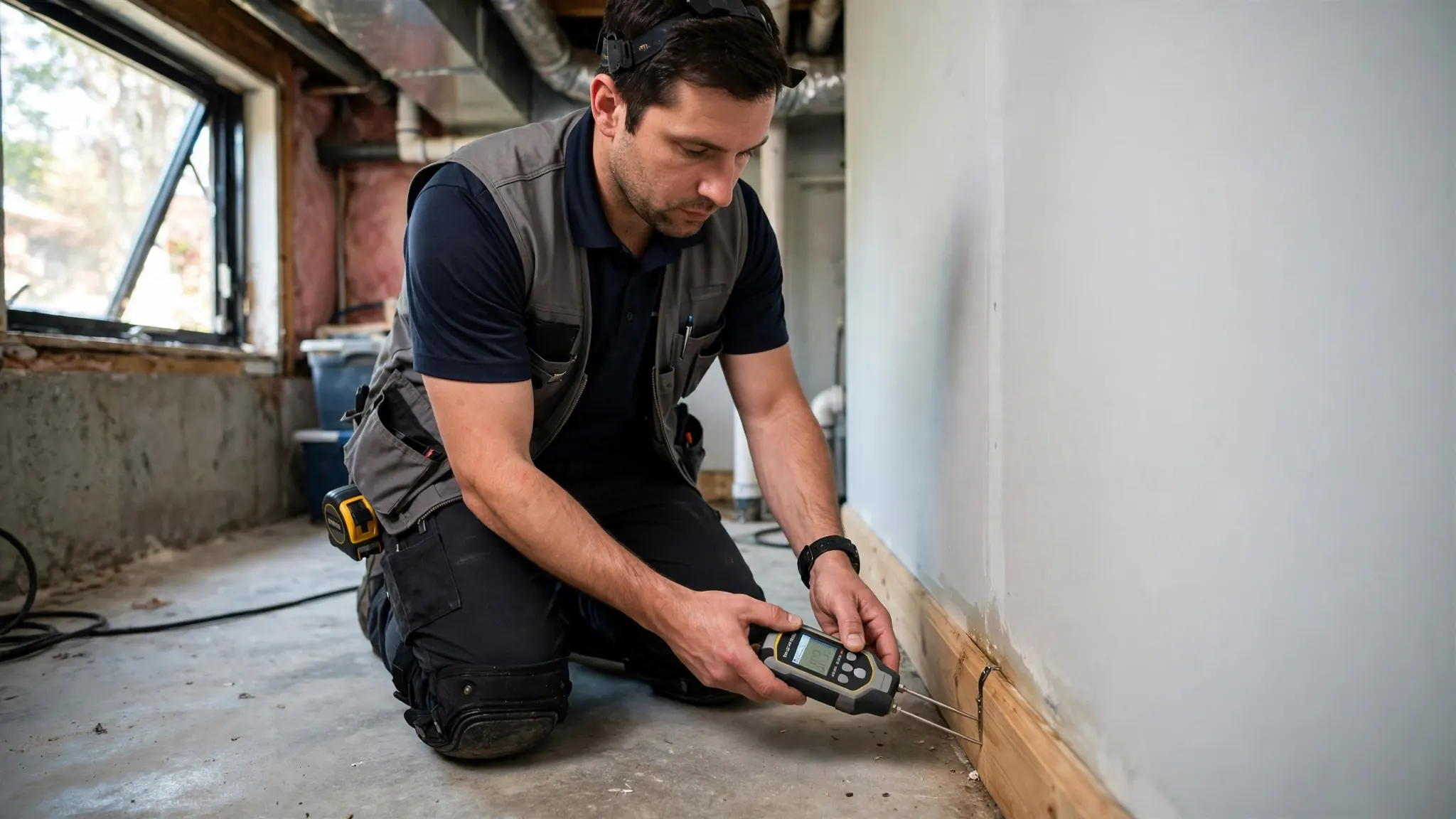
| Mapping where the odor is strongest | Moisture-meter mapping inside walls |
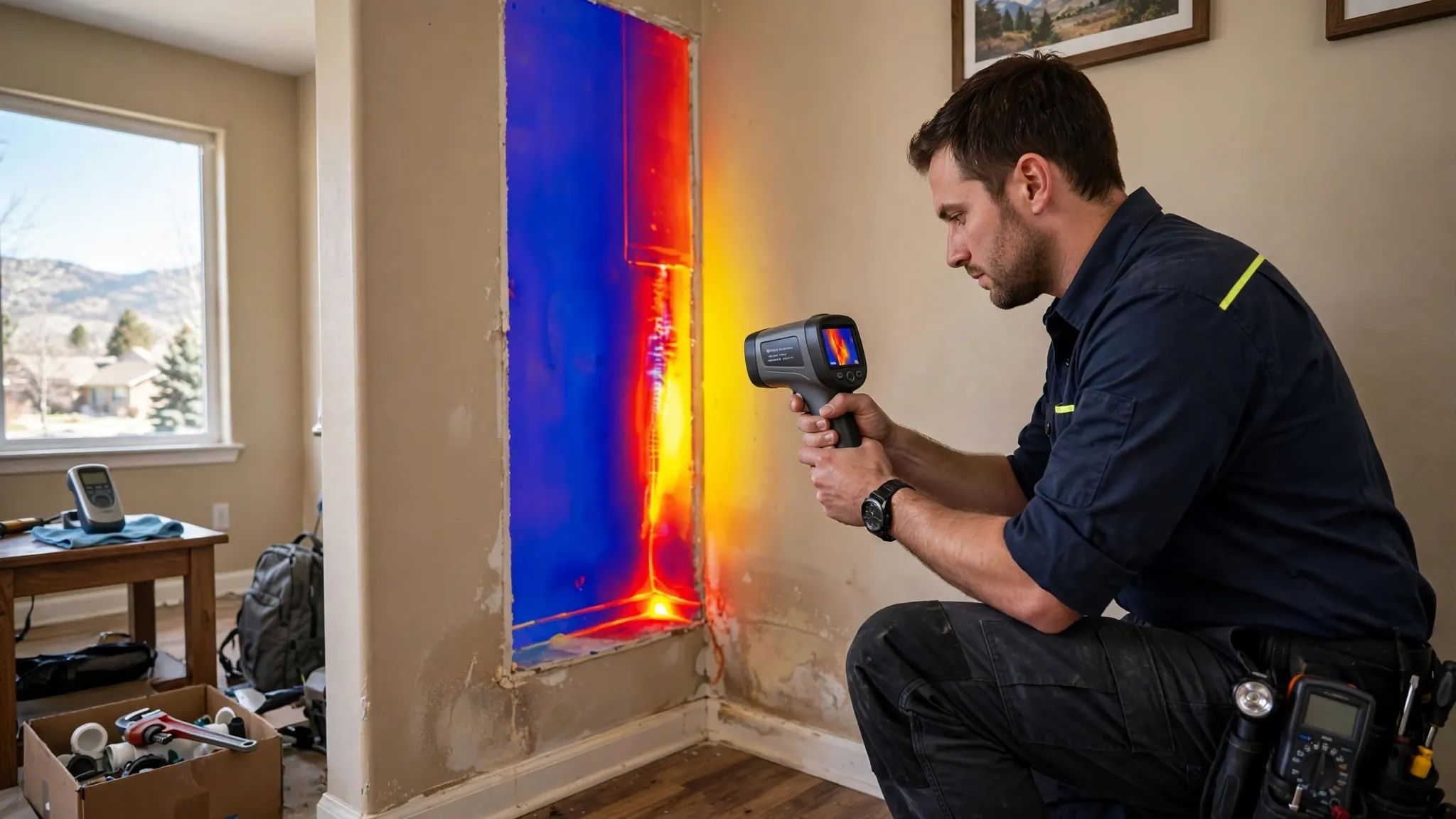
| Feeling walls and baseboards | Thermal imaging for hidden moisture |
| Meter test with fixtures off | Locating weeps inside finished walls |
| Checking visible plumbing and heater | Drying and remediating wall cavities |
| Running a fan for diagnostic airflow | Mold remediation beyond surface spots |
If you find active dripping, a bulging wall, or extensive visible growth, stop investigating and call — the situation has moved past DIY diagnosis.
How The Service Fixes It
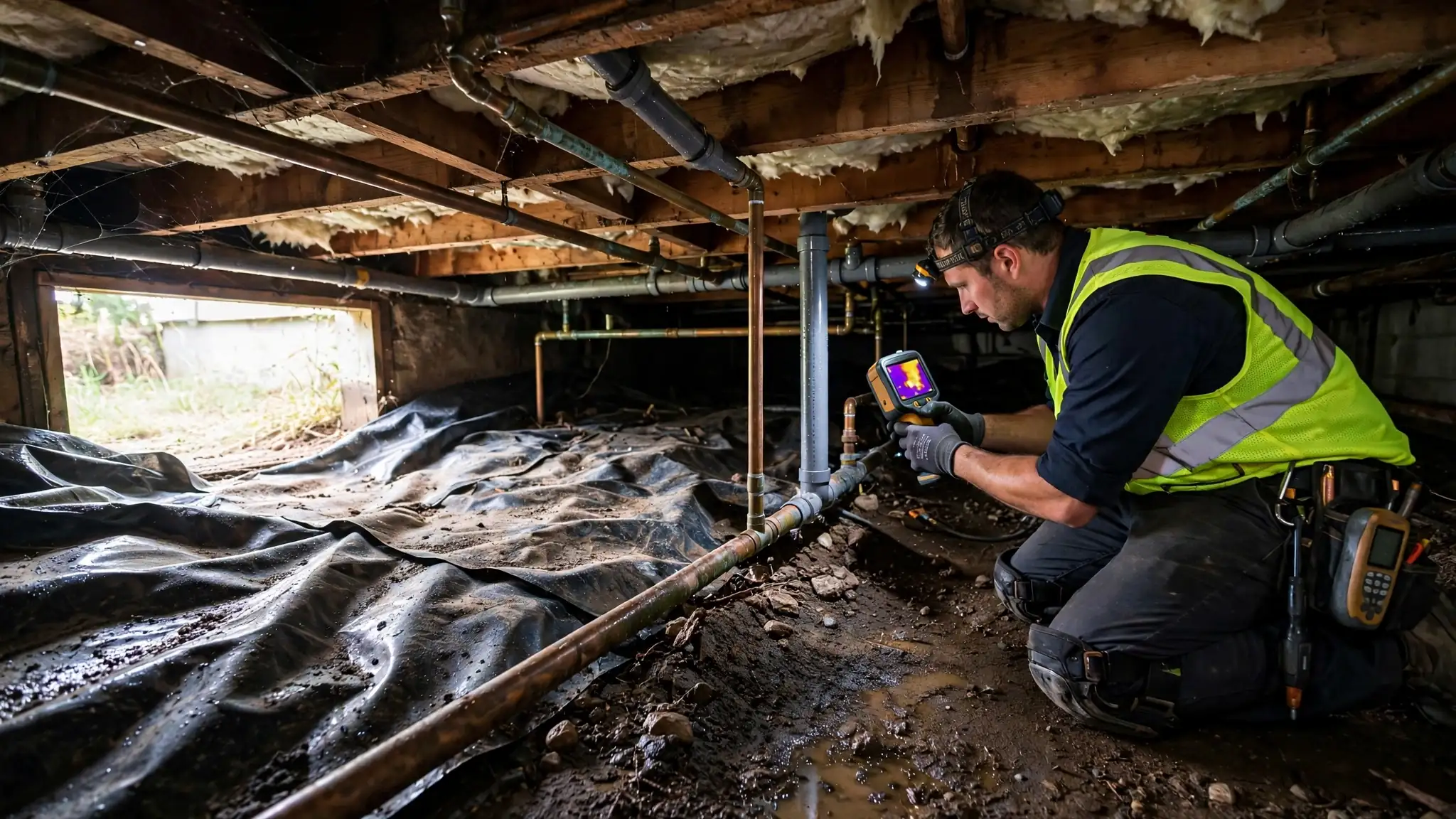
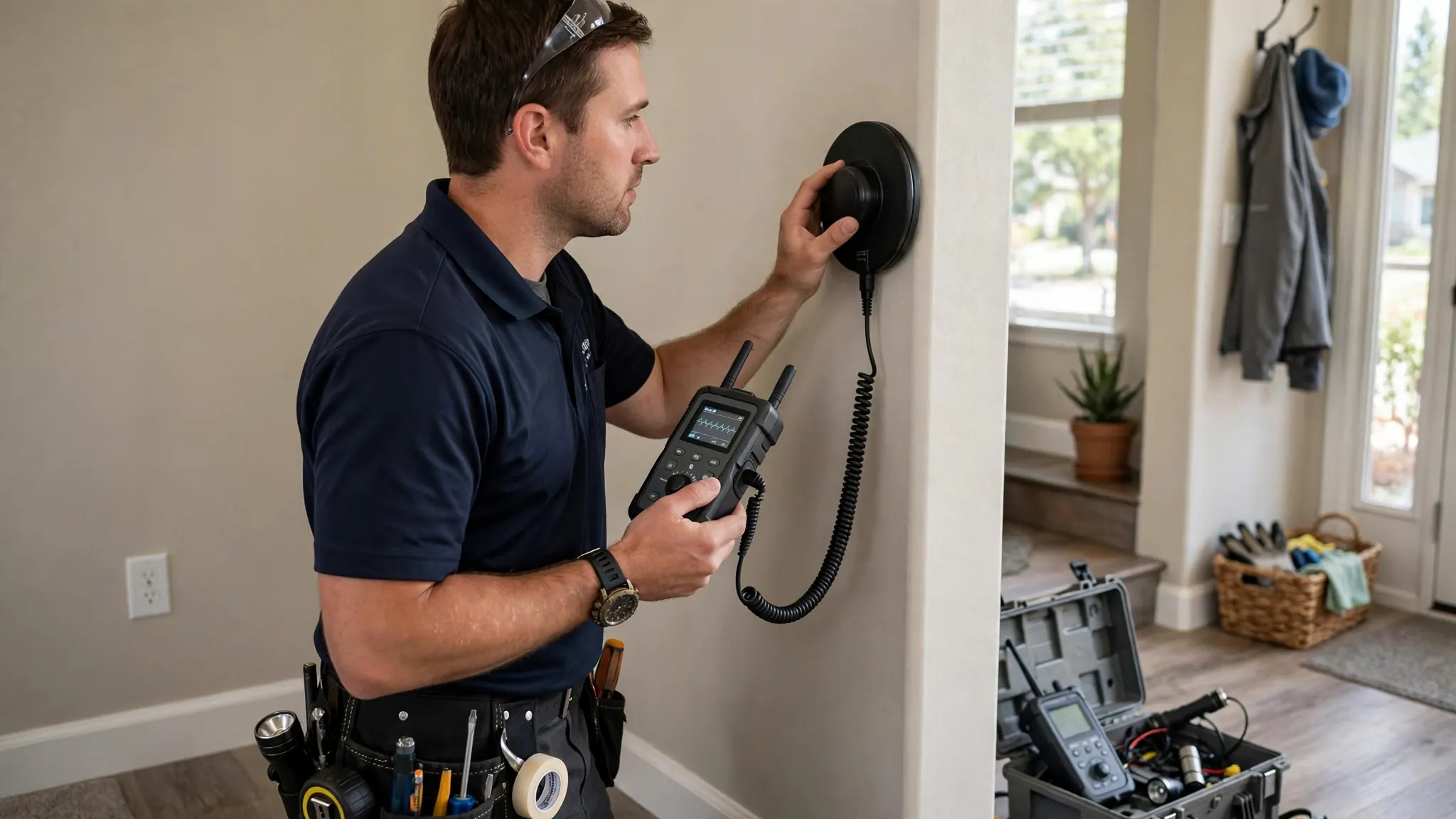
When the clues suggest plumbing, leak detection maps the moisture with thermal imaging and moisture meters, then traces it to the source — a weeping fitting, a pinhole line, or a sweating pipe run. The repair addresses the water, not just the smell.
For below-grade moisture around foundations and crawlspaces, detection distinguishes plumbing leaks from groundwater so the right fix follows. If active water is spreading, emergency leak detection is available 24/7.
Our line is answered 24/7, with 30–45 minute arrival across Broomfield. A musty basement is asking a question — we find the answer.