Water pressure that drops at one fixture usually means a clogged aerator or a single bad valve. But when pressure falls everywhere at once — upstairs and down, hot and cold — the cause sits in the main supply path: the service line, the main shutoff valve, or a leak diverting flow before it reaches the house. A hidden supply leak is one of the most common culprits, because escaping water steals pressure from every fixture downstream. This guide walks through the checks that separate the causes, and the point where professional diagnosis takes over.
Whole-house low pressure with no single-fixture cause points to the main supply. Check that the main shutoff valve is fully open, ask neighbors whether they are affected too, and run a meter test. If the meter moves with fixtures off, a supply-line leak is bleeding off your pressure — and leak detection finds where.
What To Do Right Now
Whole-house pressure loss is annoying but rarely dangerous. These checks take about 30 minutes and often identify the cause:
- Confirm the main shutoff valve is fully open. A valve left half-closed after plumbing work is a surprisingly common cause.
- Ask a neighbor. If their pressure dropped too, the issue is on the utility side — call your water provider.
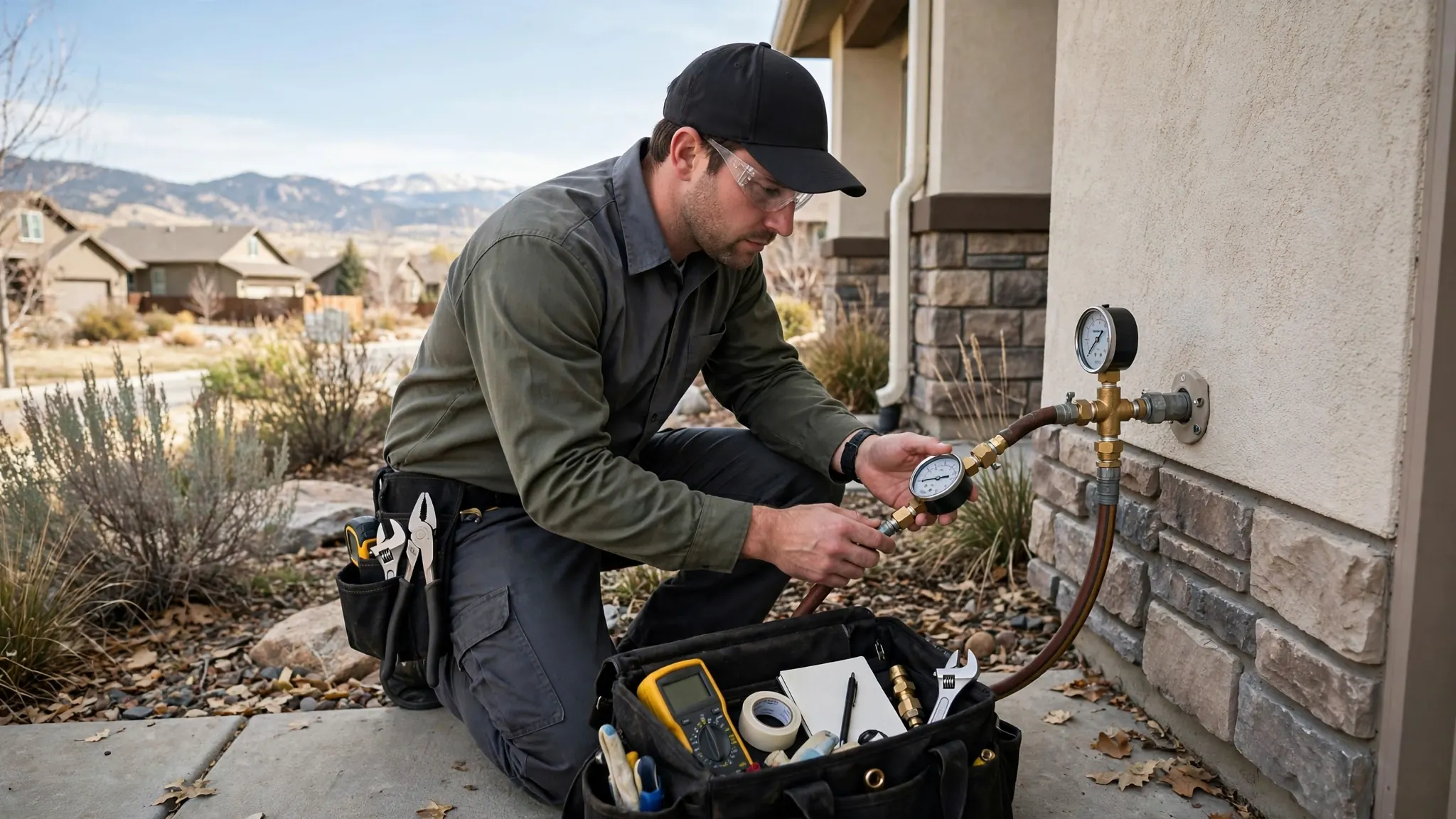
- Check the pressure regulator if you have one. A failing regulator chokes the whole house; note the gauge reading if present.
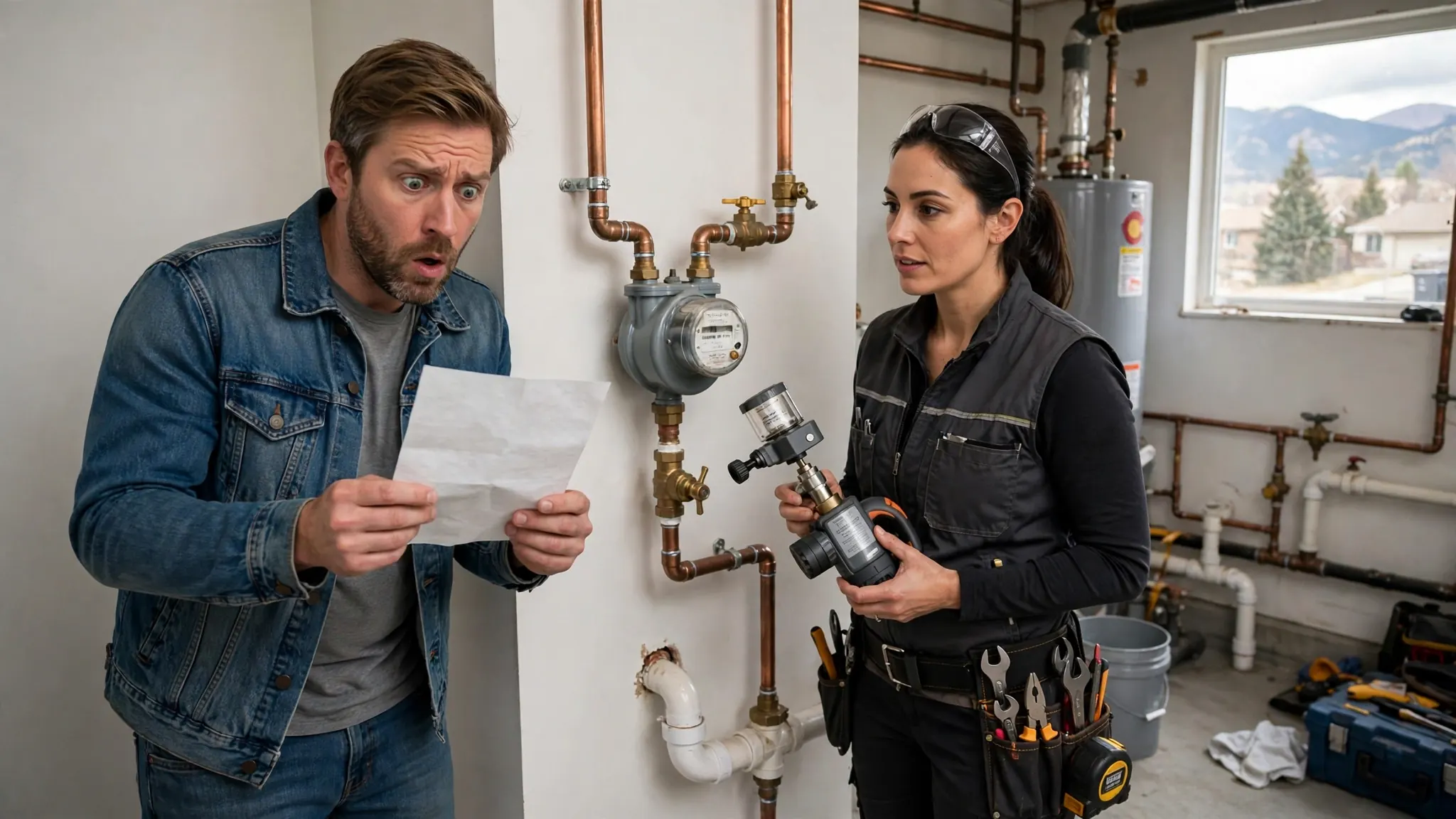
- Run the meter test with everything off. Movement confirms a leak is diverting your water underground or inside walls.
- Look and listen for leak companions: hissing, wet spots, or a high bill alongside the pressure drop.
Do not crank the regulator up to compensate before you know the cause — raising pressure on a weakened line can turn a small leak into a burst.
Signs To Look For
Pressure loss plus any of these points toward a leak rather than a restriction:
- Pressure that keeps declining week after week.
- A water bill climbing while pressure falls.
- Hissing sounds near the main line entry or in the yard.
- Wet or sunken soil along the service line's path.
- Air sputtering from faucets when first opened.
- Hot and cold both weak — a single-side problem is rarely a main leak.
Sudden total pressure loss with no water at all is different: check with the utility first for a main break or shutoff before assuming a house-side leak.
Common Causes
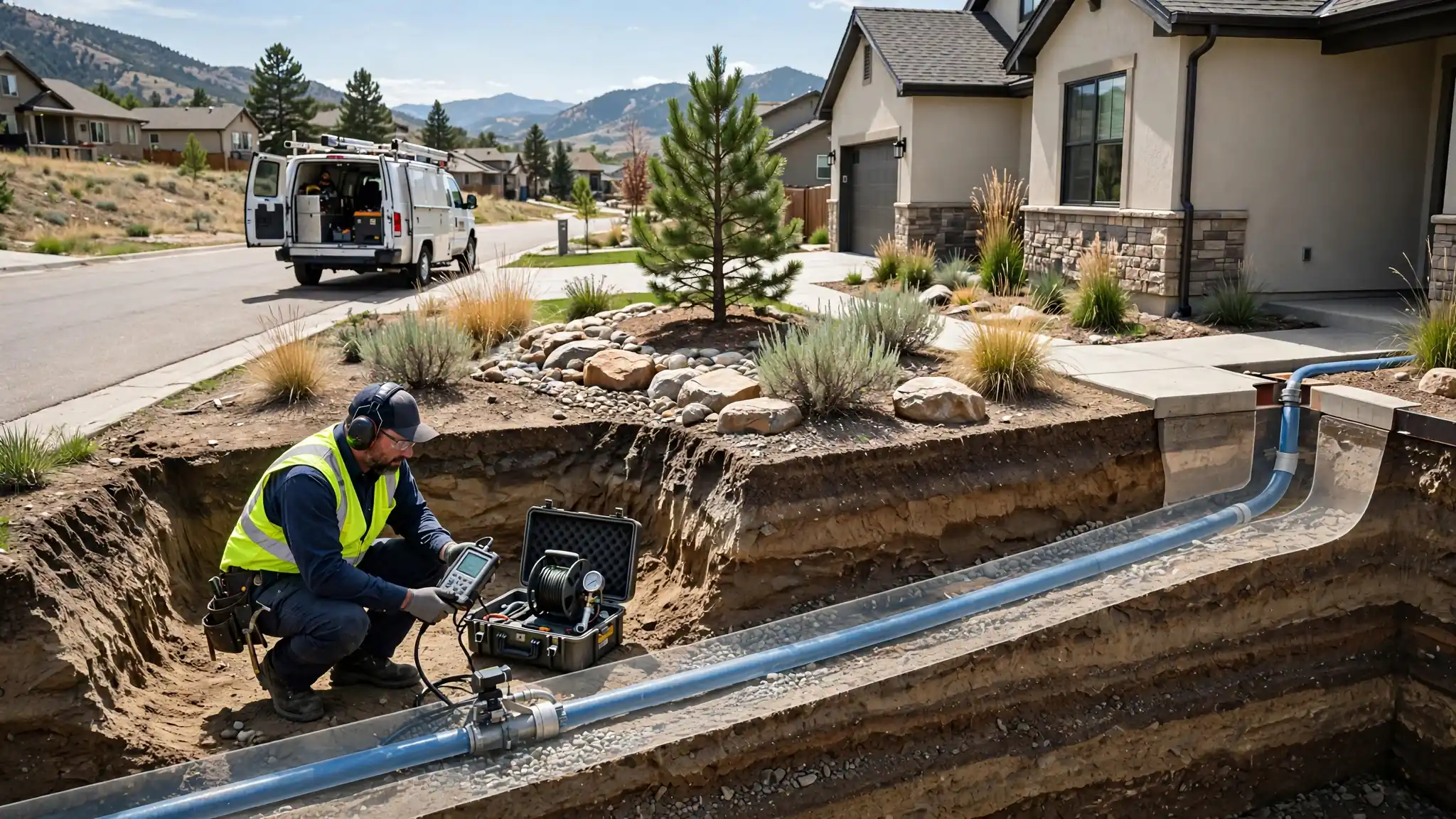
A leaking service line bleeds pressure before water ever reaches the house — the bigger the break, the weaker the flow. Corrosion pinholes, cracked joints from soil movement, and root displacement are the usual underground culprits.
Non-leak causes are equally common. A partially closed main valve, a failing pressure regulator, heavy mineral buildup in old galvanized piping, or a utility-side issue such as a main break or system maintenance can all drop whole-house pressure. That is why the neighbor check and valve check come before leak hunting.
- Supply-line leak diverting flow underground
- Main shutoff valve partially closed
- Failing pressure-reducing regulator
- Mineral scale choking old galvanized pipes
- Utility main break or system maintenance
- Partially closed meter valve at the street
Cranking up a pressure regulator to mask low pressure can over-pressurize weakened pipes and fixtures. Find the real cause first — excess pressure causes bursts.
Urgent Leak? We Answer 24/7.
Pressure suddenly gone with water surfacing? That is a line break — call now.
(720) 715-9734What Happens If You Wait
If the cause is a leak, waiting lets it grow. A pinhole that merely weakens pressure today becomes a break that floods the yard or undermines a walkway tomorrow — and the water bill climbs the entire time.
If the cause is a failing regulator or mineral-choked piping, pressure keeps declining until fixtures barely function, and sudden pressure swings can stress water heaters and appliance valves.
Either way, whole-house pressure loss never improves on its own. Identifying the cause now keeps the fix small and predictable.
Safe DIY Checks Vs. When To Call A Professional
Homeowners can rule out the simple causes quickly:
| Safe For You | Call A Professional |
|---|---|
| Verifying the main valve is fully open | Diagnosing a buried service-line leak |
| Asking neighbors about their pressure | Replacing a pressure regulator |
| Reading the meter with fixtures off | Pressure-testing the service line |
| Cleaning faucet aerators | Replacing mineral-choked supply piping |
| Checking visible valves and regulator gauge | Any excavation or line replacement |
Pressure regulators and main-line components involve the full force of the municipal supply — adjustments and replacements belong to professionals.
How The Service Fixes It
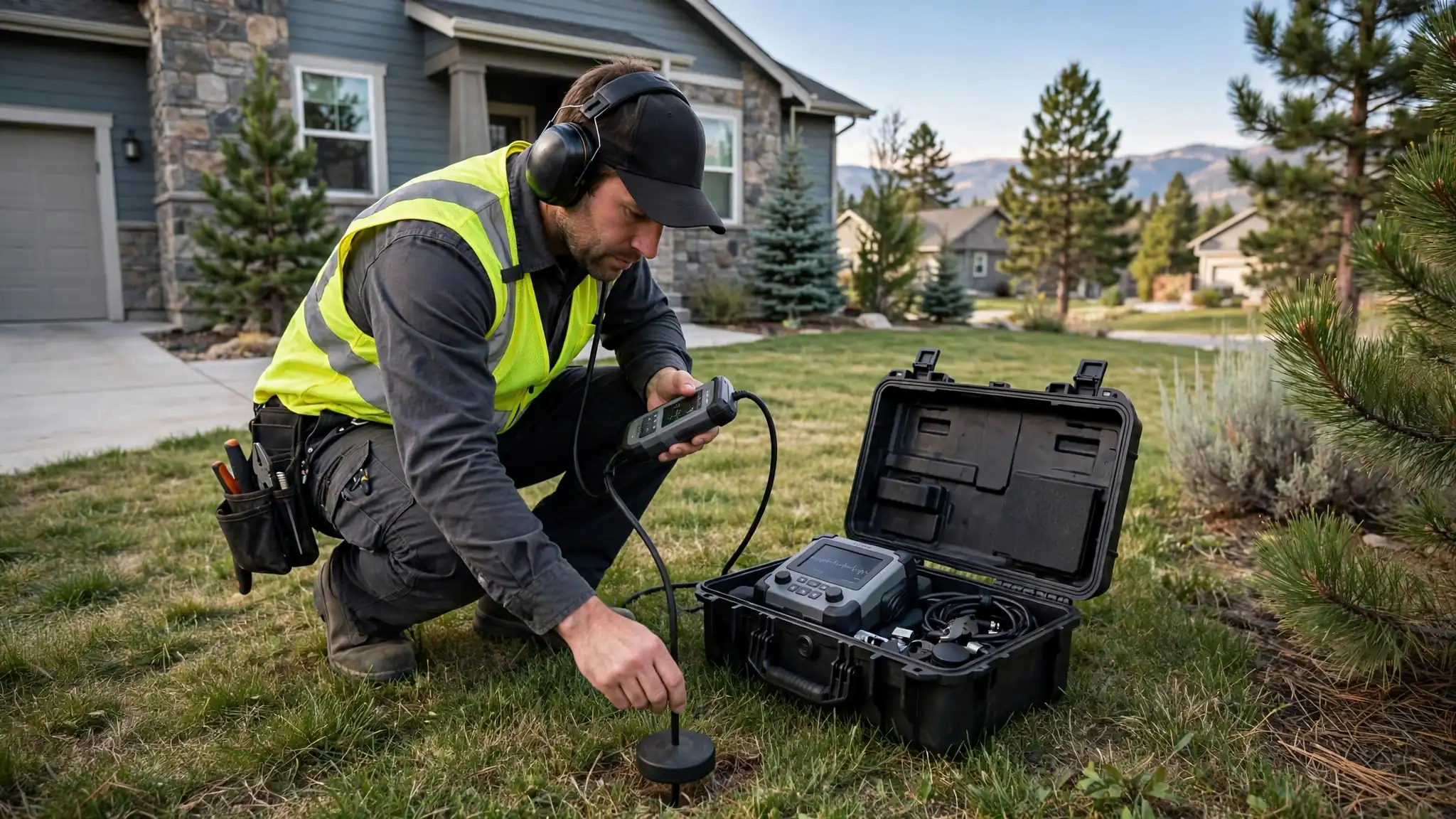
When the checks point to a leak, service-line leak detection traces the buried line from the meter to the house and listens along its path with acoustic equipment, marking the break precisely. Pressure tests confirm the diagnosis before any digging.
The repair is then targeted: a single excavation at the marked point, not a trench across the property. If pressure collapsed suddenly or water is surfacing, emergency service-line help is available 24/7.
We answer 24/7 and arrive in 30–45 minutes anywhere in Broomfield, and our detection equipment finds the pressure thief without exploratory digging.