Spring snowmelt creates foundation leaks when saturated soil pushes water against basement walls, crawl spaces, and slab edges faster than drainage can carry it away. When the ground around your home cannot absorb the melt fast enough, hydrostatic pressure builds and water finds its way through cracks, cold joints, and pipe penetrations. Not every damp spot is an emergency, but persistent seepage or standing water deserves attention. Clearing gutters, extending downspouts, and regrading low spots solve many cases. If water keeps coming in — or if you suspect a yard drainage problem — professional diagnosis can separate a drainage issue from an actual plumbing leak.
Spring snowmelt causes foundation leaks by saturating the soil around your home and forcing water through cracks and joints. Extend downspouts away from the house, clear gutters, and regrade low spots. If seepage persists or water pools under the house, get a professional inspection.
Why Spring Snowmelt Threatens Foundations In Broomfield
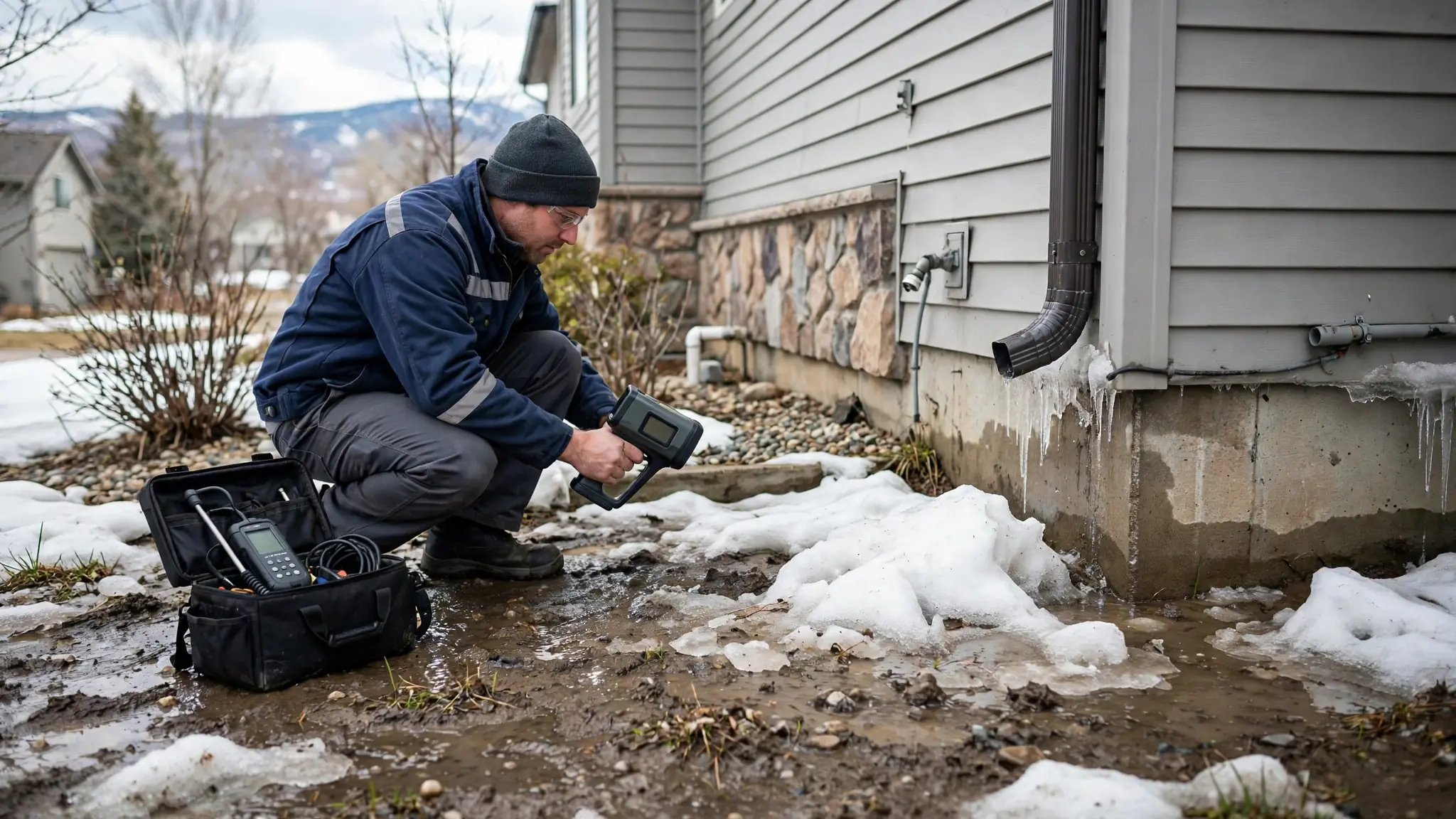
Snowmelt is a slow, sustained water load. Unlike a brief thunderstorm, melting snow can release water into the soil for days or weeks at a time, keeping the ground around your foundation saturated long after the visible snow is gone. Saturated soil holds more water against foundation walls, and that constant pressure drives moisture through any available path.
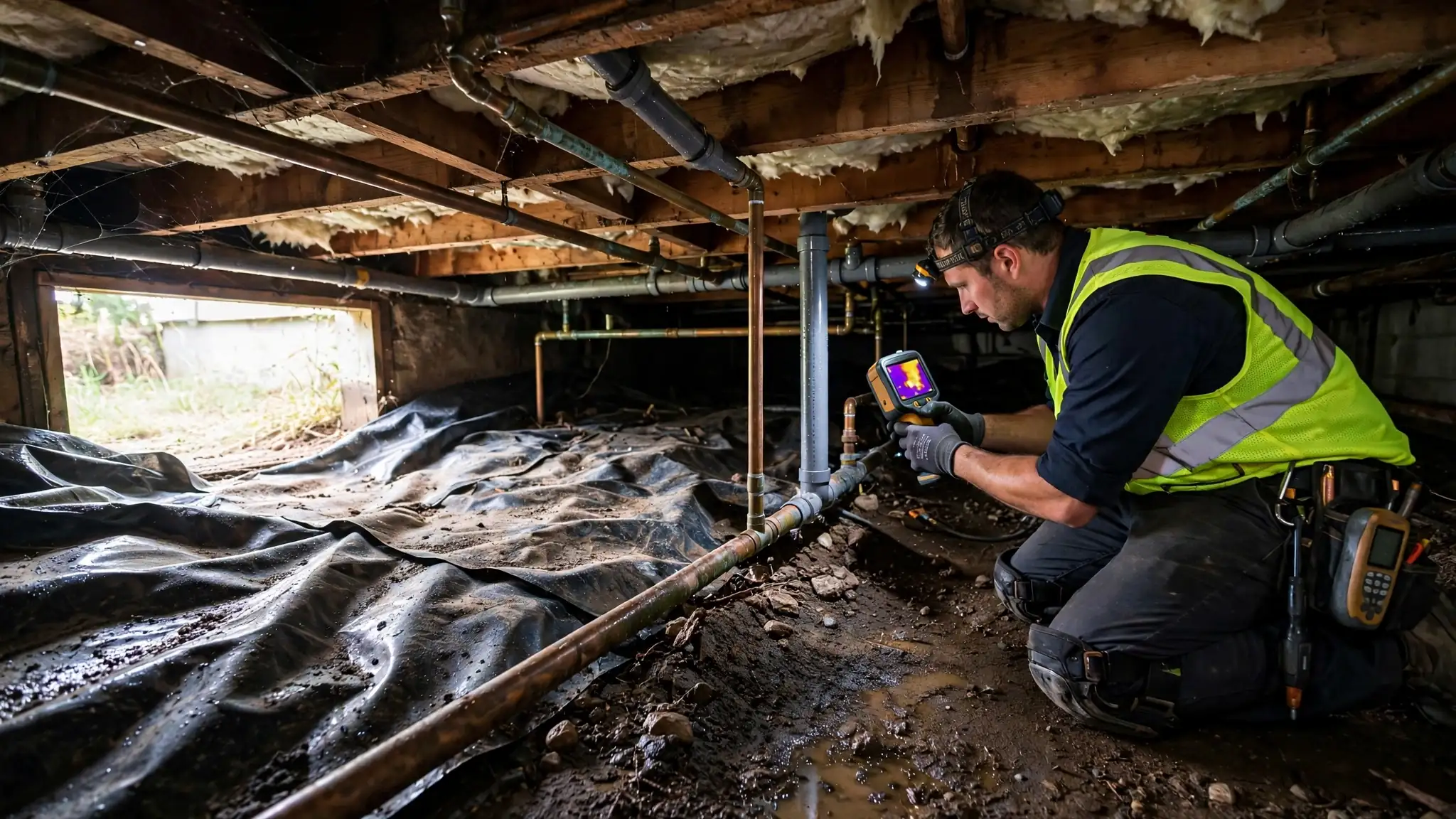
The weak points are predictable: hairline cracks in foundation walls, the joint where the wall meets the footing, pipe and utility penetrations, window wells, and the crawl space floor. Water does not need a large opening — sustained pressure can push moisture through openings too small to see from the outside. Homes with crawlspace moisture problems often notice them first in spring for exactly this reason.
Clay-heavy soils common along the Front Range make the problem worse because clay drains slowly and swells when wet, pressing even harder against foundation walls. If your yard stays soggy for days after the snow melts, the soil around your foundation is likely holding water in the same way.
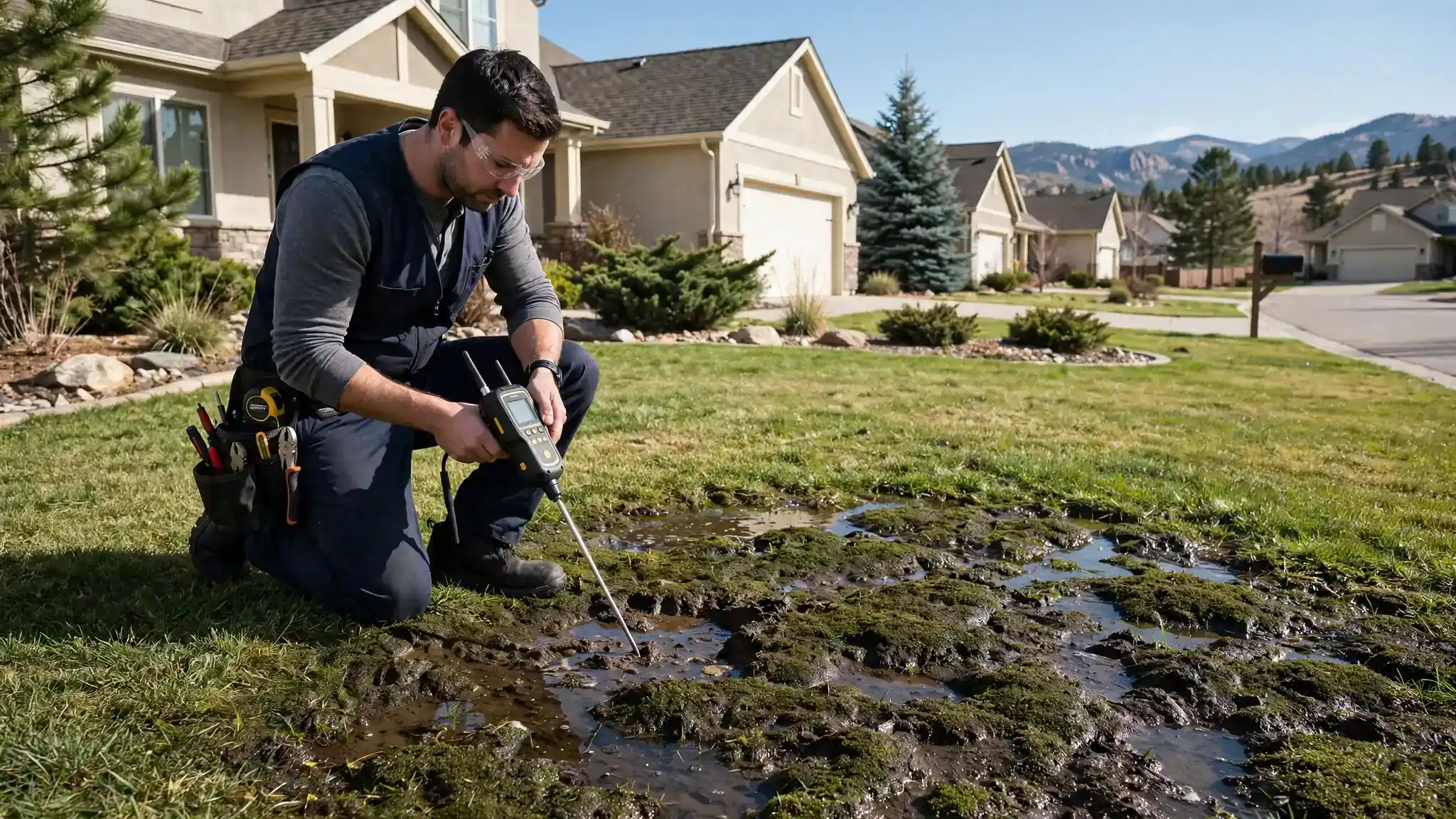
Spring seepage through foundation walls is usually groundwater, not a plumbing leak. But a wet spot in the yard that never dries long after the melt ends can indicate a buried water line leak instead — the timing tells the story.
Prevention Checklist
These steps reduce the water load against your foundation during the melt season. Most are simple exterior maintenance that pays off every spring.
- Extend downspouts at least several feet from the foundation so roof runoff discharges well away from the house instead of pooling at the walls.
- Clean gutters and downspouts of leaves and debris so meltwater flows freely instead of overflowing at the eaves.
- Check grading around the foundation — soil should slope away from the house so surface water runs outward, not back toward the walls.
- Shovel or move piled snow away from the foundation rather than letting large drifts melt directly against the walls.
- Keep window wells clear of snow, ice, and debris, and confirm the drains in them are open.
- Inspect foundation walls for new cracks before the melt begins, and seal minor non-structural cracks with appropriate sealant.
- Make sure sump pumps, if you have them, run properly and discharge away from the house before spring arrives.
- Watch the crawl space or basement during the first big melt — early detection of seepage keeps a small problem small.
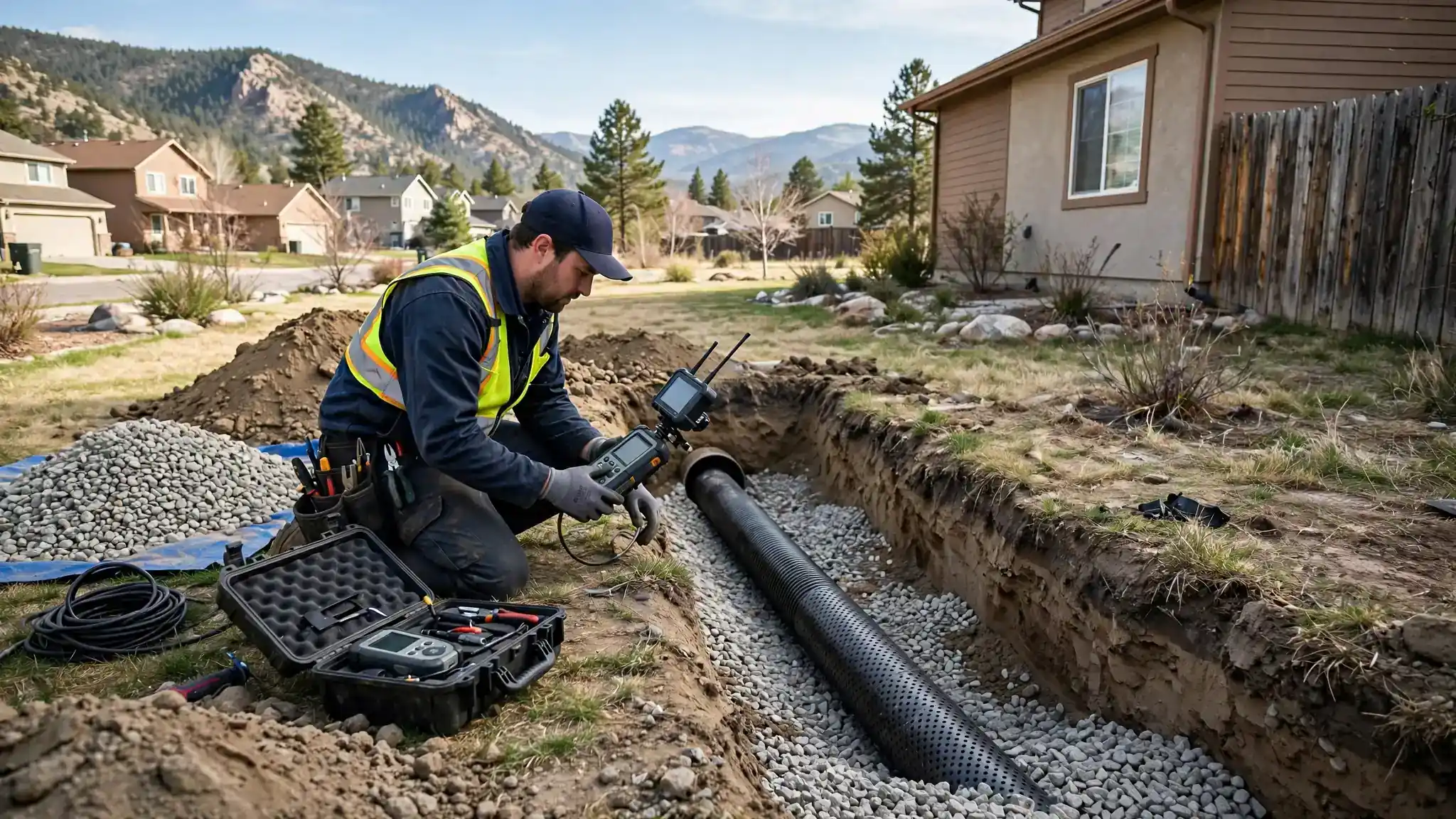
- If pooling persists, consider a yard drain or French drain to intercept surface water before it reaches the foundation.
Warning Signs
Distinguish normal spring dampness from signs of a real problem. One or two of these after a heavy melt may be manageable; several together warrant a closer look.
- Water visibly seeping through foundation wall cracks or the wall-to-footing joint during or after the melt.
- Standing water in a crawl space or basement that returns after being pumped or dried out.
- Efflorescence — white, powdery mineral deposits on interior foundation walls — indicating repeated moisture migration through the concrete.
- A musty odor that appears or intensifies in spring, suggesting persistent dampness under the house.
- New or widening cracks in foundation walls, especially horizontal cracks or stair-step cracks in block walls.
- Peeling paint or deteriorating drywall on lower walls, which signals moisture wicking upward from below.
What To Do If It Happens
If you find water coming in during the melt, work through these steps in order. Stay safe — never wade into standing water where electrical equipment or outlets may be involved.
- Move valuables, boxes, and stored items off the floor and away from the seepage area.
- Redirect obvious water sources: move snow piles away from the wall, extend a downspout with a temporary splash block, or clear a blocked window well.
- Use a wet vacuum or pump to remove standing water, and run fans and a dehumidifier to dry the space once the inflow stops.
- Take photos of where the water enters — the location tells a professional whether it is groundwater seepage or something else.
- If water keeps returning after the melt slows, or if you cannot tell whether it is groundwater or a plumbing leak, call for leak detection to identify the source.
- For active flooding that threatens the home, our emergency leak detection line is answered 24/7 with 30–45 minute arrival.
Urgent Leak? We Answer 24/7.
Water actively entering your home this spring? Call now — we answer 24/7 and arrive in 30–45 minutes anywhere in Broomfield.
(720) 715-9734How The Service Helps
Not all spring water is groundwater. A saturated yard can also expose an existing underground pipe leak that was invisible during dry months — a sprinkler zone that stays soggy days after watering, or a wet patch that never dries, often points to plumbing rather than melt.
Professional leak detection separates the two. Moisture meters trace how far water has spread, acoustic equipment listens for pressurized leaks that groundwater cannot explain, and pressure testing confirms whether a supply line is losing water. If the problem is drainage, we tell you that too — our job is finding the true source, and sometimes the true source is the soil, not a pipe.
Spring is also the ideal time to check systems that sat idle all winter. Irrigation laterals that froze and cracked often reveal themselves as the ground warms — catching them early keeps a small repair from becoming a waterlogged lawn.