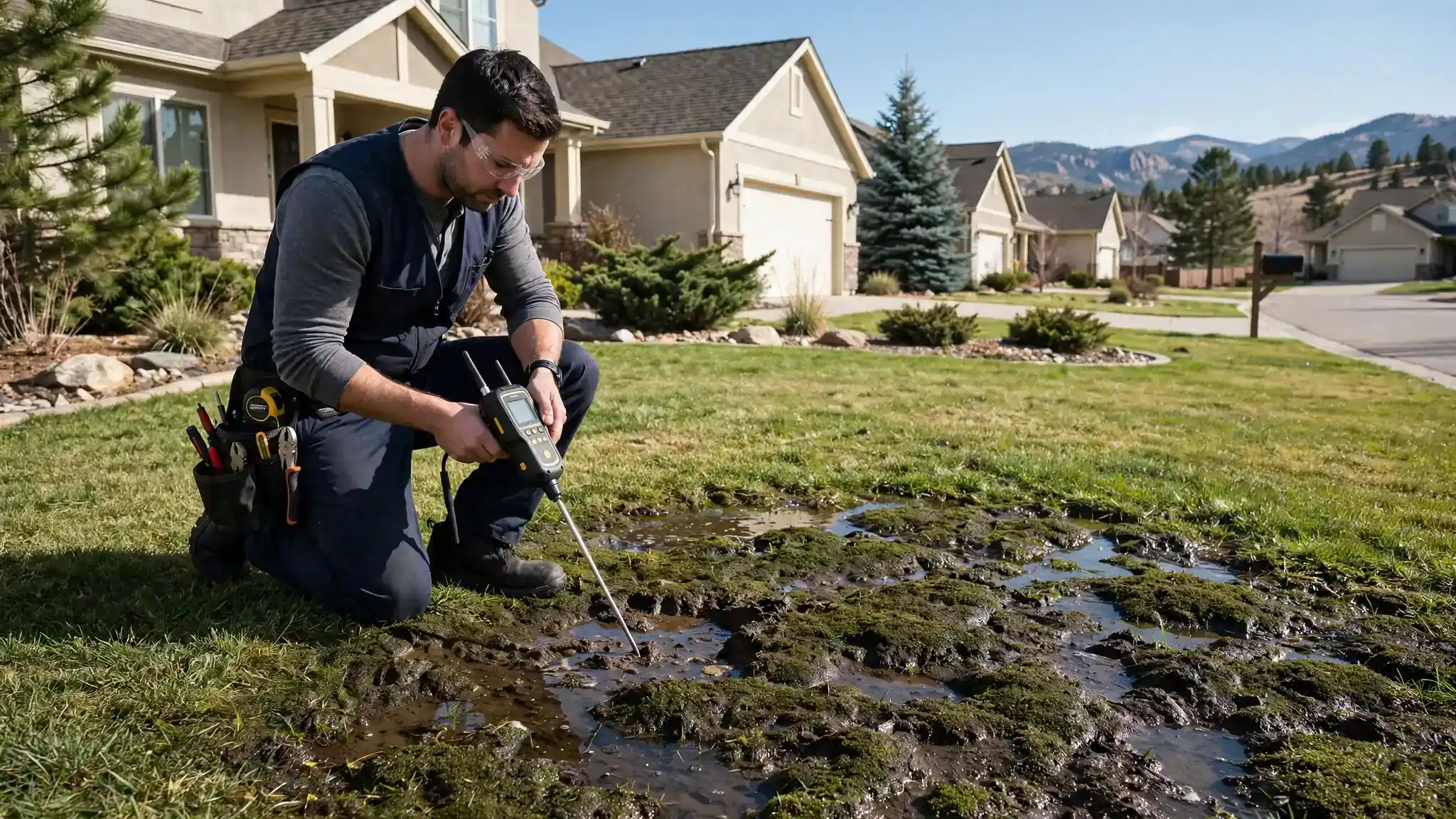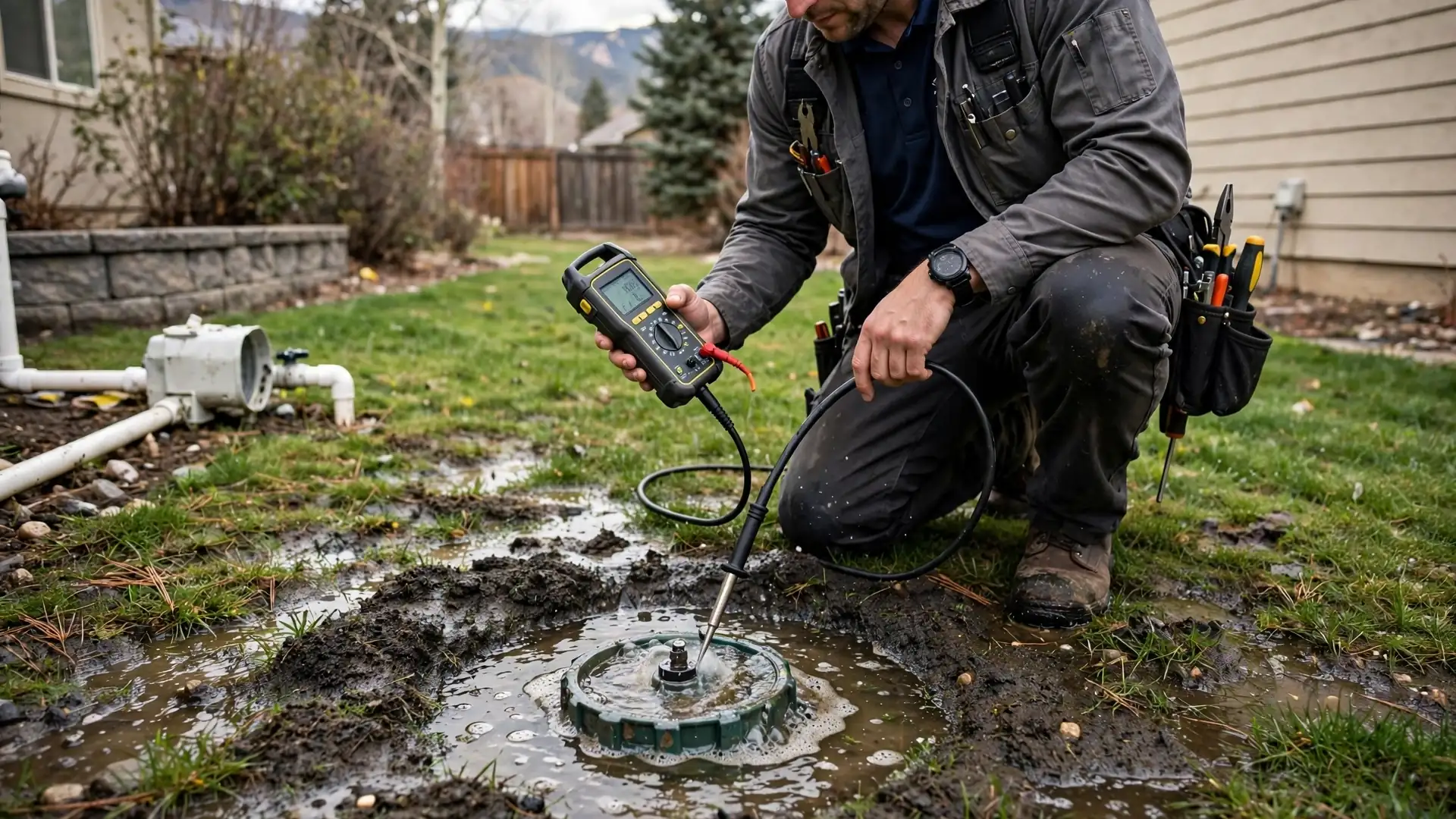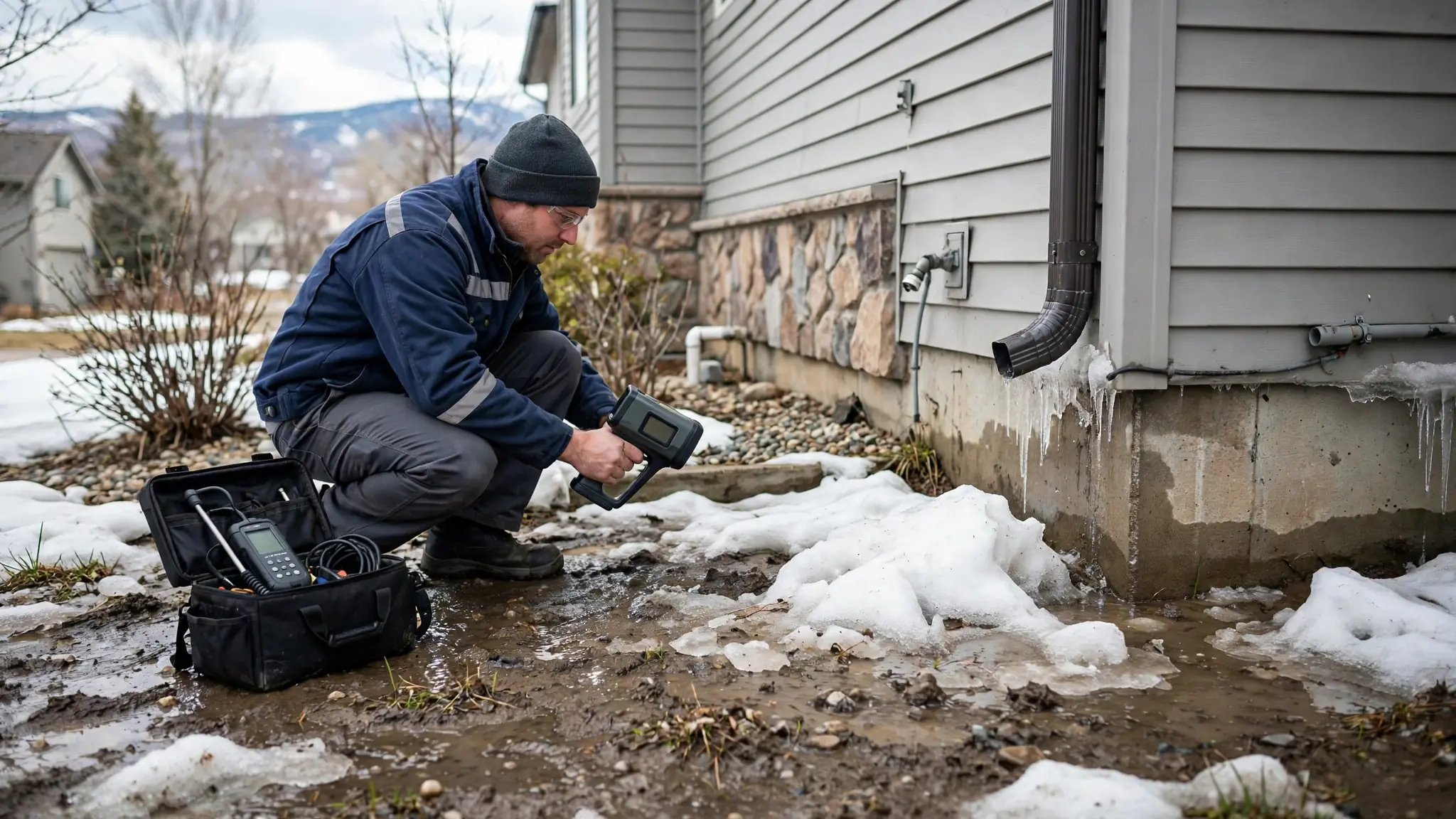
Water that has nowhere to go finds somewhere to go — usually the worst possible place. Poor yard drainage shows up as soggy lawn areas that never dry, mulch beds that wash out, water pooling against the foundation, or a basement and crawlspace that stay damp after rain — see spring snowmelt and foundation leaks for the seasonal side of this. The fix depends on where the water is: water moving across the surface needs a surface solution, while water saturating the soil needs a subsurface one. Before assuming drainage is the whole story, it is worth ruling out a hidden underground leak, which can mimic drainage problems. This guide covers both drain types and how to match them to your situation.
How Yard Drainage Is Supposed To Work
A well-drained yard moves water away from the house and off the property in a controlled path. Grading — the slope of the soil — does most of the work: soil should fall away from the foundation so surface water runs outward, not inward. Gutters and downspouts collect roof water and release it far enough from the house that it does not pool at the foundation. When grading is flat or slopes toward the house, or when downspouts dump water right at the foundation, the yard's drainage system has to compensate — and often cannot.
Clay-heavy and compacted soils make everything harder because water soaks in slowly and moves sideways instead of down. Spring snowmelt and heavy storms deliver more water than the soil can absorb at once, so the excess has to go somewhere on the surface or through the shallow subsurface. That is exactly the water French drains and surface drains are built to manage.
French Drains: How They Work
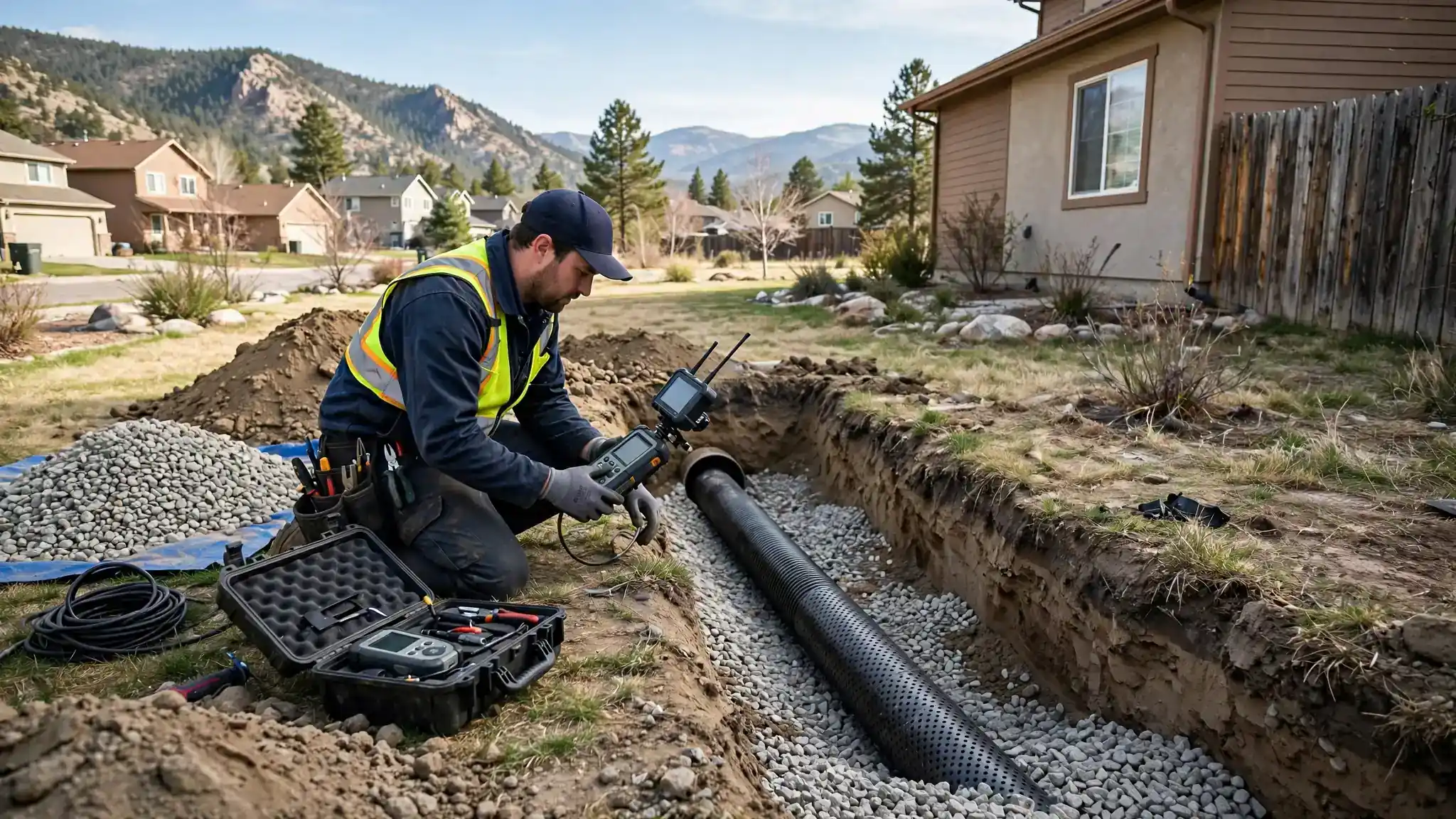
A French drain is a subsurface system: a trench filled with gravel containing a perforated pipe, usually wrapped in filter fabric. Groundwater and saturated soil water seep through the gravel, enter the pipe through its perforations, and flow by gravity to a discharge point — a lower area of the yard, a dry well, or a storm system where permitted. Because it works underground, a French drain is invisible once installed; the surface above it looks like normal lawn or landscaping.
- Best for: soggy lawn areas, water seeping toward foundations through soil, high water table spots
- Collects: subsurface water and soil saturation, not surface runoff
- Needs: consistent downhill slope from collection area to discharge point
- Watch out for: clogging from silt and root intrusion over time without maintenance
The filter fabric matters more than most people realize. Without it, fine soil particles wash into the gravel and pipe, slowly choking the system until it stops working — sometimes years later, long after the installer is gone. A properly built French drain with fabric, clean gravel, and adequate slope can work for decades; a shortcut version fails quietly and the yard gets soggy again.
Surface Drains: How They Work
Surface drains — catch basins, channel drains, and area drains — collect water you can see. A grated basin sits flush with the ground at a low spot; water flows in, enters a solid (non-perforated) pipe, and is carried away by gravity. Channel drains are the long narrow grates you see across driveways and patios. These systems handle volume: the sheet of water running across a patio during a downpour, the low corner of the yard that becomes a pond every spring.
- Best for: standing water on patios, driveways, and low yard spots; downspout discharge management
- Collects: surface runoff — water moving across the ground, not through it
- Needs: grates kept clear of leaves and debris; solid pipe to the discharge point
- Watch out for: clogged grates and basins, which turn the drain into a dam
Maintenance is the whole game with surface drains. A catch basin full of leaves does not drain — it holds water exactly where you did not want it. Seasonal cleaning of grates and basins, especially in fall, keeps the system working. If a surface drain that used to work suddenly stops, the basin or the pipe downstream is usually clogged rather than the design being wrong, which is where professional drain cleaning comes in.
Which System Fits Your Problem
The choice comes down to where your water is. Many yards need both — they solve different problems and are often installed together.
| Symptom | Likely Water Type | Usually The Fix |
|---|---|---|
| Soggy lawn that never dries | Subsurface saturation | French drain |
| Water pooling on patio or driveway | Surface runoff | Channel or area drain |
| Mulch washing out of beds | Surface runoff | Surface drain + regrading |
| Damp foundation wall or crawlspace | Subsurface seepage | French drain along foundation |
| Downspout water pooling at house | Concentrated surface flow | Extend downspouts + surface drain |
| Whole low corner becomes a pond | Both | Surface drain feeding a French drain system |
One caution before investing in drainage: a wet spot in the yard that never dries may not be a drainage problem at all. A leaking underground water line feeds water into the soil continuously, creating a soggy patch that no drain will fix because the source never stops. If the soggy area persists through dry spells, or your water bill has crept up, rule out a leak first — drainage work built over an active leak is money wasted.
Keeping Drainage Systems Working
- Clean catch basin grates and remove leaves and debris each fall and after storms.
- Flush surface drain lines periodically so sediment does not settle and harden.
- Keep soil and mulch from burying drain grates — they need to sit at the low point, exposed.
- Extend downspouts at least several feet from the foundation; never let them discharge at the wall.
- Watch French drain discharge points during rain to confirm water is actually exiting.
- Do not drive heavy equipment over buried drain lines or plant deep-rooted trees above them. If a sprinkler zone stays soggy days after watering, check the irrigation schedule before blaming the drains.
- Re-check grading every few years — soil settles and slopes change over time.
Drainage systems fail gradually and quietly. The discharge point check is the simplest diagnostic you have: during a good rain, water should be visibly leaving the system at its outlet. If it is not, something between the collection point and the outlet is blocked, and that is worth investigating before the next storm, not after.
Sketch where your drains, discharge points, and downspout extensions are. Future you — or a technician — will be grateful. Buried systems are forgotten systems, and a simple map prevents accidental damage from digging and speeds up any service visit.
When To Bring In A Professional
Call when water reaches the foundation or enters a crawlspace or basement, when a drainage system that used to work stops working, or when you cannot tell whether the water is a drainage issue or a leak. Standing water against a foundation is not a wait-and-see situation — it finds its way in through the smallest openings and creates far more expensive problems inside.
A professional visit usually starts with distinguishing the source: drainage water follows weather, while leak water does not. If it is drainage, cleaning or extending the system often solves it. If it is a leak, detection pinpoints it. We answer 24/7 across Broomfield, and for active flooding situations our emergency leak detection gets help moving fast.