Snaking a main line restores flow by punching through a blockage. Hydro jetting restores the pipe — high-pressure water scours the interior walls, stripping away the grease, sludge, and mineral scale that has been narrowing the line for years. The difference matters when a line keeps clogging: if residue left behind by snaking is the reason the blockage reforms, jetting breaks the cycle. Not every line needs it, and not every line can handle it. This guide covers how hydro jetting works, the situations where it earns its keep, and the limits to respect.
What Hydro Jetting Actually Is
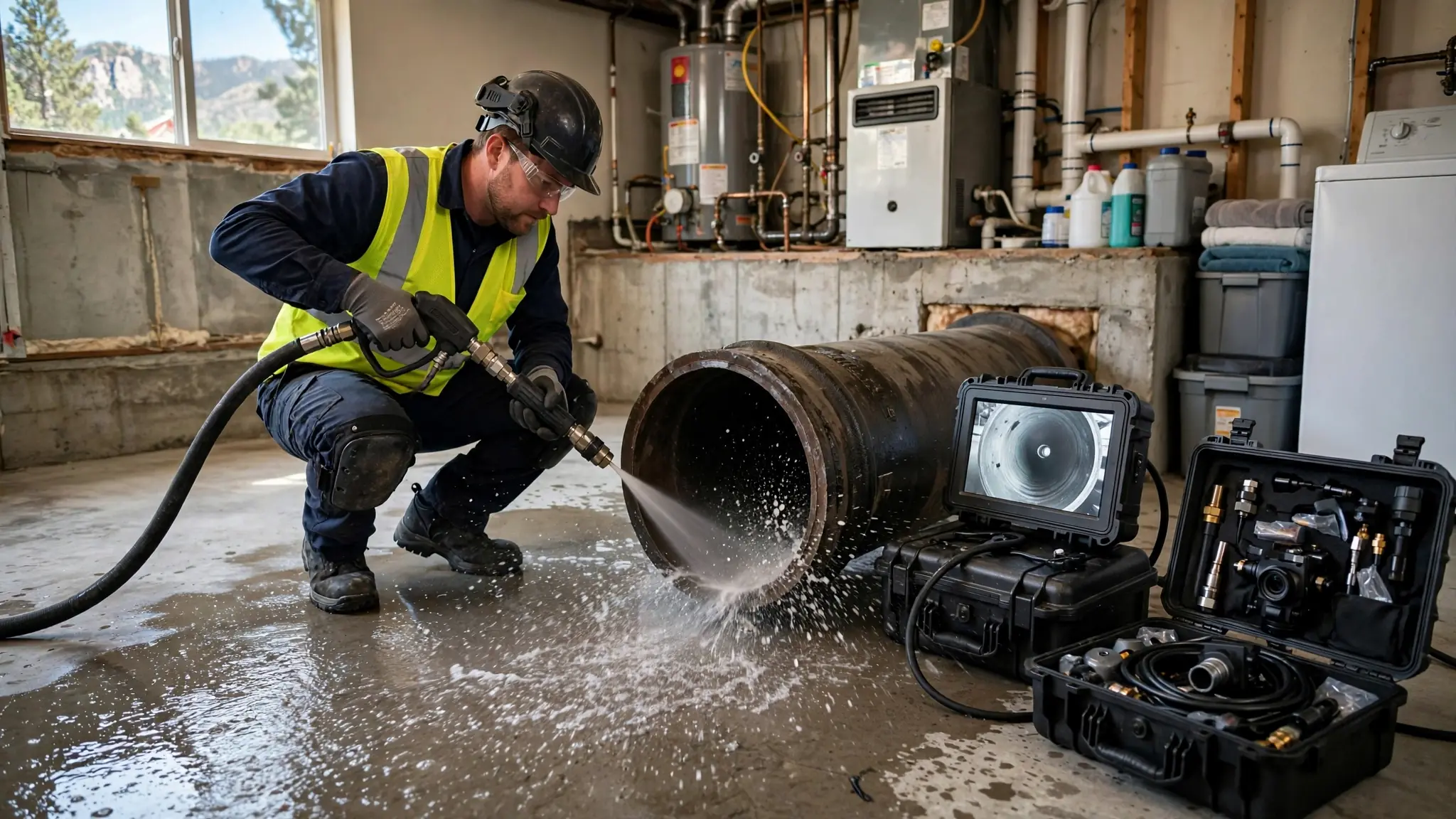
Hydro jetting feeds a specialized nozzle into the sewer line on a high-pressure hose. Water jets fire backward from the nozzle head, which does two things at once: the rearward thrust pulls the nozzle forward through the pipe, and the pressurized streams scour the pipe walls in every direction. The loosened debris washes downstream and out of the system. Unlike a snake, which cuts a path through the center of a blockage, jetting cleans the full circumference of the pipe back toward its original diameter.
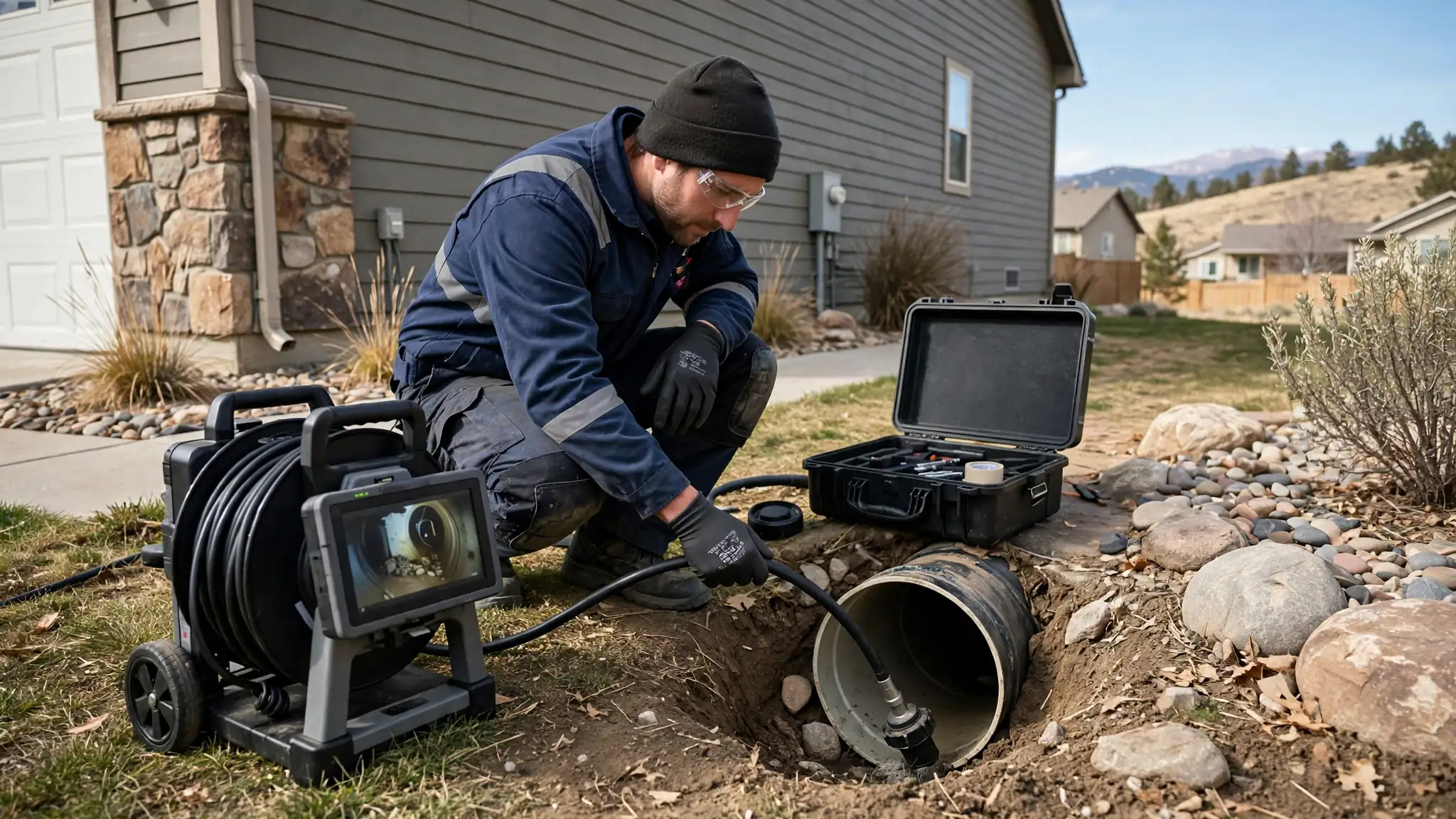
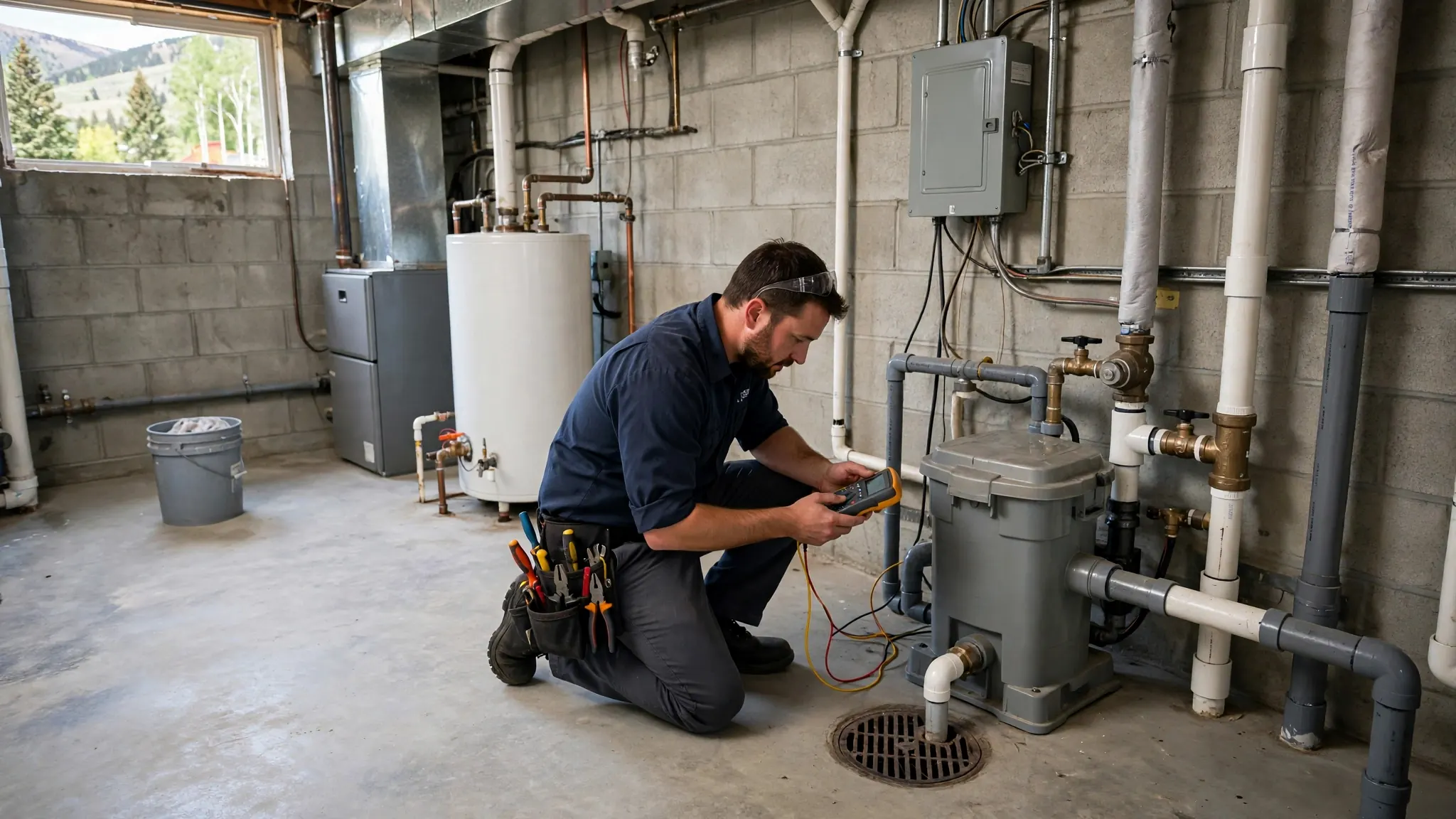
The equipment is scaled to the job. Main sewer lines get high-flow machines with nozzles designed for 3- to 6-inch pipe; the pressure and flow are matched to the pipe material and condition. A professional adjusts both — the goal is to clean the pipe, not to damage it. This is why a camera inspection usually comes first: it shows what the line is made of, what condition it is in, and whether jetting is safe for it.
When Snaking Is Not Enough
Snaking fails in predictable ways. It punches a hole through soft blockages but leaves the coating on the pipe walls untouched, so grease lines clog again within months. It cannot remove hardened scale or mineral deposits at all. And it tells you nothing about what it just pushed through — the blockage clears, the technician leaves, and the underlying condition remains a mystery until the next backup.
- The same main line clogs again within months of being snaked
- Grease buildup coats the pipe walls and keeps narrowing the opening
- Sludge and sediment have settled along long flat runs of pipe
- Mineral scale has hardened on the inside of older metal piping
- Multiple partial blockages exist along the length of the line
- A camera inspection shows heavy wall coating but structurally sound pipe
The recurring-clog pattern is the clearest signal. If a main line clog returns on a schedule — every few months, like clockwork — the pipe walls themselves are the problem, and only a method that cleans the walls will break the cycle. Businesses with grease-heavy lines face the same pattern; see commercial floor drain backups. Jetting is that method.
How A Jetting Job Runs, Step By Step
- Camera inspection first: the technician verifies the pipe material, condition, and the nature of the blockage, and confirms there are no collapsed sections.
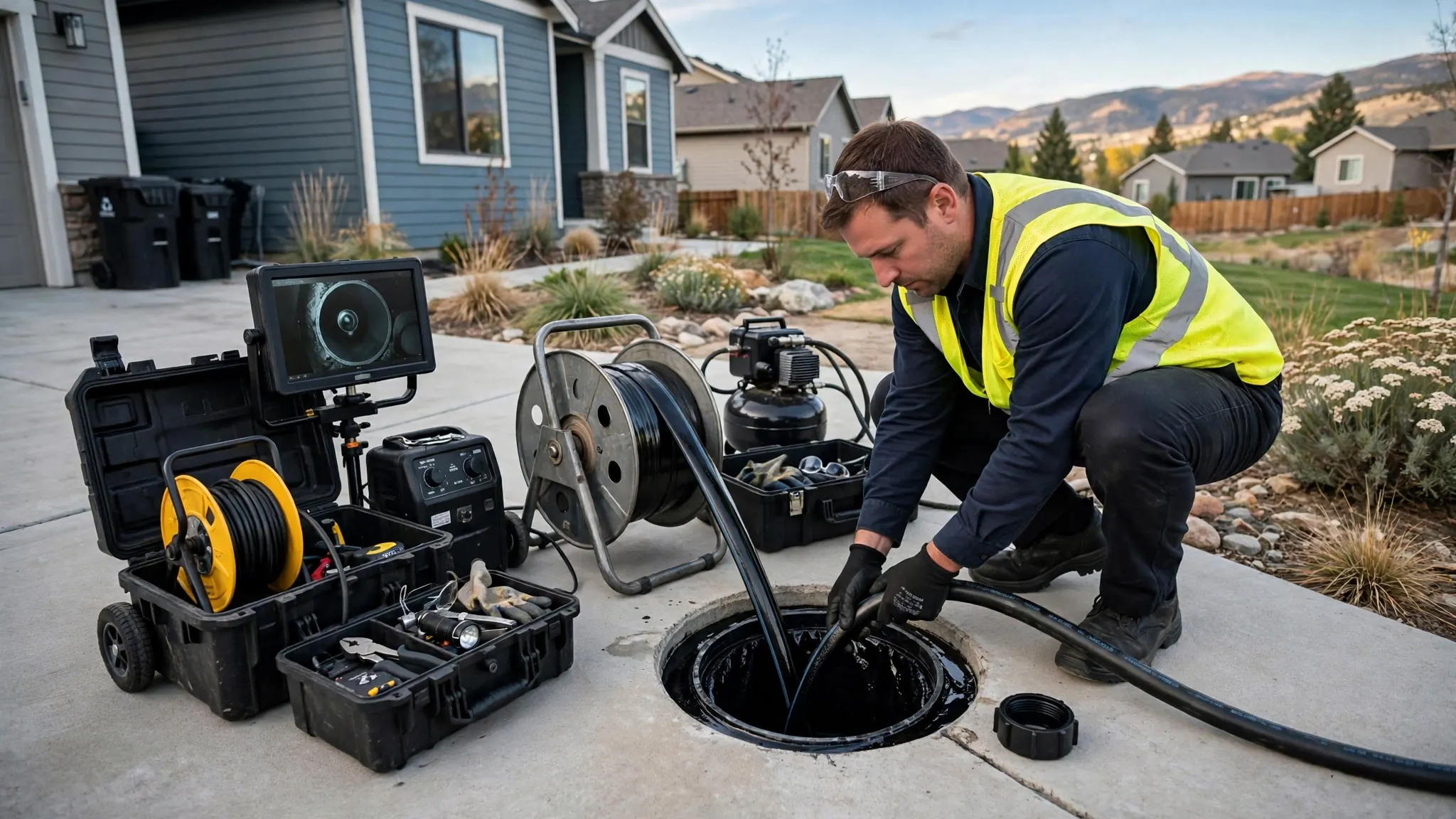
- Access setup: the hose enters through a cleanout or pulled toilet; downstream flow is confirmed so debris has somewhere to go.
- Downstream pass: the nozzle runs from the upstream end toward the street or tank, scouring walls and pushing debris ahead of it.
- Targeted passes: stubborn areas — heavy grease, scale bands, root clusters — get additional focused passes.
- Final camera check: the line is inspected again to confirm the walls are clean and the full diameter is restored.
- Flow test: fixtures are run to verify the line drains freely under real-world load.
The final camera check is what makes jetting verifiable. You can see the before and after: coated, narrowed pipe becoming clean pipe with its full opening restored. Ask to see the footage — a reputable technician will show you. That documentation also establishes a baseline for the line's condition, which helps with future maintenance planning and, in some cases, with insurance documentation.
Jetting Vs Other Clearing Methods
Each clearing method has a job it does best. Matching the method to the condition of your line is what keeps the fix lasting.
| Method | What It Does | Best Situation |
|---|---|---|
| Hand or machine snake | Punches through soft blockages to restore flow | Simple clogs, quick restoration, tight budgets |
| Hydro jetting | Scours the full pipe wall clean with pressurized water | Grease, sludge, scale, recurring clogs |
| Root cutting | Slices through root masses at joints and cracks | Confirmed root intrusion (often followed by jetting) |
| Enzyme / bacterial treatments | Slowly digests organic buildup over weeks | Light maintenance between professional cleanings |
| Pipe repair or lining | Fixes the pipe structure itself | Collapsed, bellied, or broken sections |
Jetting and snaking are often used together rather than as competitors: the snake opens the initial path, and the jetter follows to clean the walls. Root cutting similarly pairs with jetting — cut the roots, then wash the debris out. The methods complement each other, and a good technician will tell you which combination your line actually needs.
When Jetting Is Not The Right Call
Jetting is powerful, and power demands respect for the pipe. It should not be used on lines the camera shows to be collapsed, severely bellied, or structurally compromised — pressurized water can worsen a failing pipe. Very old, fragile piping gets a cautious assessment first; in some cases a gentler clearing method or a repair is the safer recommendation. Jetting also cannot fix what is not a buildup problem: a broken pipe, a separated joint, or a line crushed by soil movement needs repair, not cleaning.
This is the honest limit of the method, and it is why the camera inspection matters so much. A company that recommends jetting without looking inside the line first is guessing. The inspection takes a little extra time and protects you from paying for a cleaning that cannot solve a structural problem.
If the camera reveals a cracked, collapsed, or bellied section, cleaning around the damage does not fix it. In that situation the conversation shifts from clearing methods to repair options such as trenchless sewer repair — and knowing the difference saves you from paying for repeated cleanings that were never going to hold.
What To Expect: Cost Factors And Aftercare
Jetting costs more than a basic snaking visit because the equipment, water supply, and time involved are greater — but it also lasts longer when buildup is the problem, which changes the real comparison. Access matters: a readily accessible cleanout keeps the job straightforward, while a line that requires pulling a toilet or creating access adds labor. The length and condition of the line factor in as well.
Aftercare is simple. Avoid pouring grease down drains, keep wipes and paper towels out of the system, and consider a maintenance schedule if your line has a history of buildup — many commercial kitchens and older homes benefit from periodic jetting before problems return. A follow-up camera inspection in a year or two shows how the line is holding up and whether the interval is right. For ongoing trouble, our main line clearing service includes the camera work that keeps the diagnosis honest. If you are unsure whether the trouble is the line or the system beyond it, main line clog vs septic issue explains how to tell.