A single slow drain is a local problem. Every drain slowing down at once is a system problem — and the two systems it could be are very different. A main sewer line clog is a blockage in the single pipe carrying all your wastewater away. A septic issue is a failure somewhere in an on-site treatment system: the tank, the drain field, or the pipes connecting them. The symptoms overlap heavily, but the fixes do not, so telling them apart matters. Start by knowing which system your property uses — that one fact eliminates half the possibilities immediately.
How The Two Systems Differ
A home on a municipal sewer system sends all wastewater through one main line to the city sewer. There is no tank, no drain field, and nothing to pump — the pipe either flows freely or it is blocked. A home on a septic system sends wastewater to a buried tank on the property, where solids settle and liquid flows out to a drain field that absorbs it into the soil. Septic systems have more parts that can fail: the tank can fill with solids, the drain field can saturate, baffles can break, and the soil itself can stop absorbing.
| Municipal Sewer | Septic System | |
|---|---|---|
| Wastewater goes to | City sewer main under the street | Buried tank and drain field on the property |
| Typical failure | Clog or break in the main line | Full tank, saturated drain field, broken components |
| Key maintenance | Keeping the line clear of roots and grease | Pumping the tank on a regular schedule |
| Who fixes the line | Homeowner owns the lateral to the main | Homeowner owns the entire system |
| Warning sign unique to it | Cleanout full of standing water | Soggy drain field or sewage odor in the yard |
Most homes in established Broomfield neighborhoods connect to the municipal sewer system, while some properties on larger or more rural lots use septic. If you are unsure, your property records or water utility bill will tell you. Everything below assumes you have confirmed which system you have — or helps you figure it out from the symptoms.
Signs Pointing To A Main Line Clog
A main line clog produces a consistent pattern: everything drains slowly, and fixtures interact with each other. These are the classic tells.
- Multiple drains slow down at the same time — sinks, tubs, showers, and toilets together
- Toilets bubble or gurgle when another fixture drains, like a washing machine or tub
- Water backs up in a low fixture (tub or shower) when a toilet is flushed
- Sewage odor from drains, especially floor drains at the lowest level
- The main cleanout cap shows standing water or overflows when fixtures run
- Problems appeared suddenly rather than building up over weeks
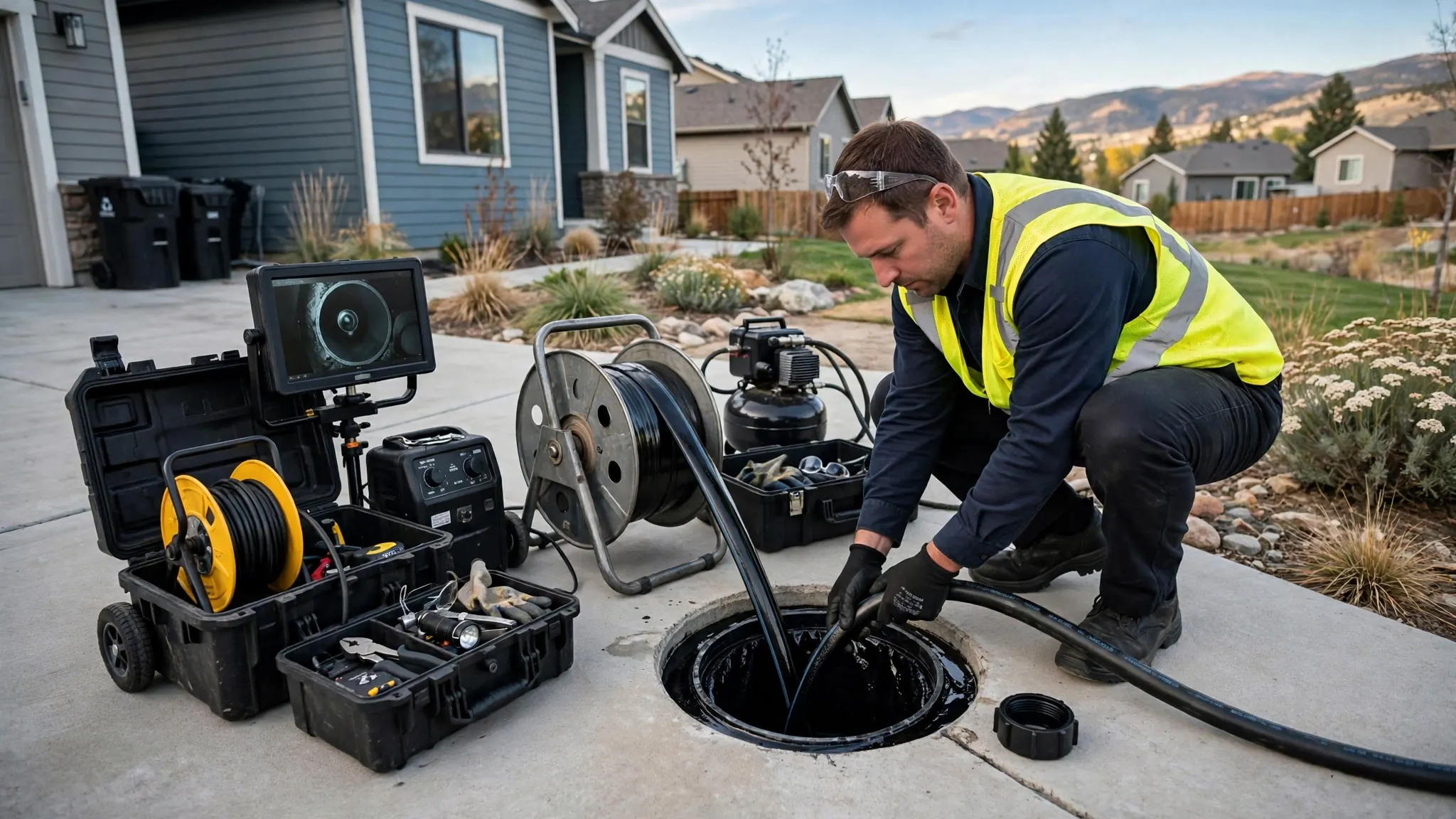
The cleanout check is the most decisive one a homeowner can do. Find the main cleanout — usually a capped pipe near the house foundation or at the property line — and carefully remove the cap. Standing water or sewage visible inside means the blockage is downstream of that point, in the main line. A dry cleanout while indoor fixtures back up means the restriction is inside the house plumbing. Either way, you have bracketed the problem without any special tools.
Signs Pointing To A Septic Problem
Septic failures develop their own signature, often tied to the drain field and the tank rather than the pipes inside the house.
- Drains slow down gradually over weeks, worst after heavy water use like laundry day
- Soggy, spongy ground or standing water over the drain field area
- Sewage odors outdoors near the tank or drain field, not just at indoor drains
- Unusually lush, green grass growing over the drain field compared to the rest of the yard
- Gurgling and slow drainage that returns soon after the tank was supposedly fine
- It has been years since the tank was last pumped
The drain field tells the story for septic systems. A healthy field absorbs liquid steadily; a saturated or failed field cannot, so effluent surfaces or backs up into the house. Heavy rain can temporarily overwhelm a marginal drain field, which is why septic problems sometimes appear after wet weather and ease off when things dry out. If your issues follow rainfall patterns, that points toward the septic system rather than a simple pipe clog.
Simple Checks You Can Do Safely
- Confirm which system you have — check property records, your water bill, or look for a septic tank lid or drain field in the yard.
- Note the pattern: sudden and total suggests a main-line clog; gradual and weather-linked suggests septic.
- Check the main cleanout for standing water to locate a sewer-side blockage.
- Walk the yard over the drain field (septic homes) for soggy spots, odors, or surfacing effluent.
- Think about timing: when was the septic tank last pumped? When did symptoms start?
- Run one fixture at a time and watch others — fixtures affecting each other means a shared downstream restriction.
Do not open a septic tank yourself. Tanks contain toxic gases and the lids are heavy; inspection and pumping are jobs for a septic professional. Likewise, do not pour chemical drain cleaners into a struggling system — they can kill the bacteria a septic tank depends on and damage pipes without clearing a main-line blockage. If sewage is backing up into the home, stop using water and call for help rather than trying to force the system through.
Wastewater backing up into sinks, tubs, or floor drains should be treated as contaminated. Keep people and pets away from it, avoid the affected fixtures, and do not try to bail it out with household containers. Professional cleanup and disinfection are part of resolving the problem safely.
What Each Problem Needs
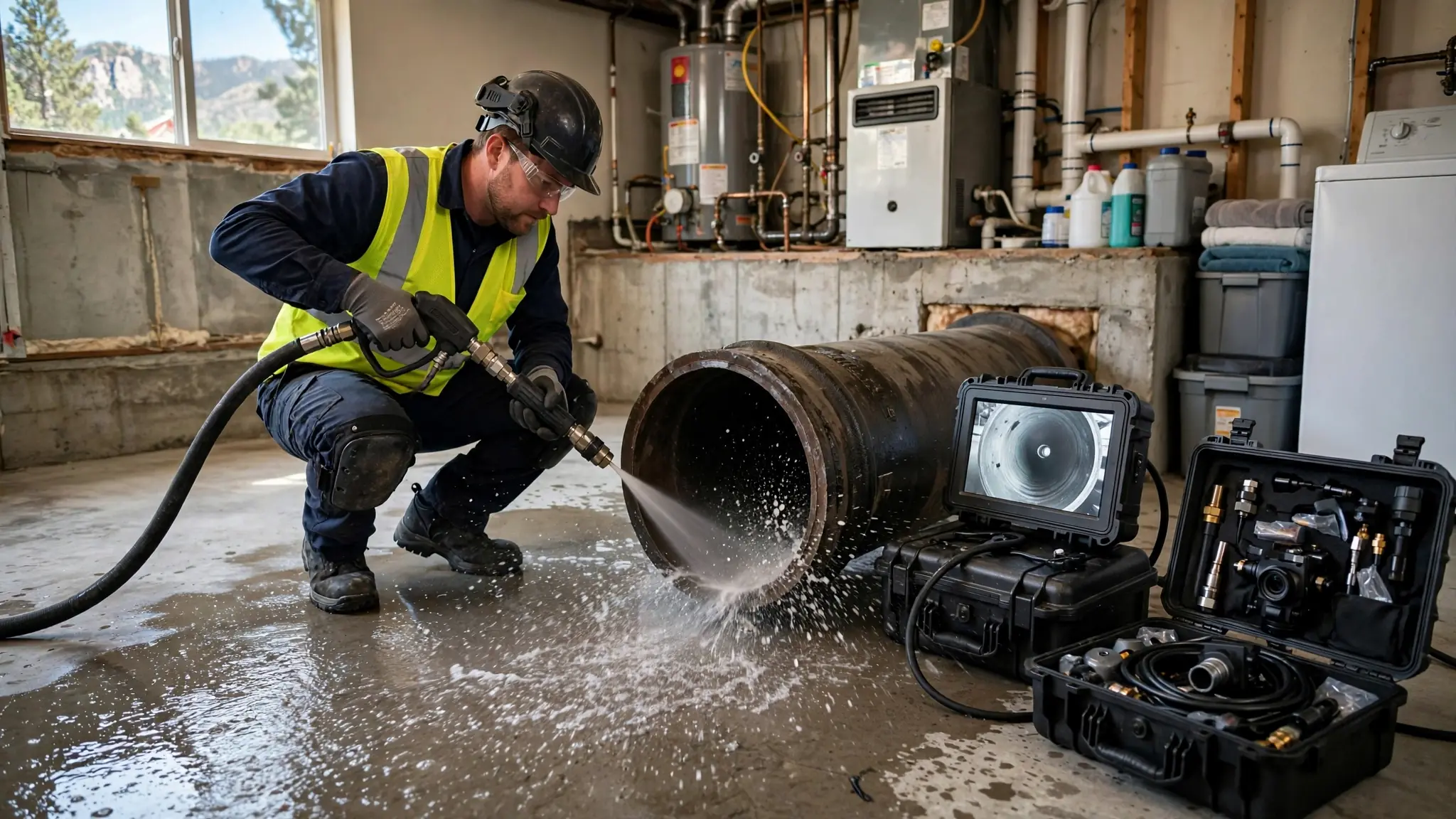
A main sewer line clog needs the blockage located and removed — usually by snaking, hydro jetting, or root cutting, guided by a camera inspection. The fix is in the pipe. Our main line clearing service handles exactly this: find the restriction, remove it, and verify flow is restored. If the camera shows a collapsed or bellied section of pipe, clearing alone will not hold, and the damaged section needs repair — see trenchless sewer repair and epoxy lining for how that is handled without full excavation.
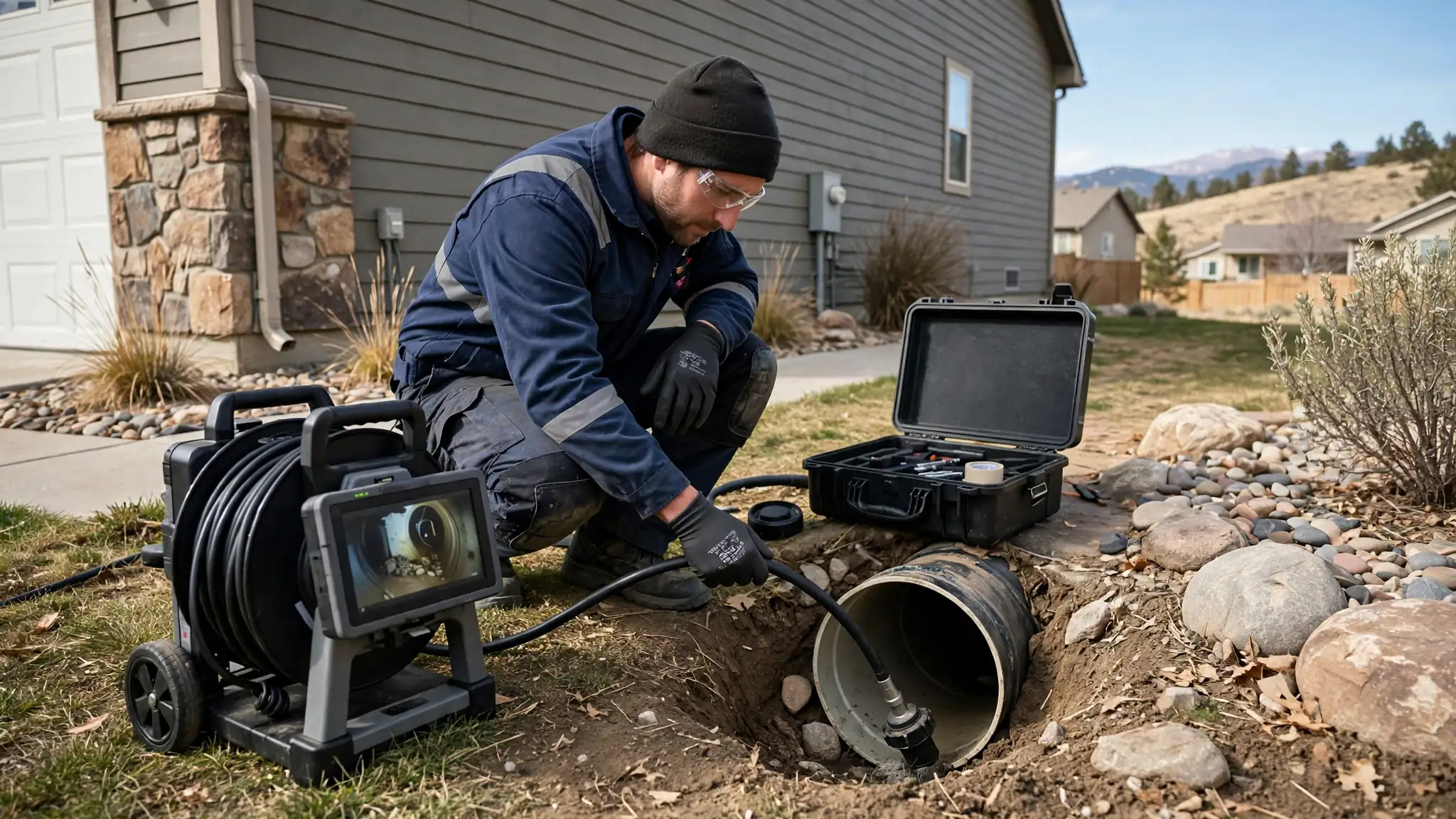
A septic issue needs a septic professional — someone who pumps tanks, inspects baffles and drain fields, and understands soil absorption. Pumping a full tank often resolves the immediate symptoms, but a failed drain field is a larger project. This is a different trade from drain clearing, and calling the right specialist first saves time. When the symptoms are ambiguous, a camera inspection of the main line can rule a clog in or out, which tells you whether you need a drain specialist or a septic contractor.
When It Becomes An Emergency
Sewage actively backing up into the home through multiple fixtures is urgent regardless of which system you have. Stop using water, keep clear of the affected areas, and get professional help fast. Our emergency main line service covers main-line blockages any time of day — we answer 24/7 and arrive in 30–45 minutes across Broomfield. For septic emergencies like a surfacing drain field or a tank alarm sounding, a septic contractor is the right urgent call. For urgent hidden water leaks, our emergency leak detection is available around the clock.
If the situation is slow drains without active backup, it is not an emergency — but it is not something to ignore either. Main-line clogs get worse, not better, and a partial blockage today becomes a full backup at the worst possible moment. A scheduled inspection now is cheaper and calmer than an emergency call later.