A floor drain that bubbles, gurgles, or pushes water back onto the floor is one of the more disruptive plumbing problems a business can face. Floor drains sit at the low point of a plumbing system, so they are usually the first place a downstream blockage shows itself. The backup itself is rarely the real problem — it is the symptom of something restricting flow further down the line. Understanding commercial floor drain service options starts with understanding what causes the restriction. This guide walks through the common causes, how professionals pinpoint the blockage, and the fixes that resolve it for good.
What A Floor Drain Backup Is Telling You
A floor drain backup means water that should leave the building cannot get past a certain point, so it takes the path of least resistance — back up through the lowest drain. The drain itself is almost never broken. Grease, paper products, sediment, and debris accumulate in the piping downstream, narrowing the opening until flow slows and eventually reverses. In commercial buildings the stakes are higher than in a home: kitchens, mop sinks, restrooms, and laundry equipment all feed the same drainage system, so a single restriction can affect an entire floor or wing. The first step is always reading the symptom correctly — where the backup appears, when it appears, and which fixtures are involved all point toward the cause.
Timing matters. A backup that appears only during heavy use — lunch rush in a restaurant, shift change in a facility with locker rooms — usually indicates a partial blockage that flow can overwhelm. A backup that happens constantly, even with little water use, points to a more complete obstruction. Backups that show up in drains far from the fixtures being used suggest the problem sits deeper in the system, possibly in the main sewer line. Noting these patterns before anyone arrives helps the diagnosis go faster.
Common Causes In Commercial Buildings
Grease is the leading cause of commercial floor drain backups in food-service buildings. Fats, oils, and grease poured or rinsed down sinks cool and harden inside pipes, coating the interior walls layer by layer. Over months and years the opening shrinks until even normal flow cannot pass. Grease traps slow this process when they are maintained, but an undersized or neglected trap lets grease straight through to the building drain.
- Grease buildup from kitchens and food-prep areas hardening inside drain lines
- Paper products, wipes, and mop strings that do not break down like toilet paper
- Sediment, sand, and grit settling in low spots of the drainage system
- Scale and mineral deposits narrowing older metal piping from the inside
- Root intrusion where building drains run under landscaping or parking areas
- Collapsed or bellied sections of underground pipe that trap debris
- Lift pump failure in buildings where drains sit below the sewer main level
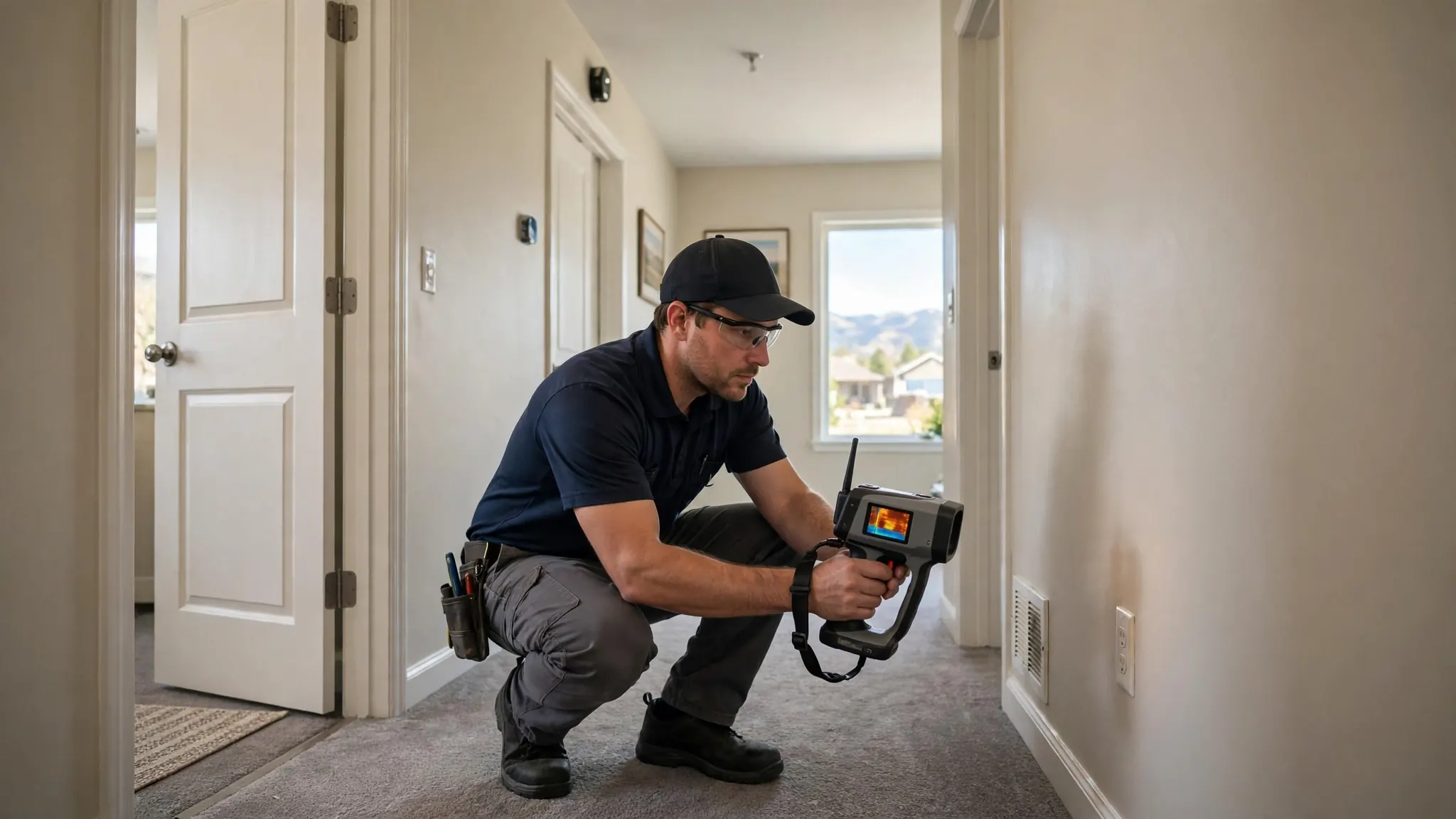
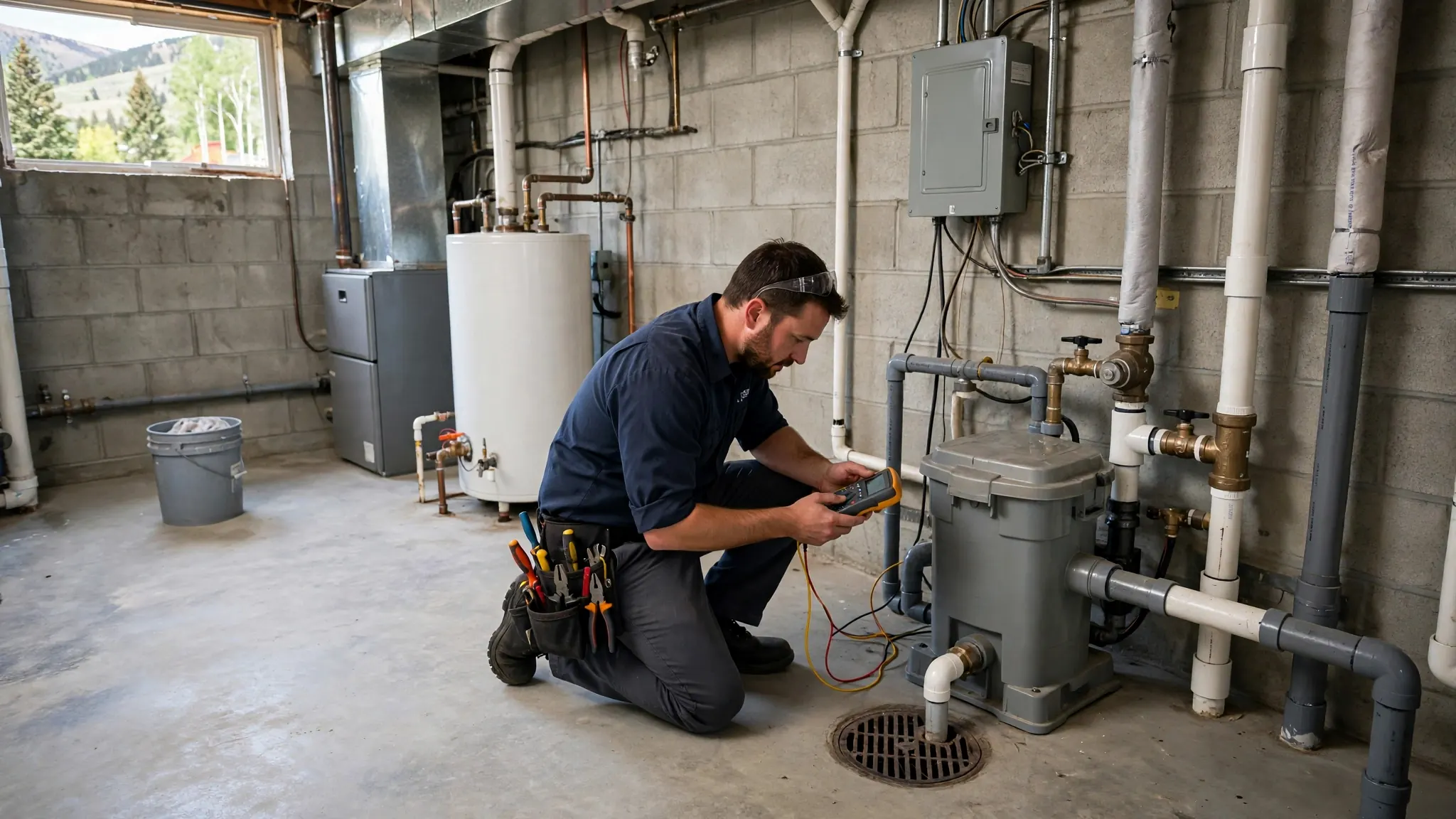
Lift pump systems deserve special attention. In buildings where plumbing sits below the municipal sewer line — basements, loading docks, below-grade kitchens — wastewater must be pumped upward to reach the main. When a lift pump fails, clogs, or loses power, every drain it serves backs up quickly. This is a mechanical failure, not a blockage, and clearing the drain will not fix it. Part of any thorough commercial leak detection visit is confirming whether the pumps that serve the drains are actually running.
How The Drain Connects To The Main Line
Floor drains rarely back up in isolation when a main line is involved. The building drain collects wastewater from every fixture and carries it to the municipal sewer or septic system through one main line. A restriction in that main line affects everything upstream — floor drains, toilets, and sinks all slow down together. If multiple floor drains back up at the same time, or if toilets gurgle when a mop sink drains, the main line is the likely culprit rather than any individual drain.
This distinction changes the fix completely. Clearing a single floor drain with a small snake removes the local symptom but leaves the main-line restriction in place, so the backup returns — sometimes within days. A camera inspection of the main line shows exactly where the restriction sits and what it consists of, which is why professionals usually start there when more than one fixture is affected. The main line clog guide explains how these deeper blockages develop and how they are cleared.
How Professionals Diagnose The Problem
Diagnosis starts with questions: which drains back up, when, and what else is slow. The answers narrow the search before any equipment comes out. A visual check of accessible cleanouts comes next — if a cleanout between the building and the street is full of standing water, the blockage is downstream of that point. If it is dry while indoor drains back up, the restriction is inside the building.
- Interview staff about when and where the backup occurs to map the affected fixtures
- Check accessible cleanouts for standing water to bracket the blockage location
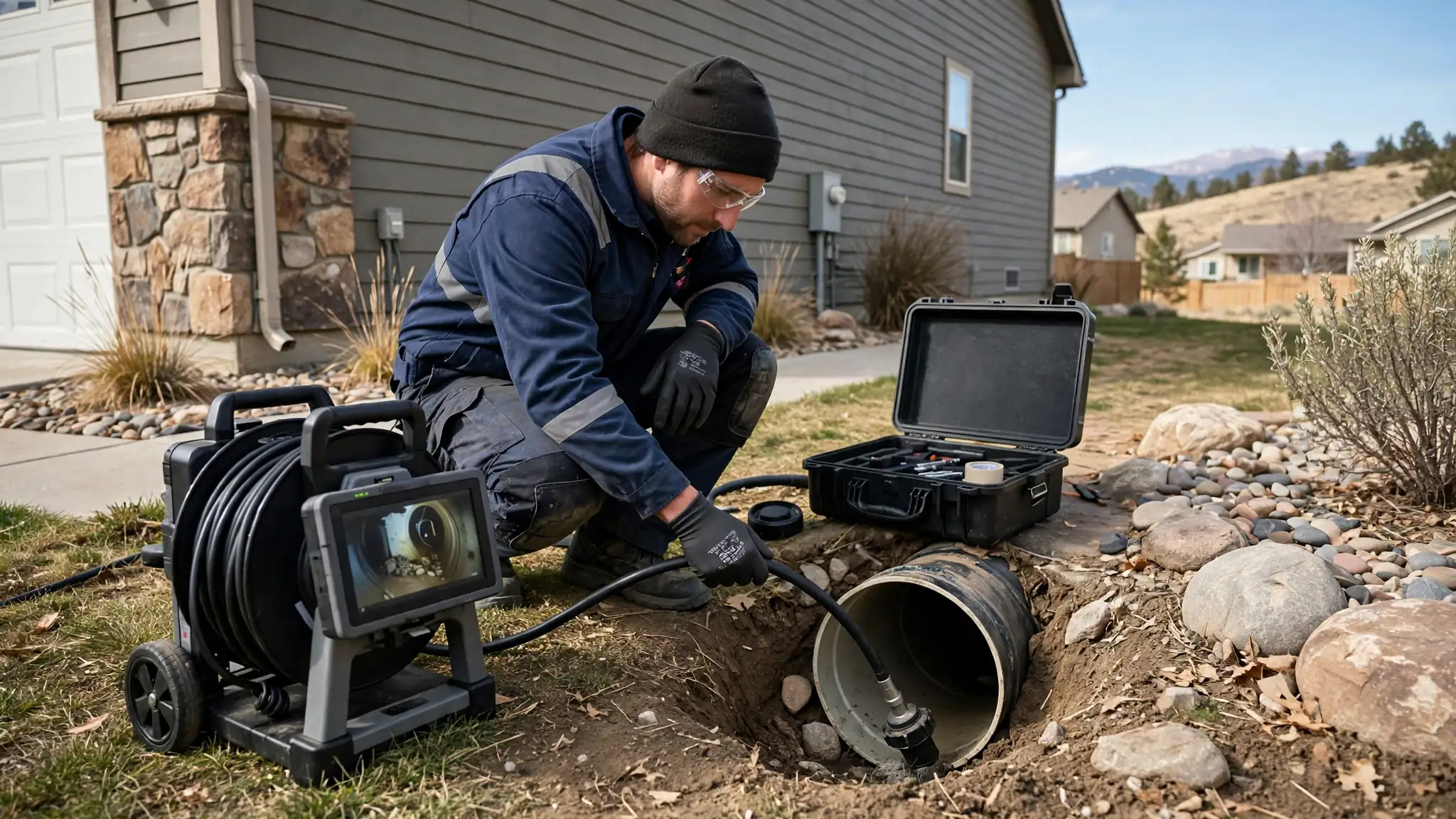
- Run a camera through the drain line to see the actual obstruction and pipe condition
- Measure the distance to the blockage from the camera's footage counter
- Check lift pumps and check valves where below-grade drains are involved
- Test flow after clearing to confirm the line drains freely under load
Camera inspection is the step that separates guessing from knowing. It reveals whether the problem is grease, roots, a collapsed section, or a foreign object — and each of those gets a different fix. It also documents the condition of the pipe itself, which matters when deciding whether clearing is enough or whether a section of pipe needs attention.
Fixes Compared: What Works For Each Cause
The right fix depends entirely on what the camera found. Matching the method to the cause saves money and prevents the backup from returning weeks later.
| Method | Best For | Limitation |
|---|---|---|
| Drain snaking / augering | Soft blockages near the drain: wipes, paper, minor buildup | Punches a hole through grease or roots but leaves residue behind |
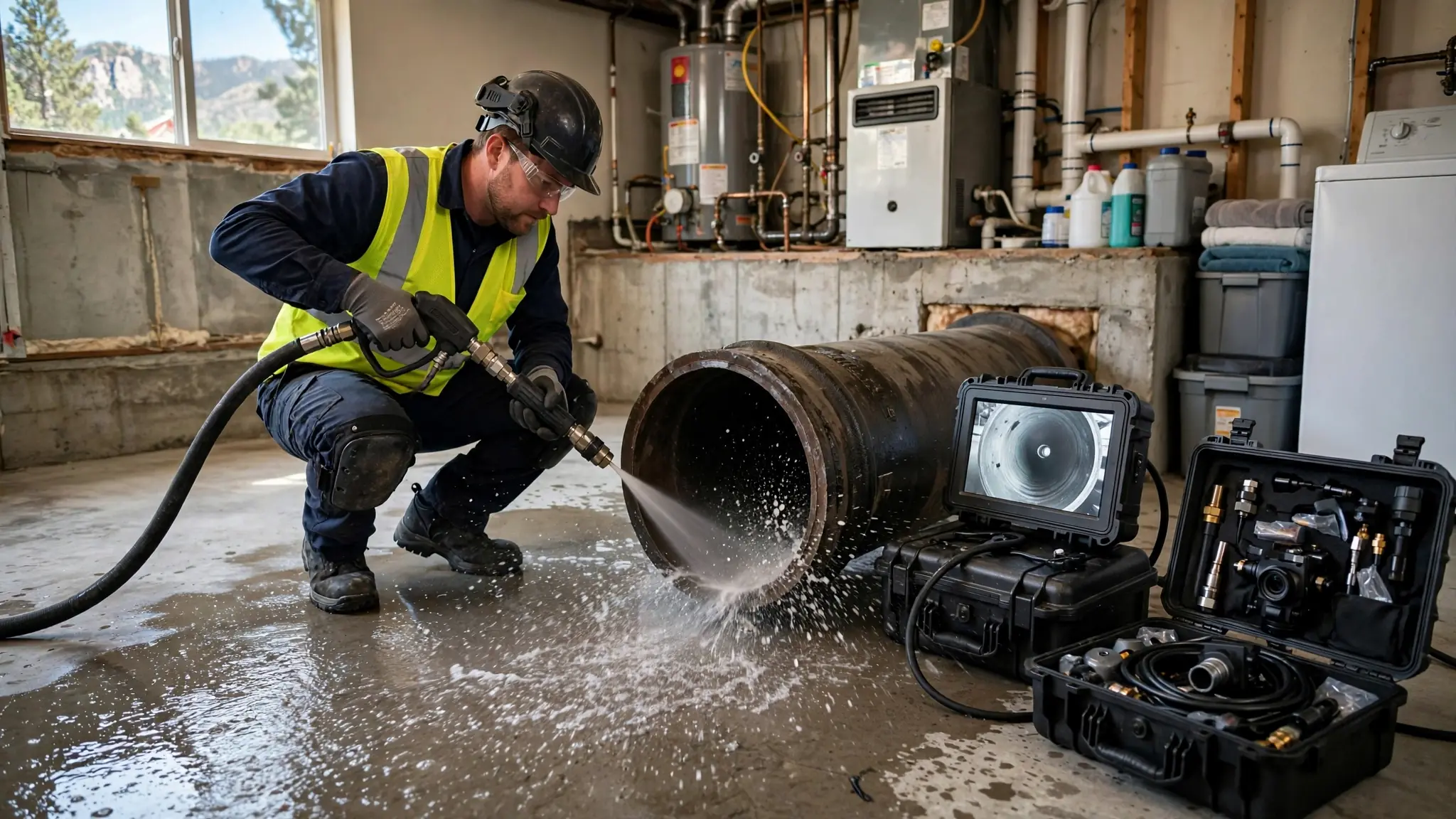
| Hydro jetting | Grease, sludge, and scale coating the pipe walls | Not appropriate for fragile or already-collapsed pipe |
| Root cutting | Root intrusion at joints and cracks | Roots grow back; treats the symptom, not the entry point |
| Lift pump repair or replacement | Pump failure serving below-grade drains | Requires diagnosing the pump, not just the drain |
| Spot repair or lining | Collapsed, bellied, or broken pipe sections | A bigger project; justified only when the pipe itself has failed |
Snaking is the fastest response and often the right first step for a simple blockage. Hydro jetting for main lines is the deeper clean — it scours the pipe walls back toward their original diameter, which matters when grease or scale has been building for years. When the camera shows a broken or bellied pipe, no amount of clearing will fix it permanently; the pipe section itself needs repair. A good technician explains which situation you are in before recommending anything.
Preventing The Next Backup
Most commercial floor drain backups are preventable with routine maintenance. The buildings that rarely deal with backups are not lucky — they are on a schedule. Grease traps get pumped before they fill, drain lines get jetted before buildup becomes a blockage, and lift pumps get tested before they fail.
- Pump grease traps on a regular schedule sized to your kitchen's output
- Train staff never to pour fats, oils, or grease down any drain
- Install and maintain strainers on floor drains in kitchens and mop areas
- Keep wipes, paper towels, and mop strings out of drains — provide bins instead
- Schedule periodic jetting for lines with a history of grease or scale buildup
- Test lift pumps and alarms regularly; keep a backup pump where downtime is costly
- Know where your cleanouts are so a technician can access the line quickly
Note the date, location, and conditions of every backup. A pattern — same drain every few months, backups only during peak hours — tells a professional exactly where to look and often reveals a maintenance gap rather than a mystery.
When To Call For Help
Call when a backup recurs after clearing, when multiple fixtures are affected at once, or when you suspect the main line is involved. Sewage backing up into a business is also a health concern — standing wastewater should be treated as contaminated, and the affected area should be kept clear of staff and customers until it is cleaned and disinfected. Never send employees to wade through backup water or to open electrical panels in a flooded area.
If water is actively rising through multiple drains, that is an emergency — shut off water use in the building if you safely can and get help immediately through our emergency main line service. For recurring but non-urgent backups, a scheduled camera inspection and cleaning resolves the underlying cause. Our guide to commercial leak detection for businesses explains how to prepare for the visit. We answer 24/7 and arrive in 30–45 minutes for urgent commercial calls across Broomfield.