Winterizing your plumbing in fall means protecting every water line that freezing weather can reach — before the first hard freeze arrives. The work falls into three groups: shut down and drain outdoor water (hoses, hose bibs, irrigation), insulate and seal indoor pipes in unheated spaces, and check for existing leaks that winter will make worse. A small drip that seems harmless in October can freeze, expand, and split a line by January. Walk through this checklist on a mild fall weekend, and consider a leak detection check if anything looks suspicious — finding a hidden leak now is far simpler than finding it under ice.
Winterize in fall by disconnecting hoses, draining hose bibs, shutting down the irrigation system, insulating exposed pipes in attics and crawl spaces, sealing air leaks around plumbing, and confirming your main shut-off valve works. Fix any existing leaks before freezing weather arrives.
Why Fall Is Winterization Season In Broomfield
Colorado weather turns on its own schedule, and the first hard freeze often arrives before homeowners feel ready for it. Fall is the window between the end of irrigation season and the start of sustained cold — the natural moment to drain what should be drained and protect what cannot be moved indoors.
The logic is simple: water left in outdoor lines has nowhere to expand when it freezes except against the pipe wall. Hose bibs, irrigation laterals, and exposed supply runs are all designed to carry water, not ice. Draining them in fall removes the risk entirely, while insulating indoor pipes in cold-prone spaces keeps the remaining water above freezing through the cold snaps to come.
Fall is also the right time to look for leaks that winter will punish. A slow water service line leak that merely dampens soil in September can keep a patch of ground saturated into December, and saturated soil around a foundation freezes and shifts. Fixing leaks in fall means repairs happen in workable weather, not in frozen ground.
Outdoor winterization depends on mild weather — draining a hose bib is easy in October and miserable in December. Schedule the exterior tasks for early fall and the indoor insulation work for later, and you will never be caught by a surprise freeze.
Prevention Checklist
Work through these in order, outdoors first. Check each one off as you go — a missed hose bib is the most common reason for a winter burst.
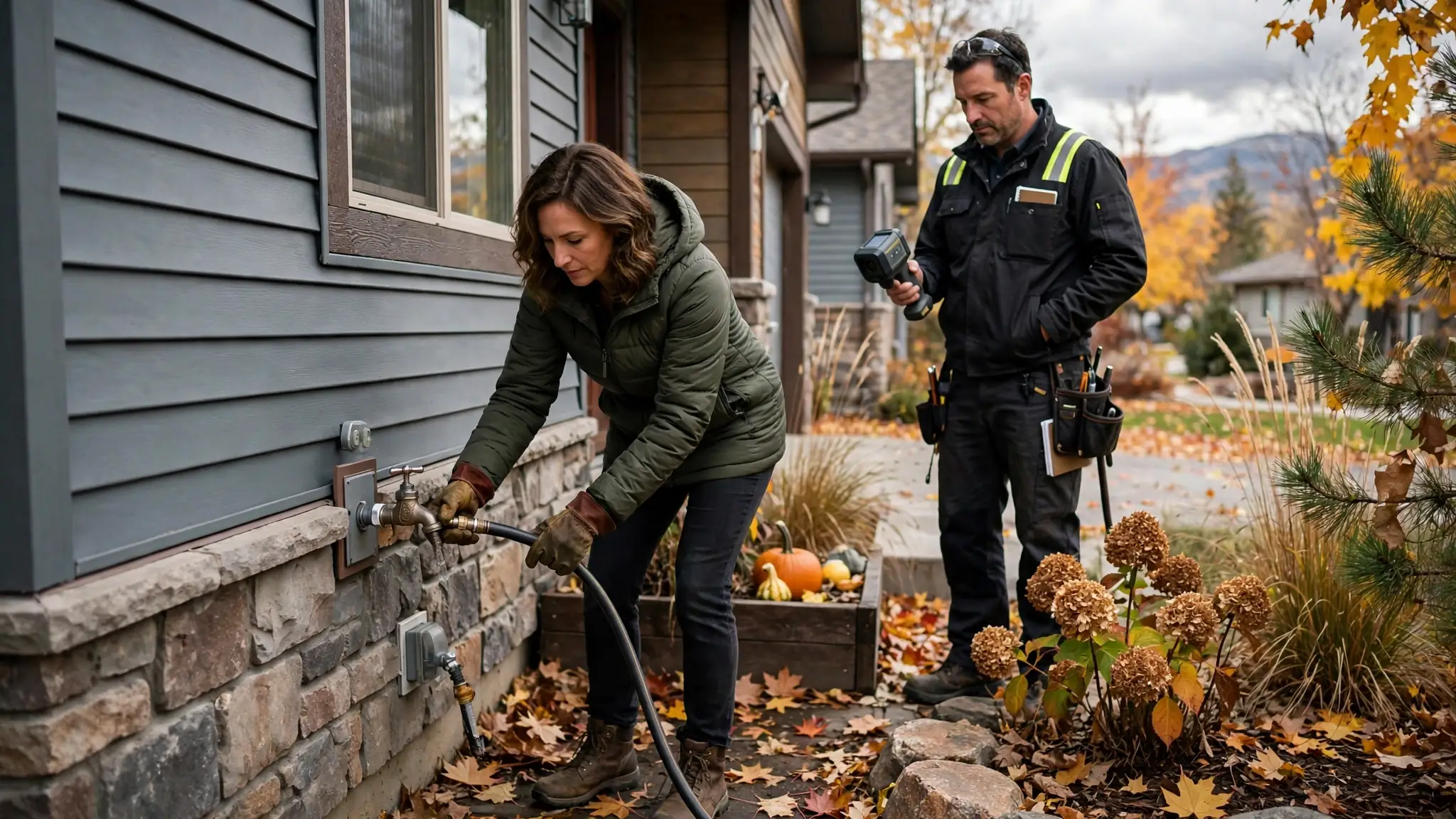
- Disconnect every outdoor hose, drain it, and store it for winter. A connected hose traps water in the bib and the line behind it.
- Shut off the interior valve for each hose bib (if your home has them), then open the outside bib to drain the line between the valve and the exterior.
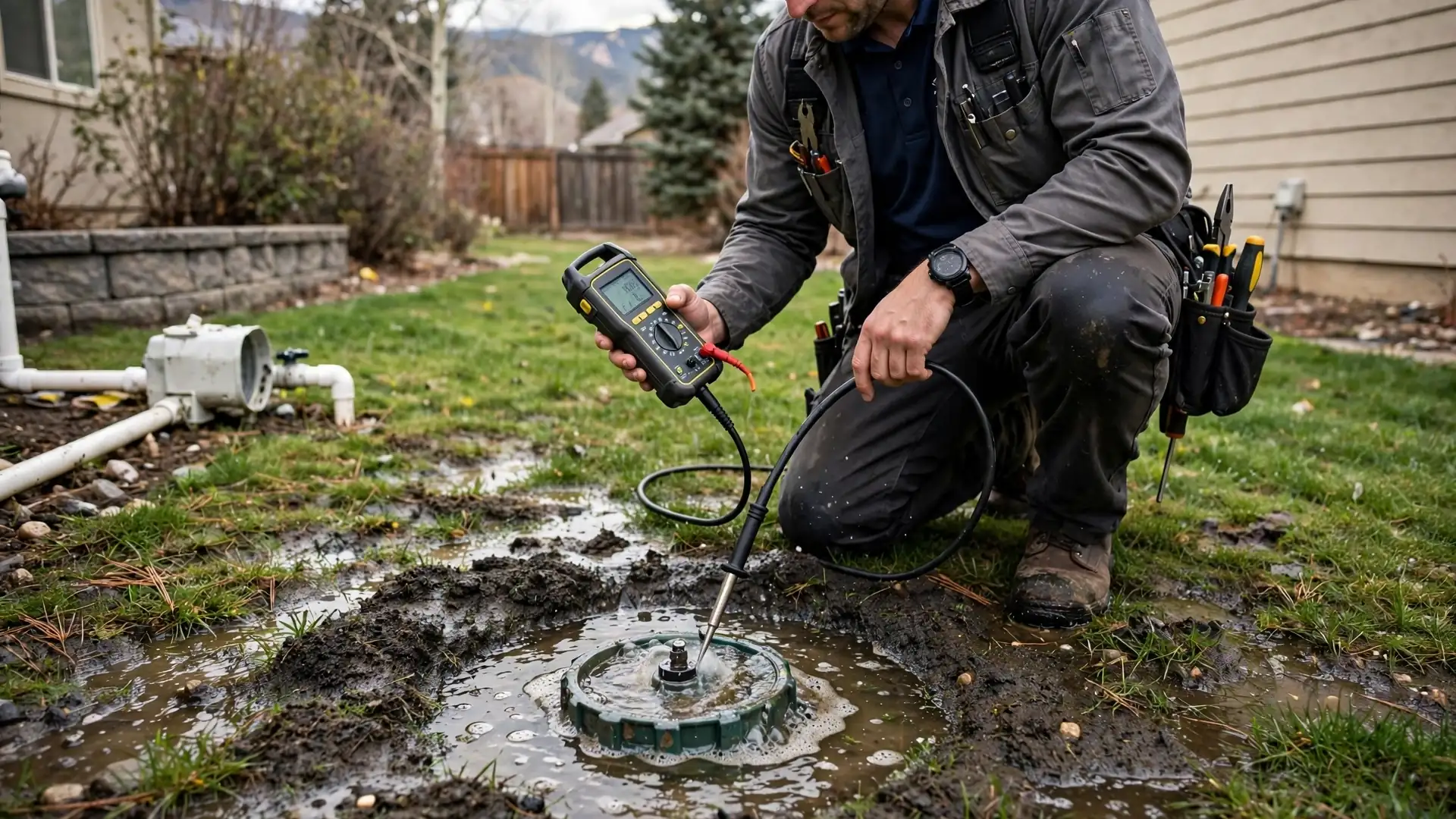
- Shut down the irrigation system completely: turn off the water supply to the system, open drain valves, and run each zone briefly to clear standing water from the laterals.
- Insulate any above-ground irrigation components that remain exposed, such as backflow preventers, with purpose-made covers.
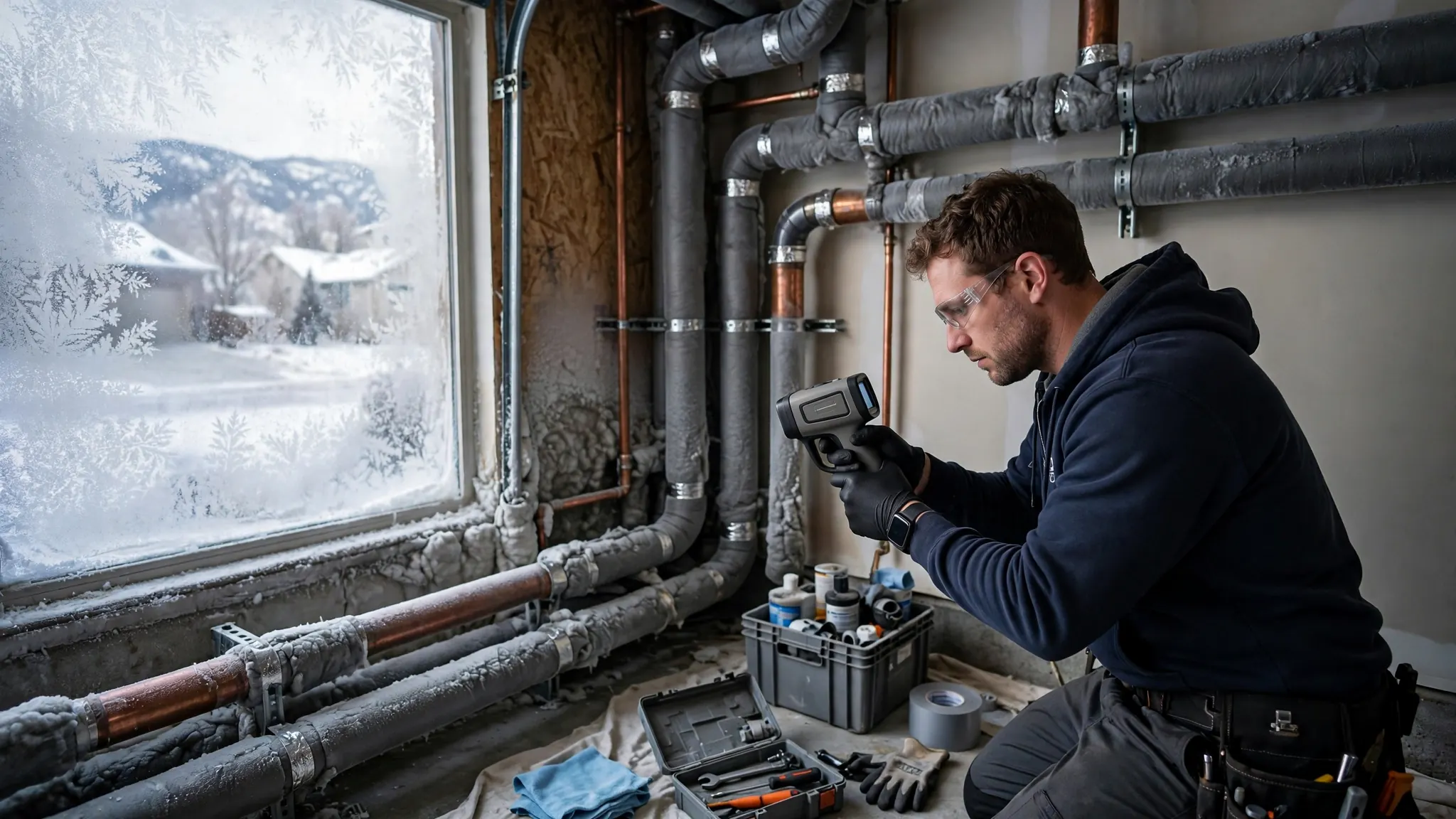
- Insulate exposed water lines in the attic, crawl space, garage, and along exterior walls with foam pipe sleeves, paying special attention to corners and elbows where air circulates.
- Seal air leaks where pipes pass through exterior walls, rim joists, and the foundation, using caulk for small gaps and expanding foam for larger ones.
- Check the attic for plumbing runs near vents or soffits where wind-driven cold air can reach them, and insulate accordingly.
- Test your main water shut-off valve: turn it off and on to confirm it moves freely, and make sure every adult in the house knows where it is.
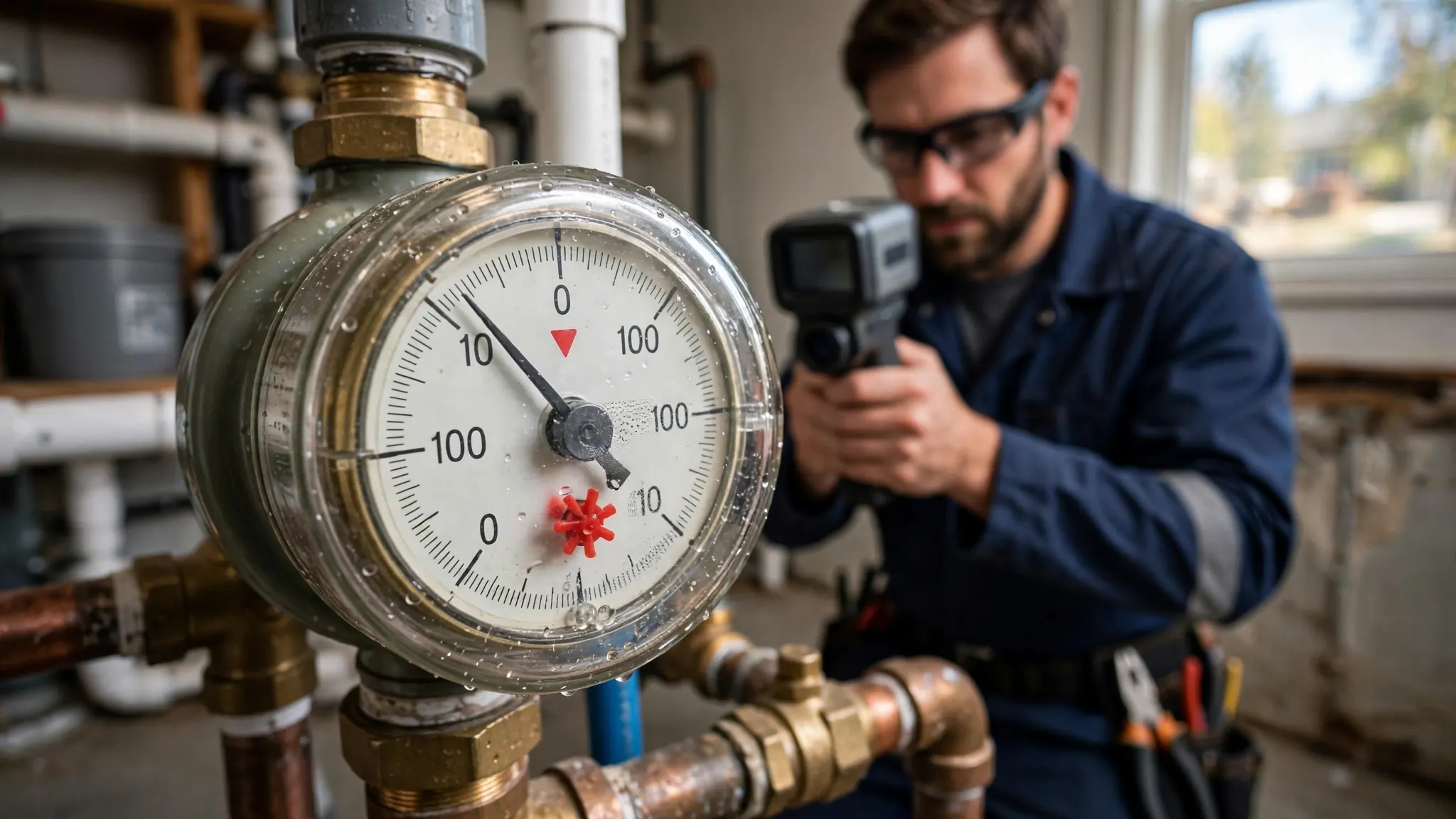
- Walk the house and yard looking for existing leaks — damp drywall, a spinning water meter with no water running, or soggy ground — and address them before winter.
- Note the location of your water meter and keep the meter box accessible in case you need to check for leaks during winter.
Warning Signs
These are the signs that your winterization found — or missed — something worth addressing before the cold settles in.
- A hose bib that drips after you shut off its interior valve, indicating the valve is not holding and the line may still be full.
- An irrigation zone that stays soggy days after watering even after shutdown — a possible cracked lateral.
- Exposed pipes in the crawl space or attic with no insulation, or insulation that has slipped, torn, or been disturbed by pests.
- Daylight visible around pipe penetrations in exterior walls or the foundation, meaning cold air has a direct path to the plumbing.
- A water bill that stays elevated after irrigation season ends, which can signal a leak that winter will only make harder to fix.
- Damp spots on walls or ceilings discovered during your fall walkthrough — address them now rather than letting them freeze and expand.
What To Do If It Happens
If your fall inspection turns up a problem, handle it in this order before the weather turns.
- For a hose bib that will not drain: re-check the interior shut-off, and if it still drips, have the bib serviced before the first freeze rather than hoping it holds.
- For a soggy irrigation zone after shutdown: mark the wet area and avoid running that zone again. A cracked lateral is a spring repair, but knowing its location now saves diagnostic time later.
- For uninsulated pipes: install foam sleeves immediately — this is a same-day fix with materials from any hardware store.
- For a suspected hidden leak: perform a water meter test to confirm whether water is escaping somewhere in the system.
- For confirmed or suspected leaks you cannot locate: call for leak detection while the ground is still workable — winter repairs in frozen soil are harder on everyone.
- If a pipe has already burst and water is flowing, shut off the main valve and call our emergency line — we answer 24/7 and arrive in 30–45 minutes.
Urgent Leak? We Answer 24/7.
Found a burst pipe or active leak during winterization? Call now — we answer 24/7 and arrive in 30–45 minutes.
(720) 715-9734How The Service Helps
Fall is the smartest season for a leak check because everything is accessible: the ground is unfrozen, crawl spaces are tolerable, and irrigation lines can still be pressure-tested. A professional inspection now finds the slow service line leak or the weeping joint that would otherwise spend winter growing.
We pressure-test supply lines to confirm they hold, listen for the telltale sounds of hidden leaks with acoustic equipment, and check irrigation laterals for freeze vulnerability before they are put to bed. If we find something, the repair happens in October weather — not January weather.
Think of winterization as a system with two halves: the parts you can do yourself (draining, insulating, sealing) and the parts worth verifying professionally (hidden leaks, pressure integrity). Together, they are what gets a Broomfield home through winter without a 2 a.m. surprise.