You can prevent most frozen pipes by protecting the water lines most exposed to cold air. Insulate exposed pipes in attics, crawl spaces, and exterior walls, seal air leaks near plumbing, keep your heat on during cold snaps, and let a faucet drip when temperatures plunge. Pipes freeze from the outside in, so any line running through an unheated space is at risk. A frozen line that bursts can flood a wall or ceiling before anyone notices, which is why leak detection in Broomfield matters even after the pipe thaws. Below is the full prevention plan we recommend for Broomfield homes.
Prevent frozen pipes by insulating exposed lines in attics, crawl spaces, and exterior walls, sealing gaps where cold air reaches plumbing, keeping indoor heat steady during cold snaps, and letting a faucet drip in extreme cold. Know where your main shut-off valve is before winter arrives.
Why Winter Causes Frozen Pipes In Broomfield
Water expands as it freezes, and that expansion is what breaks pipes. When standing water in a supply line turns to ice, pressure builds between the ice blockage and the nearest closed faucet, and the pipe wall eventually gives way at its weakest point. This is not a slow process — a line exposed to cold air can freeze within hours on a bitter night.
Broomfield winters regularly bring stretches of well-below-freezing weather, and Colorado cold snaps can arrive suddenly between warmer days. Pipes in attics, crawl spaces, garages, and exterior walls are the most vulnerable because they sit in spaces that track outdoor temperatures. Supply lines to outdoor hose bibs and irrigation systems are at risk too, since they often hold standing water.
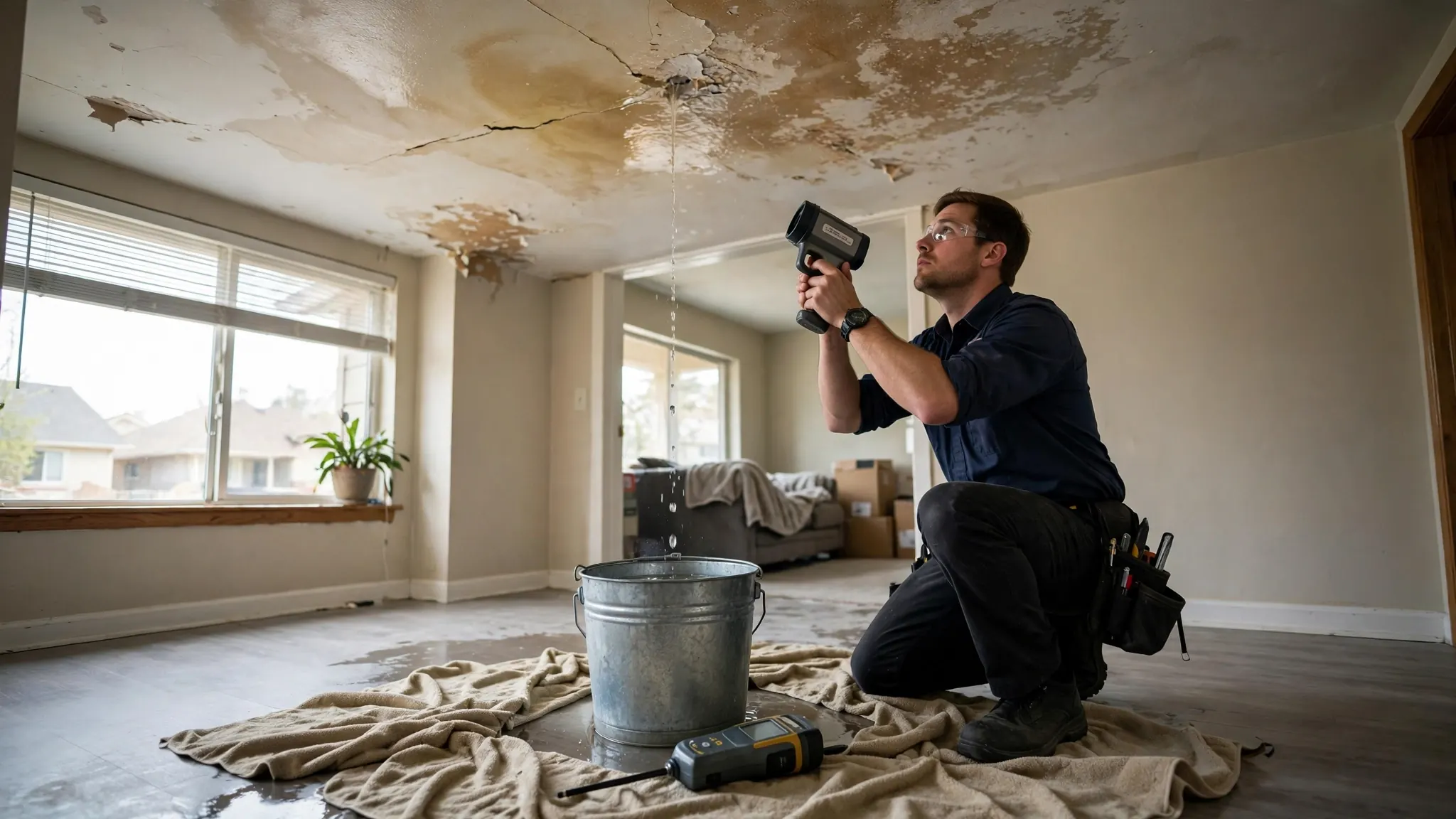
The danger does not always show up while the pipe is frozen. A burst line may not leak until the ice thaws and water pressure returns, which can be days after the cold spell ends. That delayed flooding is why wall leaks sometimes appear in late winter or early spring with no obvious trigger. Understanding this delay helps you check the right places when the thaw arrives.
The highest risk comes during sustained cold snaps when overnight temperatures stay well below freezing. Watch the forecast and prepare your home before the first deep freeze of the season, not during it.
Prevention Checklist
Work through this list before the first hard freeze. Each step closes off a way that cold air reaches your plumbing, and together they cover the vulnerabilities that cause most freeze damage.
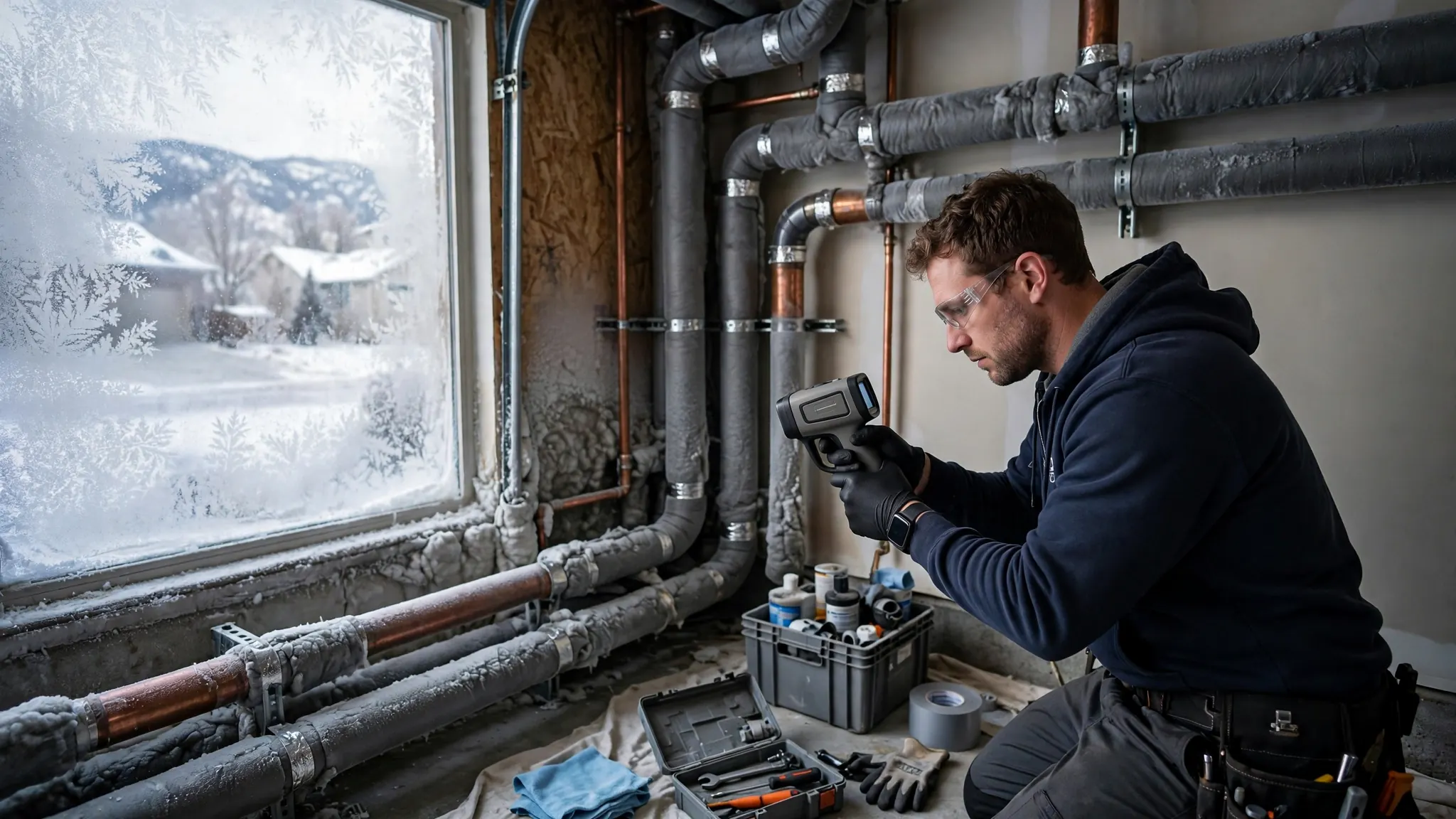
- Insulate every exposed water line in unheated spaces, including attics, crawl spaces, garages, and along exterior walls. Foam pipe sleeves are the simplest option and fit over standard copper and plastic lines.
- Seal air leaks where plumbing enters the house. Use caulk or expanding foam around pipe penetrations in exterior walls, rim joists, and foundation openings so cold air cannot blow directly across the pipes.
- Disconnect and drain outdoor hoses, then shut off and drain the interior valve feeding each hose bib if your home has one. Standing water in the line outside is the fastest path to a burst bib.
- Shut down and winterize the irrigation system before sustained freezing weather. An irrigation lateral that freezes can crack underground and surface as a soggy spot in spring.
- Keep indoor heat on and steady, even if you leave town. Set the thermostat no lower than the mid-50s so interior wall cavities stay warm enough to protect the pipes inside them.
- Open cabinet doors under sinks on exterior walls during the coldest nights so warm room air reaches the plumbing inside.
- Let one faucet drip slowly — ideally the faucet farthest from where water enters the house — when temperatures drop well below freezing for an extended period. Moving water resists freezing.
- Know exactly where your main water shut-off valve is and confirm it turns freely. In a burst-pipe emergency, shutting off the water in seconds limits the damage enormously.
- After a cold snap, walk the house and look for signs of wall leaks such as damp drywall, bubbling paint, or musty odors before small leaks become big ones.
Warning Signs
Catching a freeze in progress gives you a chance to prevent the burst. Watch for these indicators during and after cold weather.
- A faucet that produces only a trickle or nothing at all while other faucets work — the supply line to that fixture may be frozen.
- Frost visible on an exposed pipe, or a pipe that feels ice-cold to the touch in a crawl space or garage.
- Strange sounds when a faucet is opened, such as clanking or a sudden rush of water pressure, which can indicate ice shifting inside the line.
- A damp spot, stain, or bubbling paint on a wall or ceiling appearing during or after a cold snap — a possible thawed burst leak.
- A hissing sound inside a wall after temperatures rise, which can mean a pressurized line is spraying behind drywall.
Never use a blowtorch, heat gun on high, or any open flame to thaw a pipe. Use gentle warmth — a hair dryer on low, warm towels, or simply raising the room temperature — and if you cannot reach the frozen section safely, call a professional.
What To Do If It Happens
If you suspect a frozen pipe, act calmly and in this order. The goal is to restore flow safely or, if the pipe has burst, to limit water damage until help arrives.
- Keep the affected faucet open. Running water, even a trickle, helps melt ice and relieves pressure building behind the blockage.
- Apply gentle heat to the frozen section: a hair dryer on low, an electric heating pad, or towels soaked in hot water. Start at the faucet end and work back toward the coldest area.
- Never use an open flame or a propane heater near plumbing. The fire risk is worse than the freeze.
- Check the rest of the house. One frozen line often means others in the same area are frozen too — inspect nearby exterior-wall plumbing.
- If you find an active leak, shut off the main water valve immediately, move valuables away from the water, and take photos for your records.
- Call for emergency leak detection if water is actively leaking or you cannot locate the problem — we answer 24/7 and arrive in 30–45 minutes.
Urgent Leak? We Answer 24/7.
Burst pipe flooding your home right now? Shut off your main valve and call us — we answer 24/7 and arrive in 30–45 minutes.
(720) 715-9734How The Service Helps
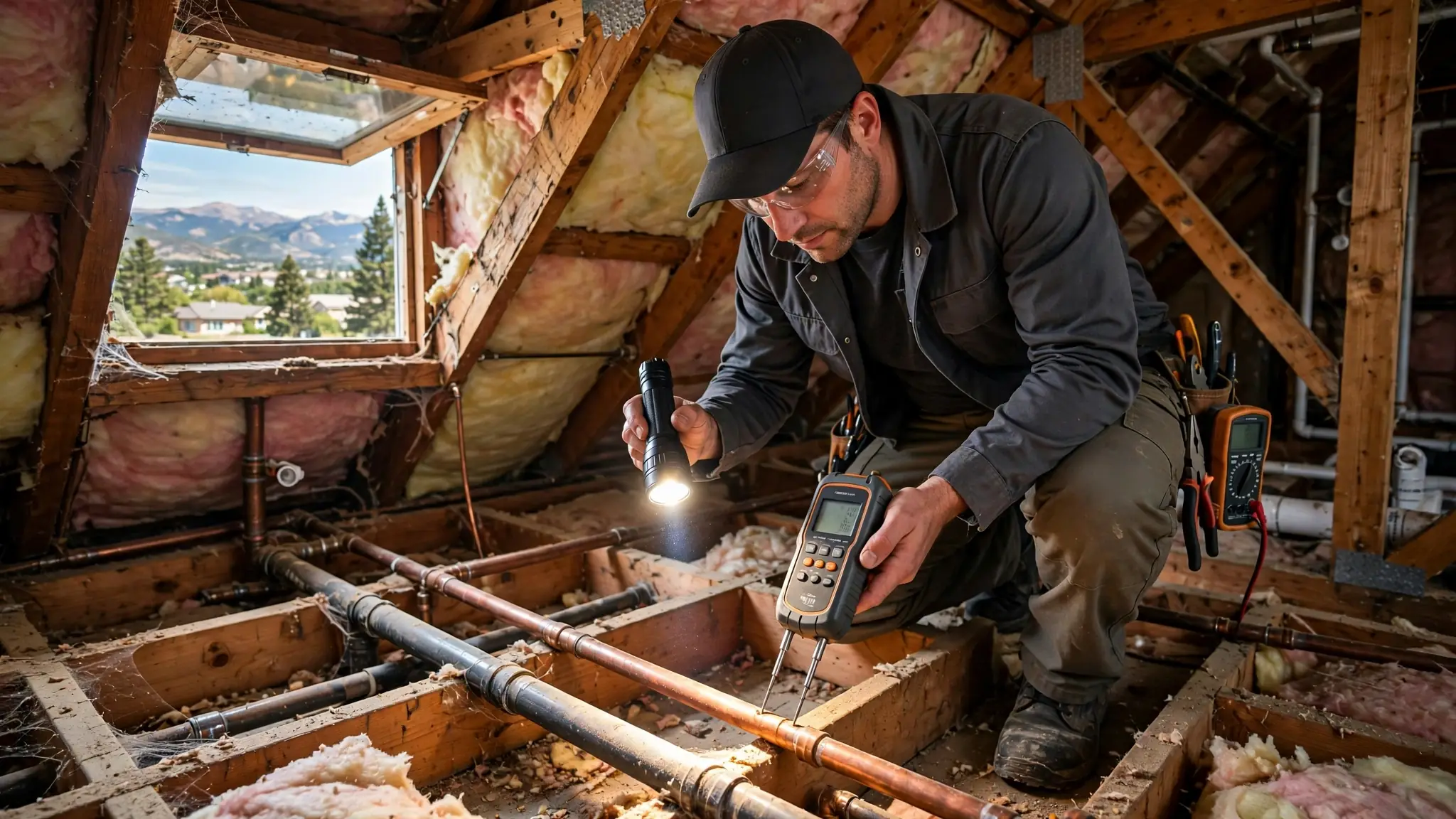
After a freeze event, the damage is often hidden. A line that split behind drywall may leak only when the system is pressurized, and a cracked crawlspace supply line can soak insulation for weeks before anyone notices. Professional leak detection finds these hidden failures without tearing open every wall.
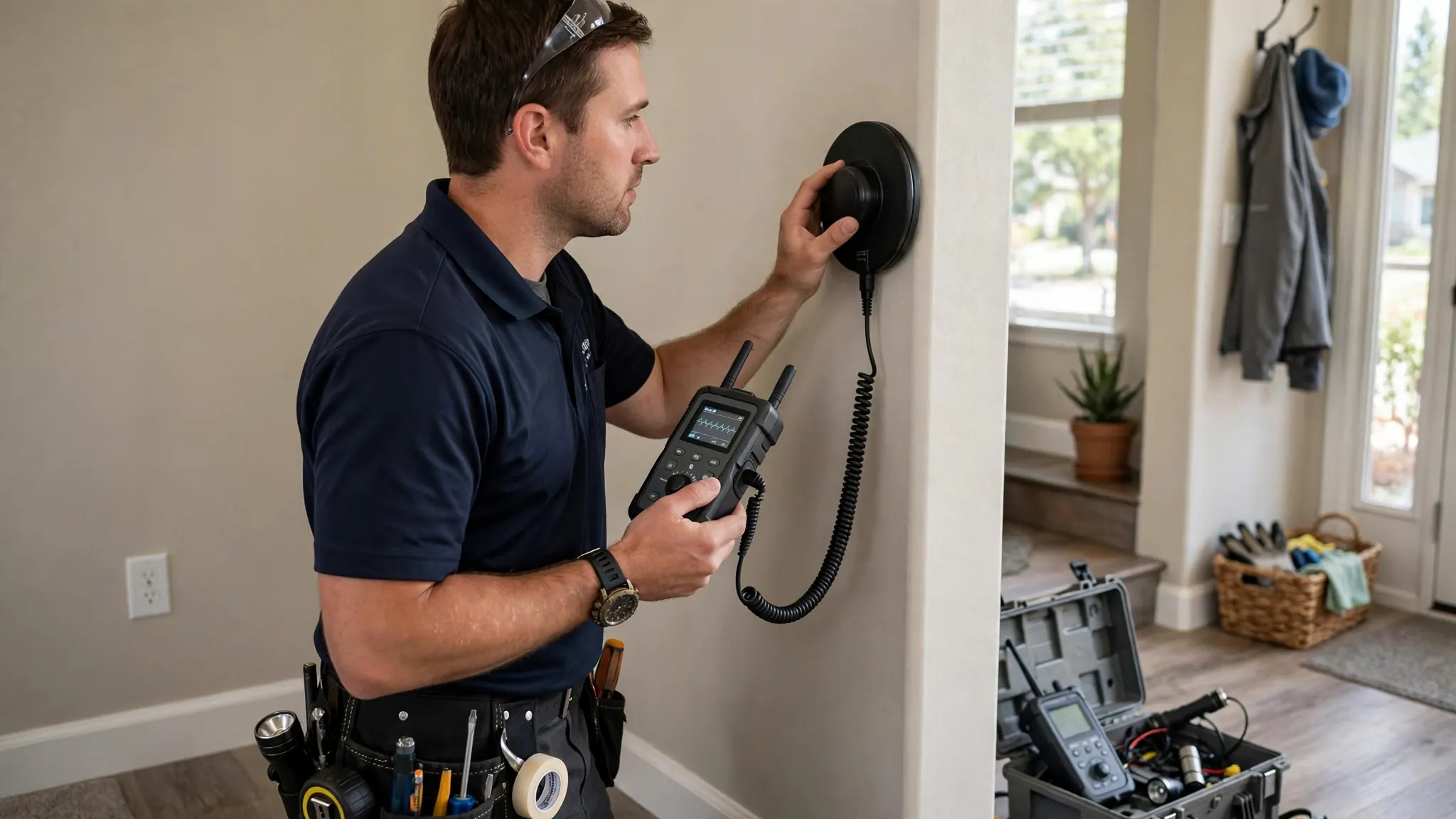
We use acoustic listening equipment to hear pressurized leaks through building materials, thermal imaging to spot temperature differences caused by escaping water, and pressure testing to confirm which line is failing. Once the leak is pinpointed, only a small area needs to be opened for the repair. If you are already dealing with water damage from a burst pipe, see our guide on what to do when you find a ceiling leak for safe first steps while you wait for help.
The best outcome, of course, is preventing the freeze in the first place — which is exactly what the checklist above is designed to do. But if winter has already done its damage, early detection keeps a burst pipe from becoming a renovation.