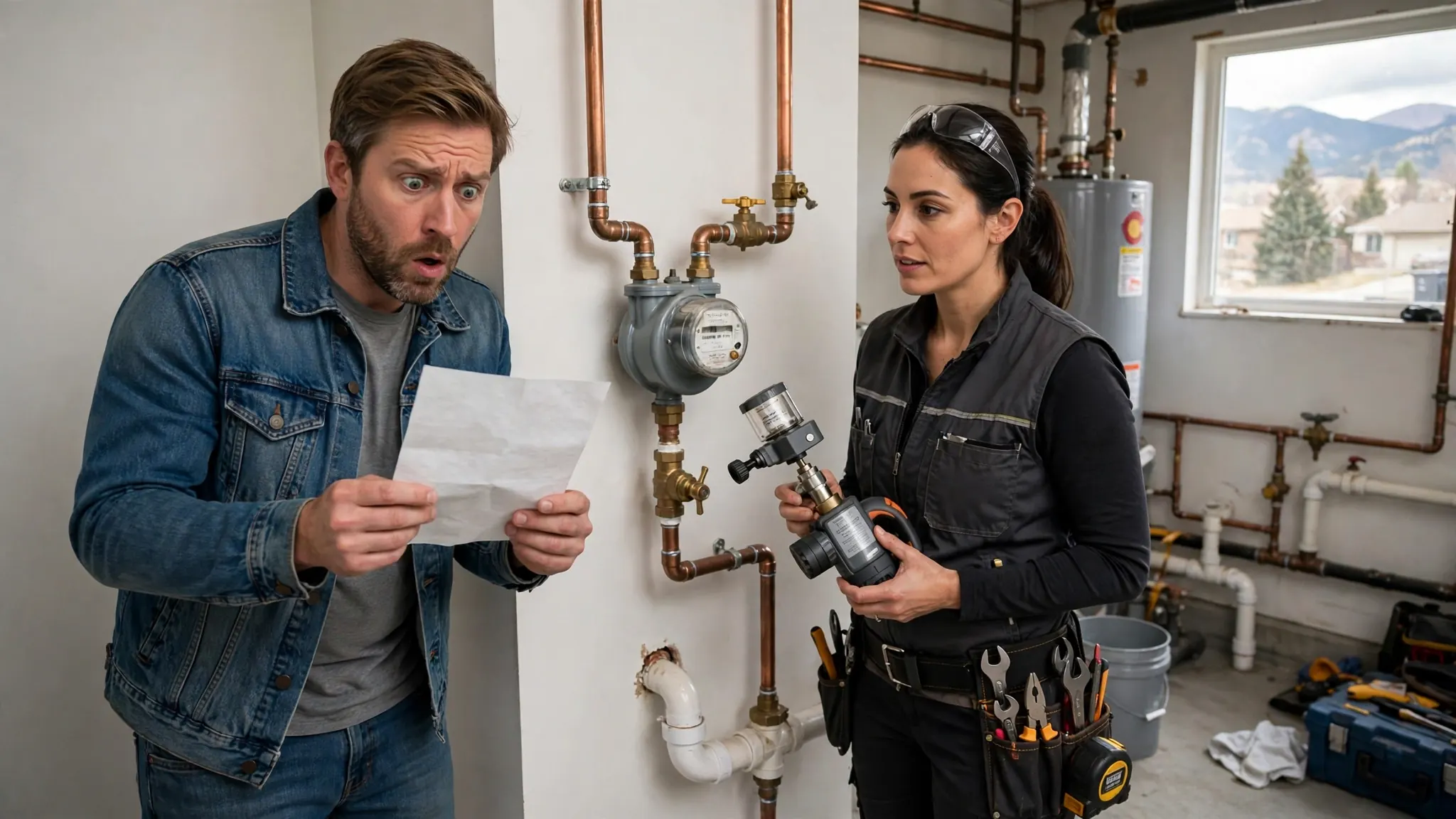
The water meter is the most honest witness in your plumbing system: it only moves when water passes through it. So when the dial turns with no water running anywhere in the house, the conclusion is straightforward — water is escaping on your side of the meter. That could be a silent toilet, a weeping irrigation valve, or a buried line leaking underground. This guide explains how to read what the meter is telling you, the checks that narrow it down, and when to bring in professional leak detection.
A spinning meter with everything off confirms water is flowing through your system. First rule out toilets and irrigation, then watch the meter's speed: a slow creep suggests a small fixture leak, while steady movement points to a supply-line break. Either way, the meter has told you a leak exists — leak detection finds exactly where.
What To Do Right Now
A moving meter is confirmed water loss, so work through this list promptly. Nothing here requires tools or plumbing skill.
- Verify everything is truly off. Check that no toilet is refilling, no ice maker or softener is cycling, and no irrigation zone is running.
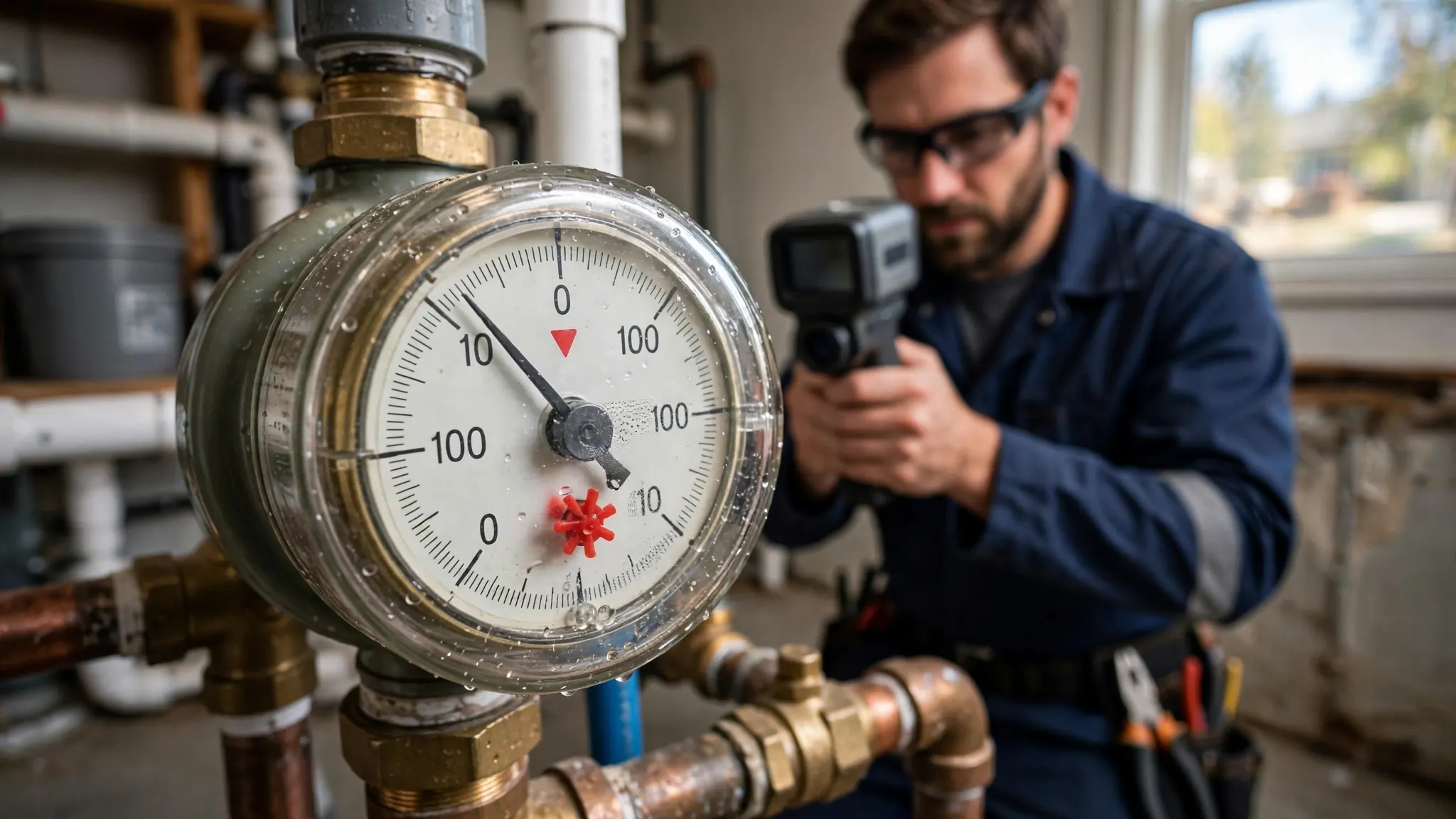
- Watch the meter for two full minutes. Note whether the dial creeps slowly or spins steadily — the speed hints at the leak's size.
- Shut off the main house valve and watch again. If the meter stops, the leak is inside the house or in the service line; if it keeps moving, the problem is between the meter and the house shutoff.
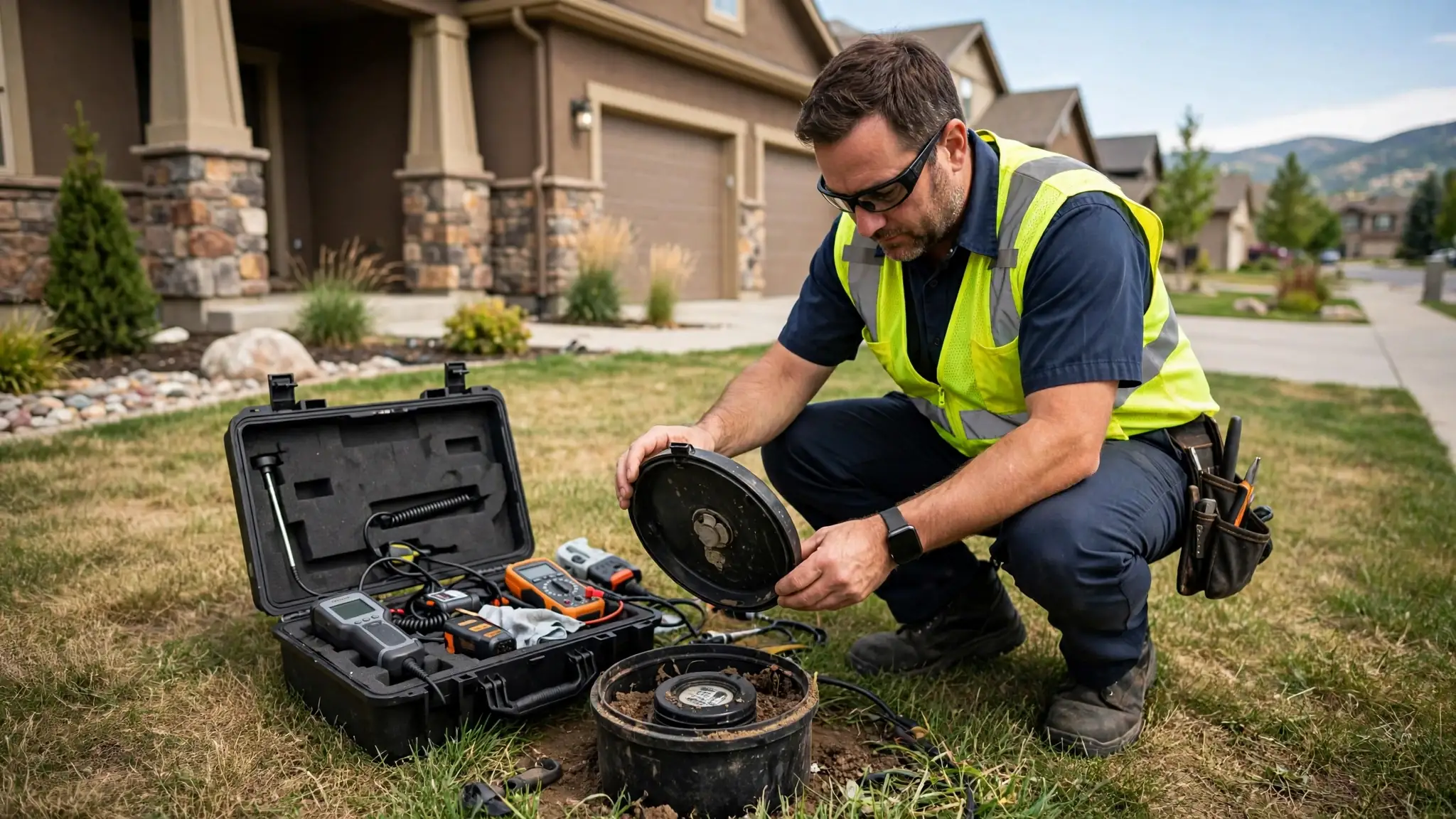
- Check the yard meter box area for standing water, mud, or an unusually green strip of grass.
- Record the meter reading and the time. A photo of the dial gives you a baseline for comparison later.
The main-valve test in step three is the single most useful thing you can do: it splits the entire property into two halves and tells the leak specialist where to start.
Signs To Look For
A spinning meter plus any of these points toward the likely culprit:
- A toilet that hisses or refills periodically on its own.
- Damp soil or standing water around the meter box itself.
- A strip of lawn that is greener or soggier than the surrounding grass.
- Hissing sounds near walls, floors, or the water heater.
- Water pressure that has dropped noticeably at every fixture.
- A water bill that climbed before you ever looked at the meter.
Note which fixtures were recently used or repaired — a leak often starts soon after plumbing work disturbs an old connection.
Common Causes
Toilets are the usual suspects: a degraded flapper lets tank water slip silently into the bowl around the clock, and the meter registers every gallon. Irrigation systems come next — a zone valve that does not fully close keeps its lateral pressurized and leaking between cycles.
Beyond those, the causes get more serious. A water service line can crack from soil movement or corrosion, a yard meter box connection can weep at its fittings, and slab or wall lines can develop pinholes. The meter cannot tell you which — it only confirms that water is going somewhere.
- Toilet flapper or fill valve leaking silently into the bowl
- Irrigation zone valve stuck partially open
- Weeping fittings inside the yard meter box
- Cracked water service line between meter and house
- Pinhole leak in a wall or under-slab supply line
- Water softener or filtration unit stuck in a drain cycle
Appliances with automatic cycles deserve a mention: softeners, ice makers, and humidifiers can all draw water on schedules you never notice. Rule them out before assuming the worst.
Urgent Leak? We Answer 24/7.
Dial moving steadily with the house valve off? That is an underground break — call now.
(720) 715-9734What Happens If You Wait
Every revolution of that dial is water you pay for and never use. Small leaks waste steadily; supply-line breaks waste enormously. Either way the meter keeps score on your bill.
The physical damage depends on location. A toilet leak wastes money but harms little. A service-line leak saturates soil, undermines walkways and foundations, and can surface as a sinkhole in the yard. An indoor supply leak soaks framing and finishes around the clock.
Because the meter gives you early warning, acting now usually means the cheapest possible version of the repair. Waiting converts a detection visit into a damage-restoration project.
Safe DIY Checks Vs. When To Call A Professional
Homeowners can narrow the search considerably before calling:
| Safe For You | Call A Professional |
|---|---|
| The main-valve isolation test | Pinpointing a buried service-line break |
| Toilet dye tests on every toilet | Acoustic location of underground leaks |
| Watching the meter's speed and pattern | Pressure-testing isolated sections |
| Inspecting the meter box for water | Excavating around the meter or line |
| Checking softener and appliance cycles | Repairing pressurized fittings |
Do not open the meter itself beyond reading the dial, and never attempt to repair pressurized fittings. If the meter keeps moving with the house valve off, the leak is underground — that is professional territory.
How The Service Fixes It
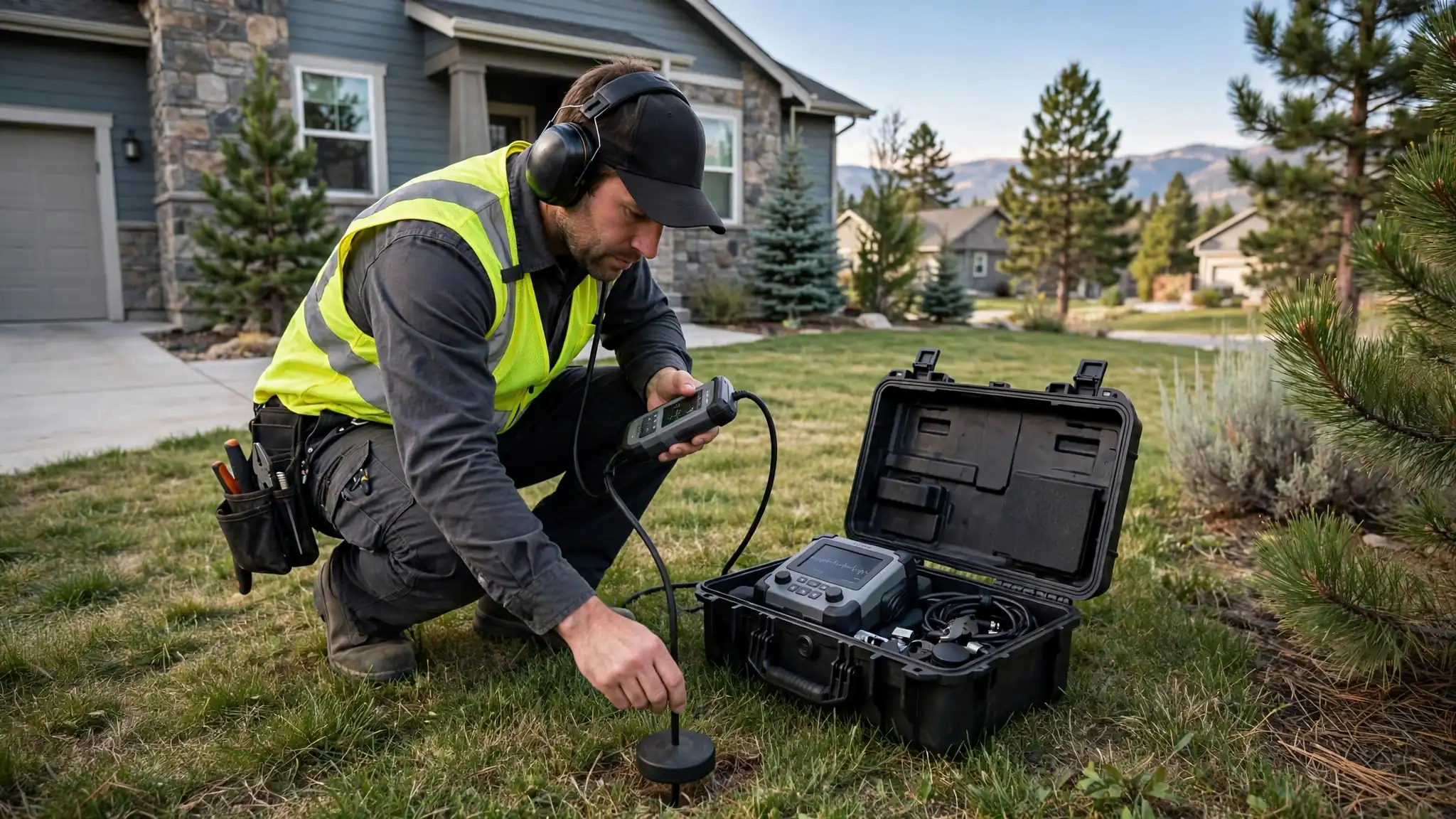
A water meter leak diagnosis starts where your checks left off: the isolation test results tell the technician whether to search inside the house or along the buried service line. Acoustic equipment then listens for the leak's signature along the suspected path, and the break is marked for a targeted repair.
For buried lines, underground leak location avoids trenching the whole yard — the repair opens one precise spot. If water is flowing steadily and you need help now, emergency leak detection runs 24/7.
We answer 24/7 and dispatch meter-leak calls within 30–45 minutes. A spinning meter is already telling you the answer — we find where.