The attic is a noisy place: rain drums on the roof, ducts pop as they expand, and small animals skitter across insulation. But a pipe leaking in the attic makes a distinctive sound — a steady drip, trickle, or hiss that continues regardless of weather — and it deserves prompt attention, because attic water lands on ceilings below. Sorting plumbing sounds from roof and condensation noise is a learnable skill. This guide explains what each attic sound usually means, the safe checks to run, and when to call for professional diagnosis.
If the sound continues in dry weather with no rain, suspect plumbing or condensation rather than the roof. A steady drip or hiss that never stops points to a supply line; intermittent dripping after showers points to a drain line; pattering that matches rainfall is the roof. When plumbing is suspected, check the meter — movement with fixtures off confirms a supply leak.
What To Do Right Now
Attic water can reach the ceiling fast, so investigate within a day or two. Safety comes first — attics combine water, wiring, and fragile footing:
- Note when the sound occurs. Constant in dry weather suggests plumbing; only during rain suggests the roof.
- Listen from below first. Press your ear to the ceiling under the sound before entering the attic at all.
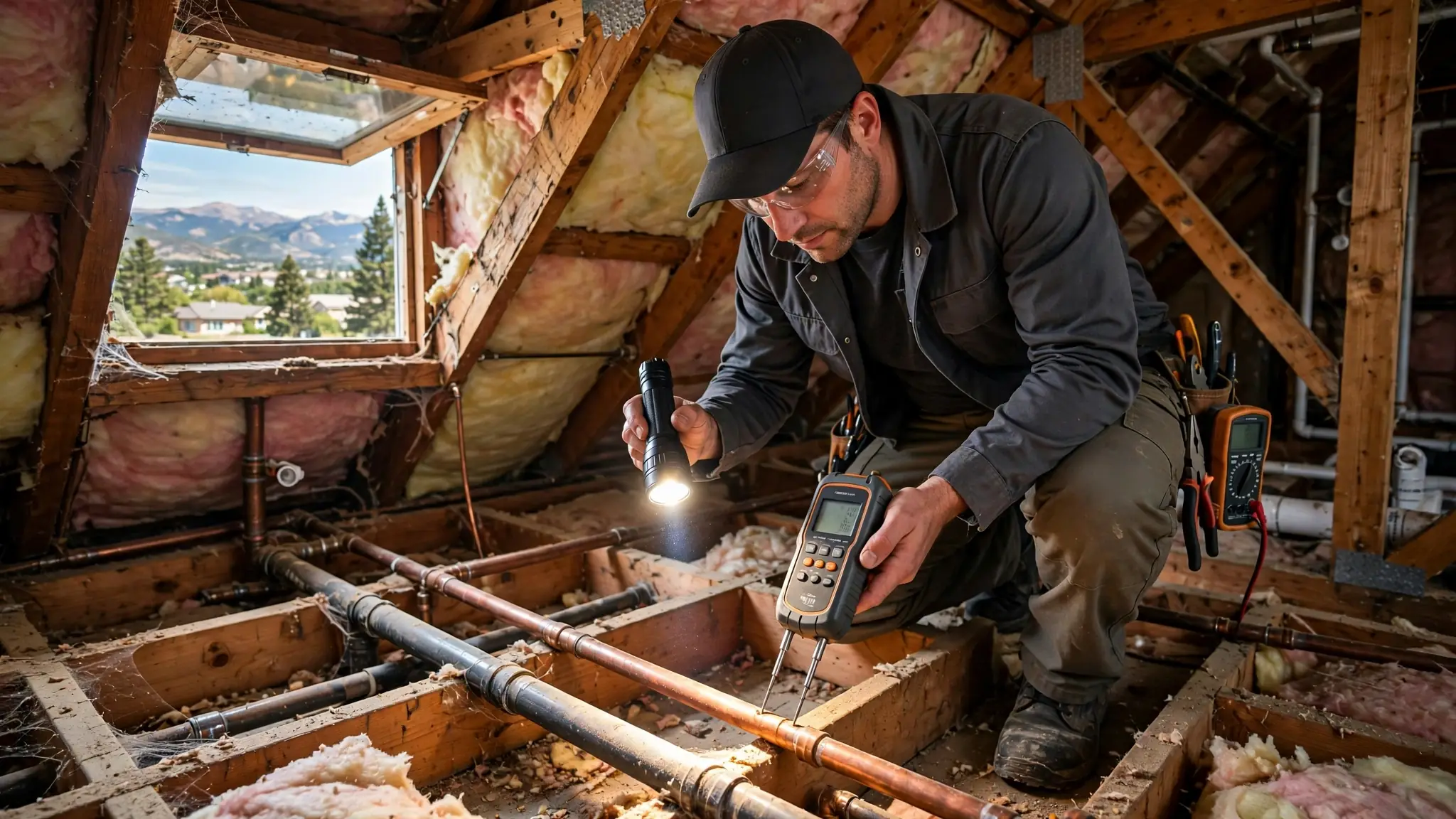
- If you enter the attic, walk only on joists or decking — never on drywall — and bring a bright flashlight.
- Look for the water's path: wet insulation, stained decking, drips from pipe runs, or moisture around vent penetrations.
- Photograph what you see and note the exact location relative to rooms below.
Do not touch wiring, junction boxes, or anything electrical in a damp attic. If water is near electrical components, leave the attic and call a professional — that combination is genuinely dangerous.
Signs To Look For
Different sources make different sounds and leave different evidence:
- Steady drip or hiss in dry weather: pressurized supply-line leak.
- Trickling that follows shower or laundry use: drain-line leak.
- Pattering or drumming matched to rainfall: roof or flashing leak.
- Intermittent dripping with no pattern in cold weather: condensation on ducts or pipes.
- Scratching or scurrying added to the mix: pests, sometimes chewing pipes.
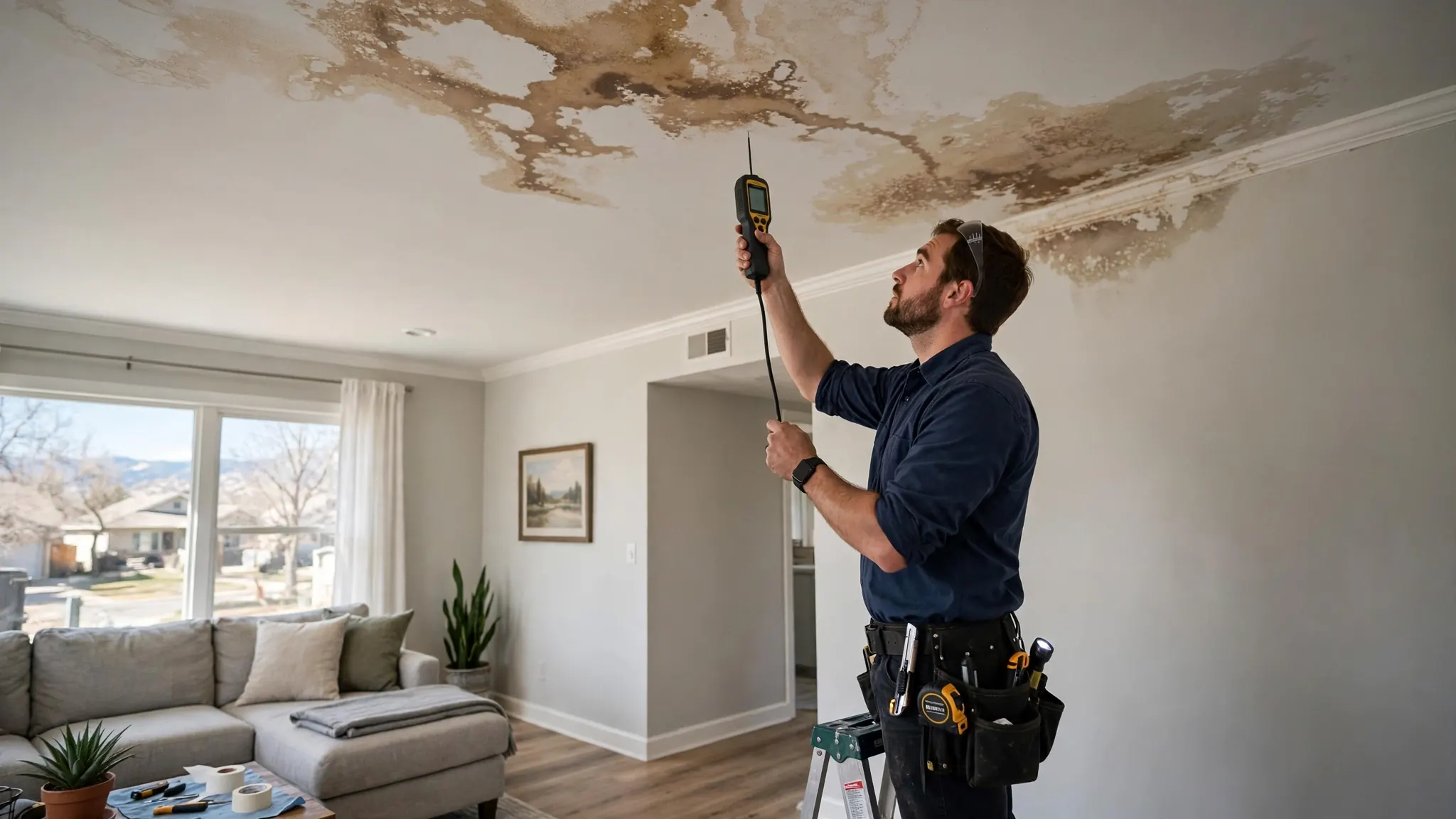
- Stains appearing on the ceiling below the sound's location.
Supply leaks are the most urgent of the set because they flow continuously. A ceiling stain forming below an attic drip means water has already found its path downward.
Common Causes
Attic supply lines — often running to bathrooms or hose bibs — fail the same ways as other pressurized pipe: pinhole corrosion, failed fittings, and freeze splits in poorly insulated runs. Attics swing through the widest temperature range in the house, making them prime territory for freeze damage.
Non-plumbing causes are common too. Roof leaks at flashing, vents, and valleys drip onto insulation; uninsulated ductwork and cold-water lines sweat condensation that drips steadily; and bathroom exhaust fans vented into the attic (instead of outside) pump moist air straight into the space.
- Pinhole or fitting leak in an attic supply line
- Freeze-split pipe in an unconditioned attic run
- Roof or flashing leak dripping onto insulation
- Condensation dripping from uninsulated ducts or pipes
- Bathroom fan venting moist air into the attic
- Pest damage chewing through pipe or insulation
Water plus attic wiring is a serious shock risk. If you see water near junction boxes, recessed lights, or the electrical panel feed, do not enter — shut off the relevant breaker if you can do so safely and call a professional.
Urgent Leak? We Answer 24/7.
Water dripping through the ceiling from above? Keep clear and call now.
(720) 715-9734What Happens If You Wait
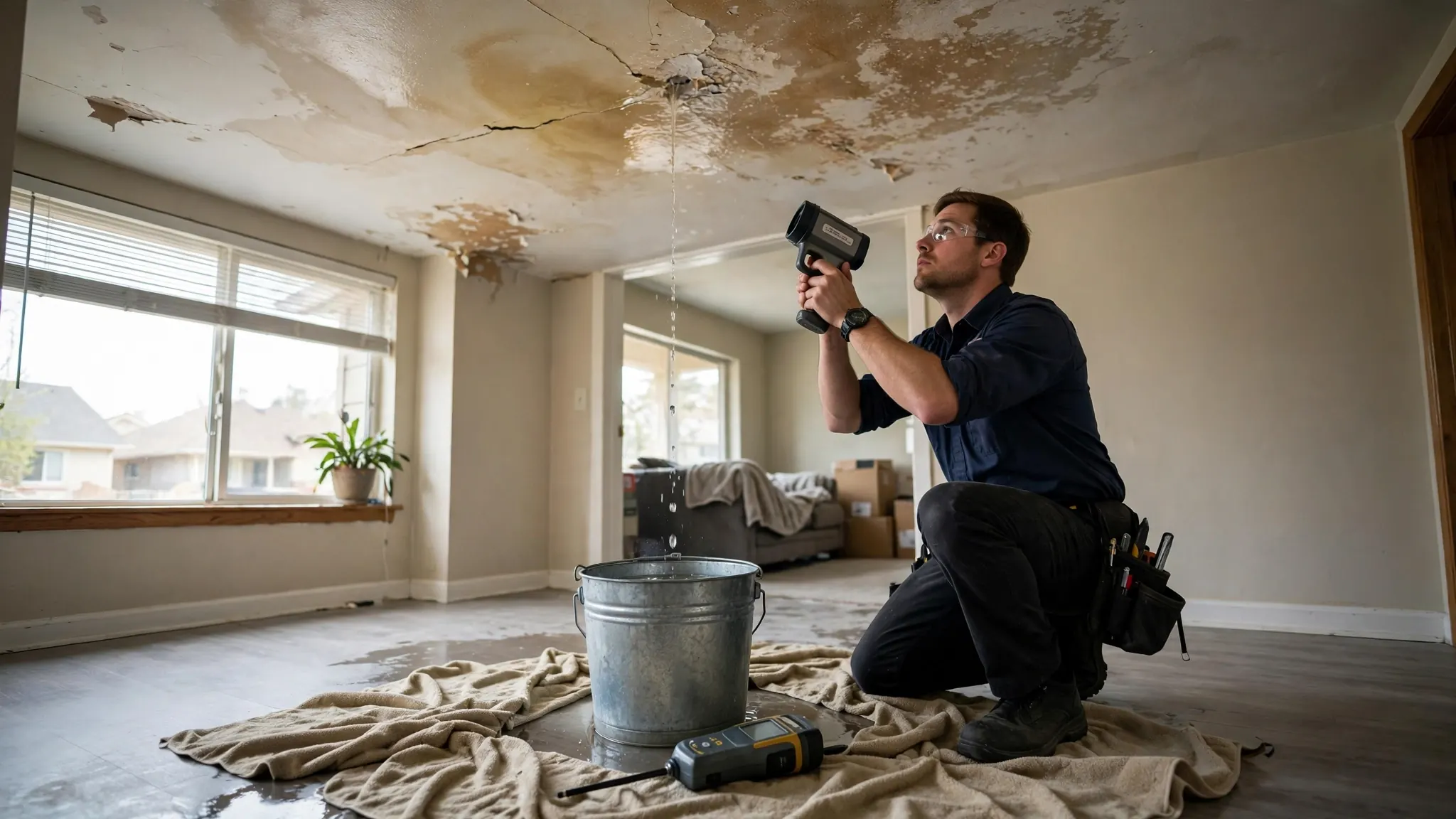
Attic water does not stay in the attic. It soaks insulation — which then compresses and stops insulating — stains and softens the ceiling drywall below, and feeds mold in the dark cavity between. A supply leak does all of this continuously.
Freeze-split pipes deserve special urgency: a small split discovered in winter can become a full burst during the next deep freeze, turning a drip into a deluge through the ceiling.
Because attic leaks announce themselves audibly before the ceiling shows damage, acting on the sound now is the cheapest possible intervention point.
Safe DIY Checks Vs. When To Call A Professional
Observe carefully, but respect the attic's hazards:
| Safe For You | Call A Professional |
|---|---|
| Timing the sound vs. weather and usage | Pinpointing a leak inside insulation |
| Listening from below the ceiling | Thermal scanning of the attic floor |
| Careful visual inspection on joists | Repairing pressurized attic lines |
| Photographing wet insulation or decking | Working near wet wiring or panels |
| Checking the meter with fixtures off | Opening ceilings to access the leak |
If the attic access requires a tall ladder, the decking is incomplete, or you see any water near electrical gear, skip the inspection entirely and call — no diagnosis is worth a fall or a shock.
How The Service Fixes It
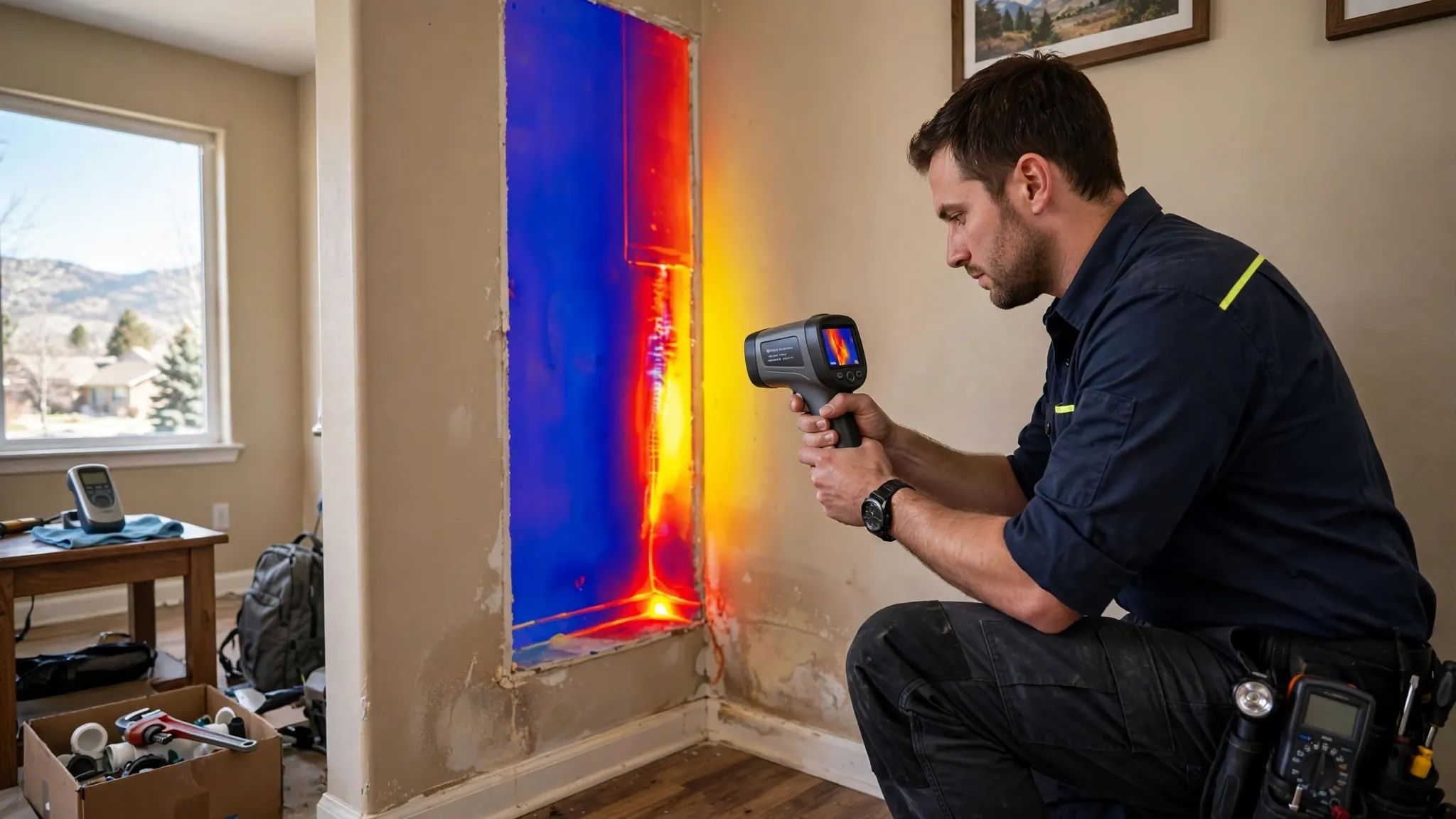
Attic leak detection starts with your timing notes, then uses thermal imaging to see damp insulation patterns and acoustic listening to pinpoint pressurized leaks — even buried under blown insulation. Moisture meters confirm how far the water has spread.
Supply-line breaks get repaired at the fitting or section; condensation issues get addressed at their source with insulation or ventilation fixes. If water is actively dripping through to the ceiling, emergency leak detection is available 24/7.
Attic-leak calls are answered 24/7 with 30–45 minute arrival. Attic sounds are hard to interpret from below — our equipment reads them clearly.