Water follows gravity, so a ceiling stain is evidence of a leak above — but not necessarily directly above. The single most useful diagnostic clue is timing: stains that worsen during or after rain implicate the roof or flashing, while stains that grow after showers, toilet flushes, or laundry cycles implicate plumbing in the floor above. Misreading that timing sends you to the wrong contractor. This guide explains how to track the pattern, the checks that distinguish the two, and when the stain signals urgency.
Watch when the stain grows. Rain-linked growth means roofing or flashing; usage-linked growth means a plumbing leak in the ceiling cavity. Either way, place a bucket under any active drip, photograph the stain's progression, and avoid poking the ceiling. Professional tracing finds the true source uphill — which is often feet away from the stain itself.
What To Do Right Now
A growing stain means active water — act this week, and today if it is dripping. These steps are safe:
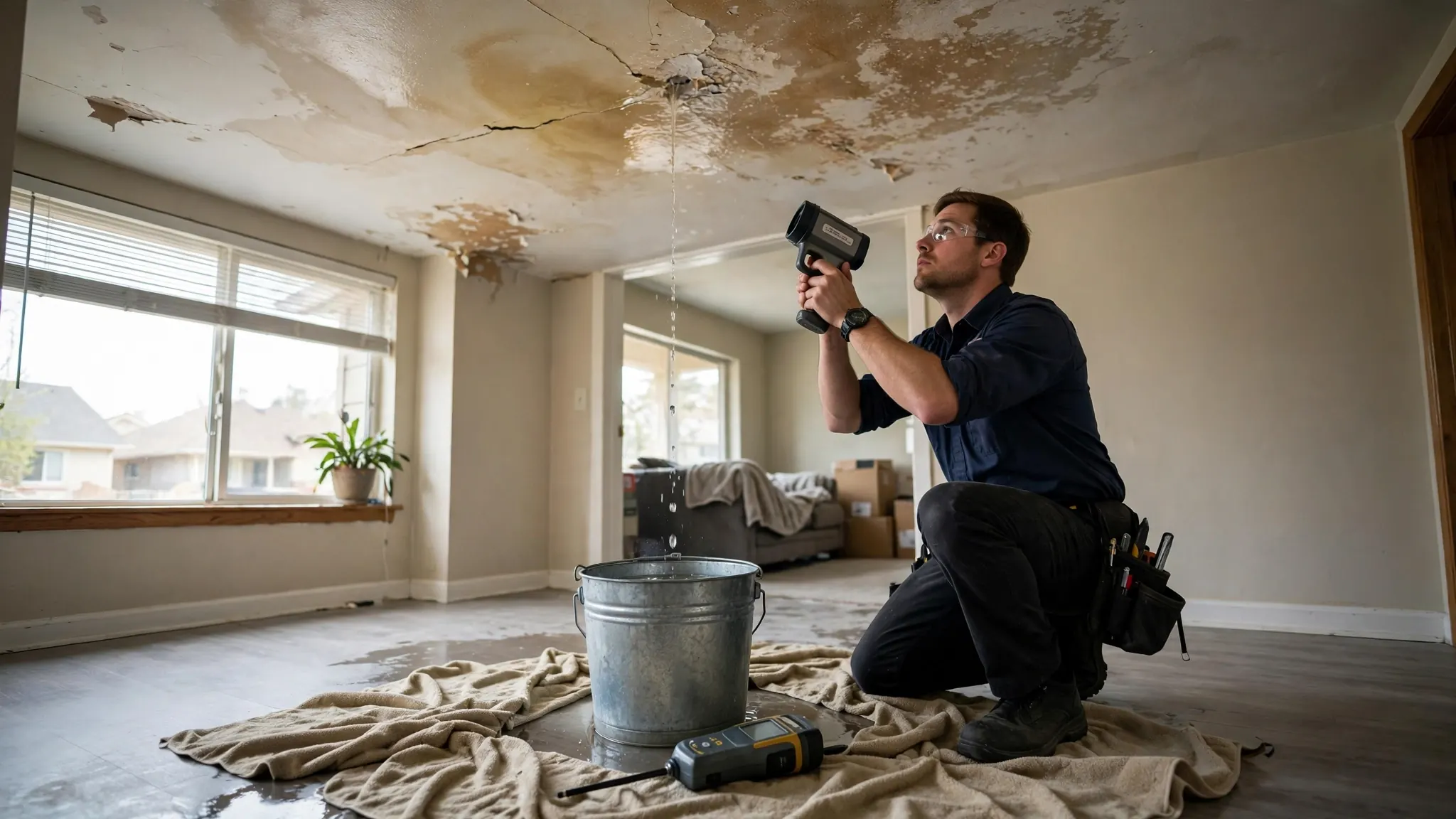
- Place a container under any active drip and lay down towels. Puncturing the ceiling is not recommended — let a professional relieve trapped water.
- Photograph the stain with a date stamp, then again in a few days. Growth pattern and timing are diagnostic gold.
- Note the correlation: does it darken after rain, after showers, or constantly? Write it down.
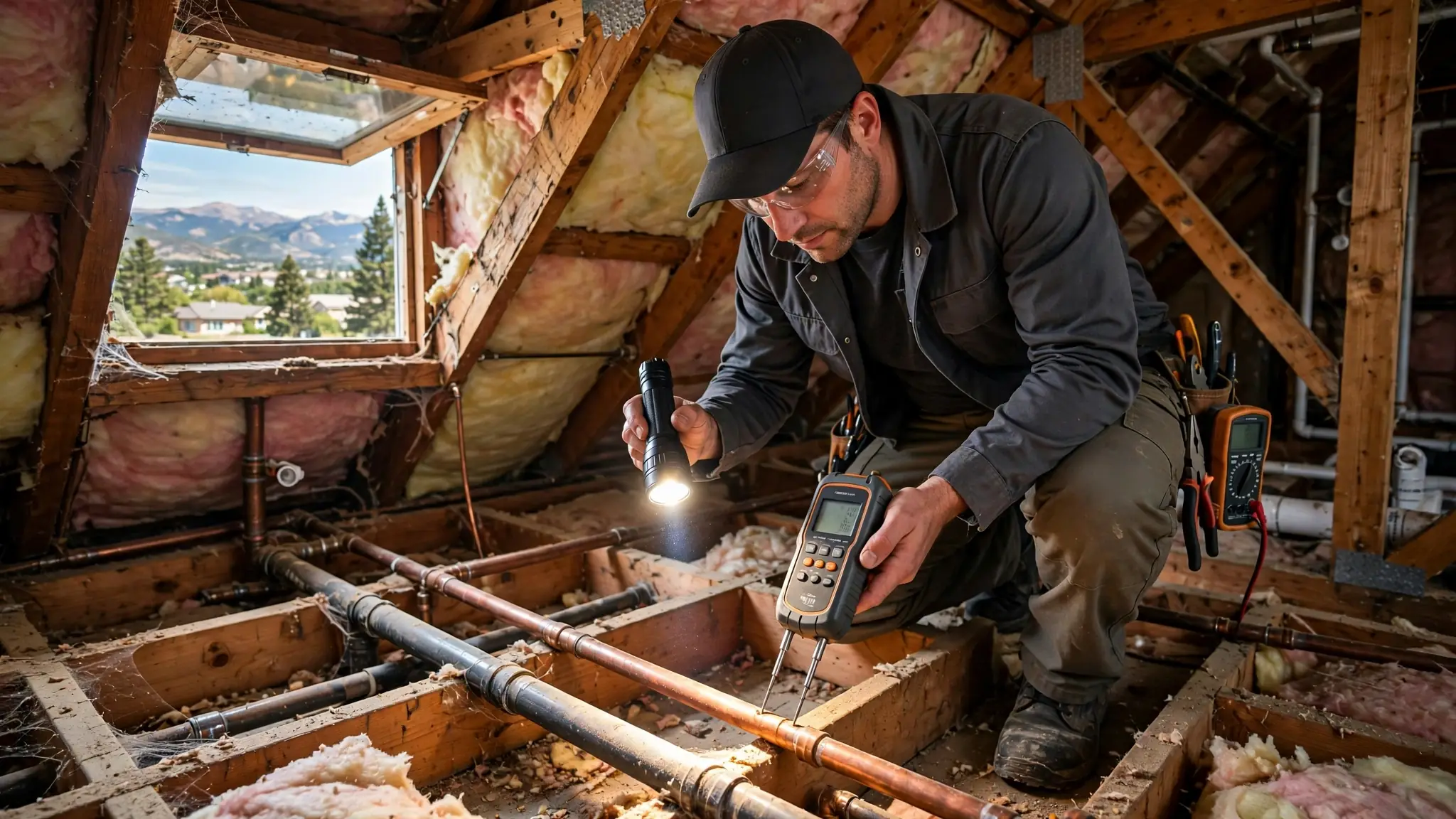
- Check the rooms above. Look under bathroom fixtures, around toilets, and in the attic for damp insulation or decking.
- Move valuables and electronics away from the area below the stain.
If the ceiling is bulging or sagging, keep clear of the area directly beneath it — saturated drywall can release suddenly, and the water it holds may be unsanitary depending on the source.
Signs To Look For
The stain's companions reveal its origin:
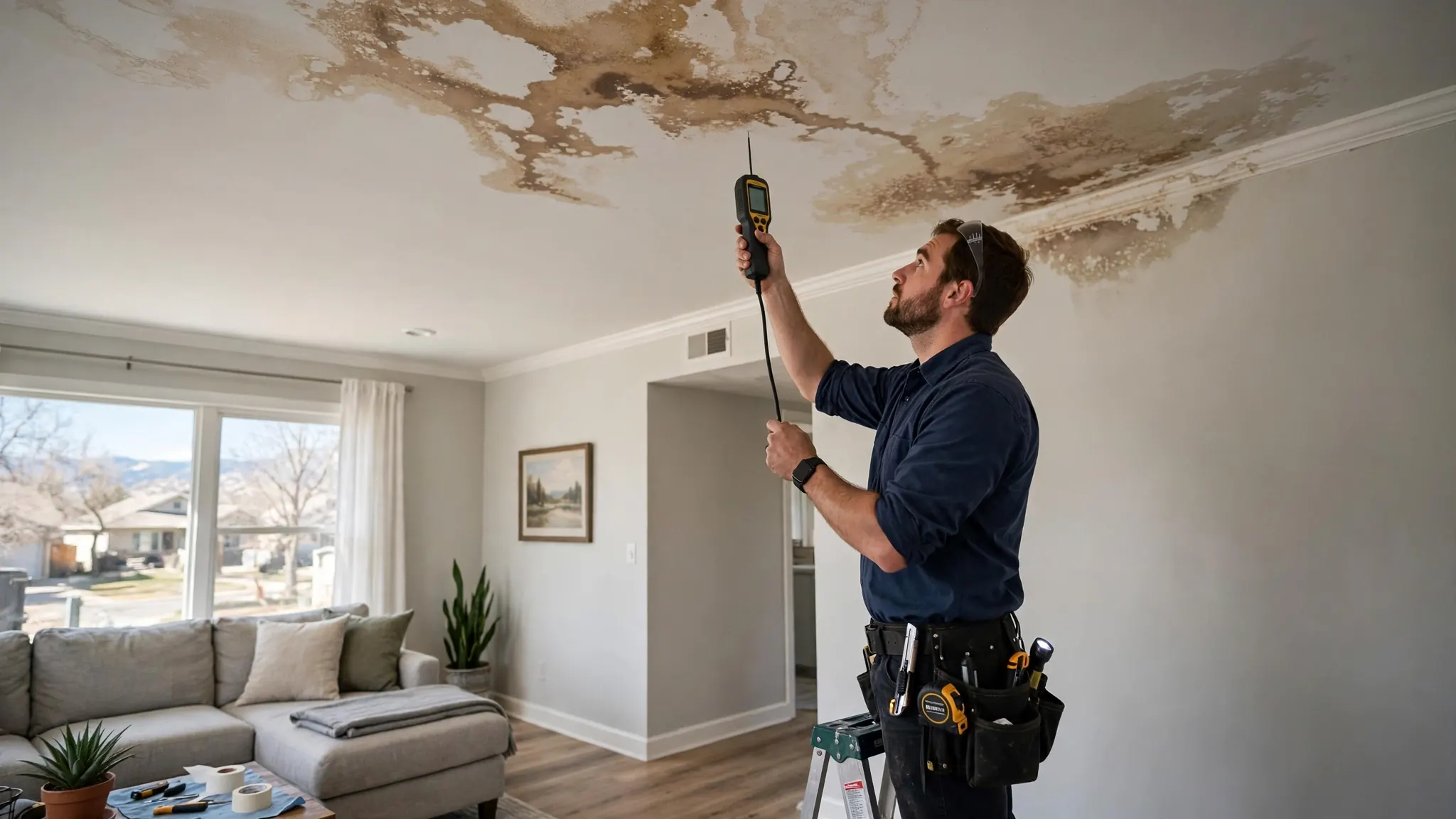
- Brown or yellow rings with darker edges — classic dried water staining.
- Stain growth timed to rain or snowmelt: roof, flashing, or attic issue.
- Growth timed to plumbing use: supply or drain leak in the floor above.
- Musty odor near the stain indicating prolonged dampness.
- Paint bubbling or drywall tape loosening around the discoloration.
- Dripping that continues long after rain stops: trapped water draining slowly.
A stain directly below a bathroom is the strongest plumbing clue; a stain near an exterior wall or chimney chase leans roofing. But water travels along joists, so treat location as a hint — tracing confirms it.
Common Causes
On the plumbing side, the usual suspects live in the bathroom above: a failed wax ring or supply connection at the toilet, a shower pan or grout failure letting water through, a split drain pipe, or a pinhole in a pressurized supply line running through the ceiling cavity.
On the roofing side, failed flashing around chimneys, vents, and valleys is the leading cause — shingles rarely leak mid-field. Ice dams can force meltwater under shingles at the eaves, and attic condensation or plumbing vent issues can mimic roof leaks from inside.
- Toilet wax ring or supply-line failure in the bathroom above
- Shower pan, grout, or tub drain leaking through the floor
- Pinhole or fitting leak in a ceiling-cavity supply line
- Failed roof flashing at chimneys, vents, or valleys
- Ice-dam backup forcing water under shingles
- Condensation on attic ductwork dripping onto the ceiling
A ceiling that bulges or sags is holding trapped water and can fail without warning. Keep people away from directly beneath it and call a professional promptly — do not try to drain it yourself.
Urgent Leak? We Answer 24/7.
Ceiling bulging or actively dripping? Keep clear underneath and call now.
(720) 715-9734What Happens If You Wait
Ceiling cavities hide the damage while it compounds. Insulation saturates and compresses, losing its effectiveness; drywall softens until tape joints fail and sections sag; and mold establishes in the dark, damp cavity — often well before the stain looks serious from below.
Plumbing-sourced stains keep growing with every use of the fixture above. Roof-sourced stains worsen with every storm. In both cases the repair scope expands from the leak itself to the ruined cavity materials around it.
Catching it at the stain stage usually means a contained repair. Waiting for the sag stage means replacing insulation, drywall, and finishes across a much larger area.
Safe DIY Checks Vs. When To Call A Professional
Timing observation is powerful and completely safe:
| Safe For You | Call A Professional |
|---|---|
| Tracking stain growth vs. rain and usage | Tracing the leak uphill to its source |
| Photographing progression with dates | Moisture mapping inside the cavity |
| Checking bathrooms and attic visually | Opening the ceiling at the right point |
| Placing buckets and protecting belongings | Repairing supply lines or roof flashing |
| Noting odors and drip timing | Draining trapped water safely |
Attic inspections deserve caution: walk only on joists or decking, watch for exposed wiring near water, and never step on drywall — it will not hold your weight, especially when damp.
How The Service Fixes It
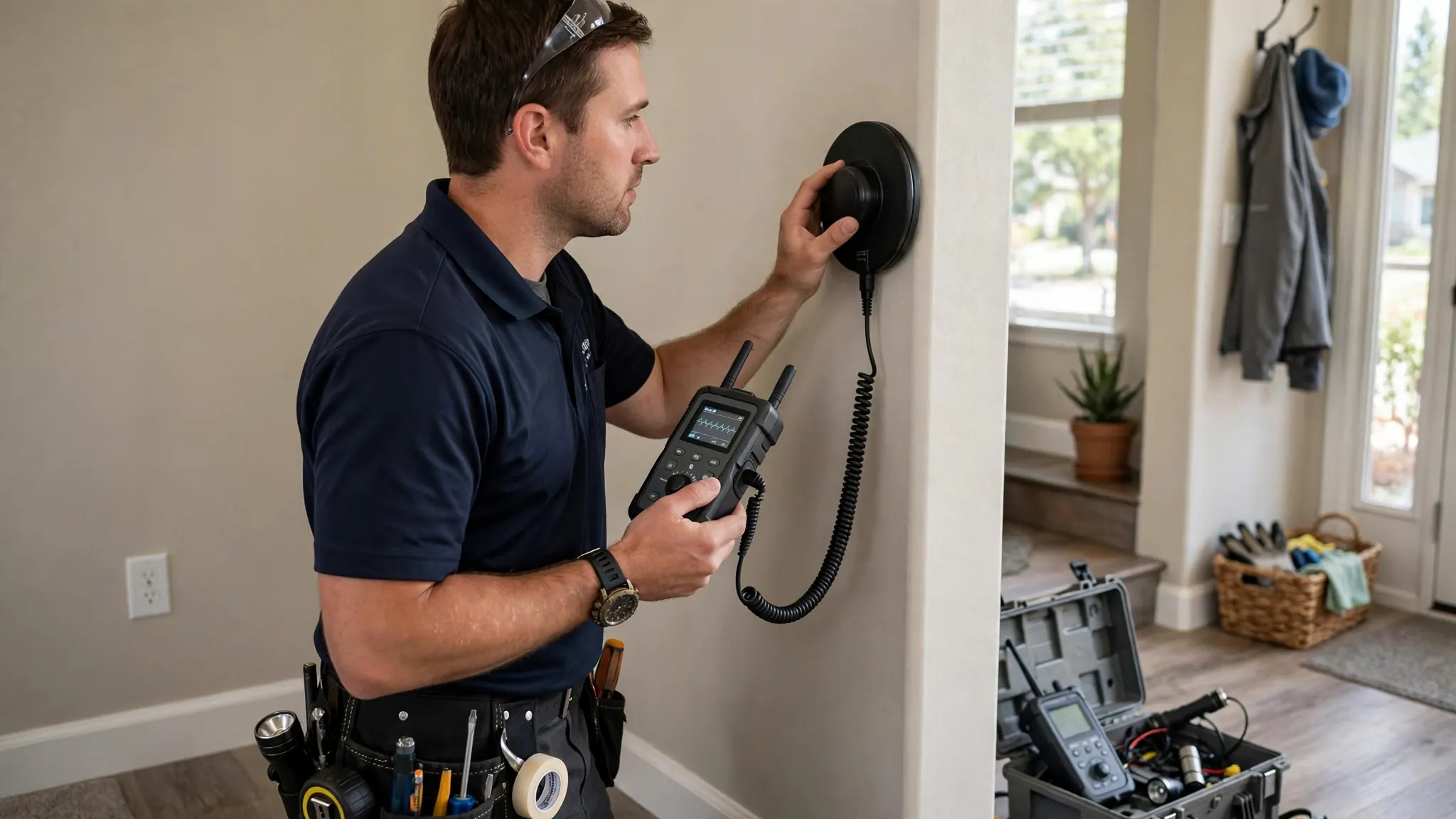
For plumbing-sourced stains, ceiling leak detection traces the water uphill — past where it drips — to the actual failed connection or pinhole, using acoustic listening and moisture mapping. The opening lands at the source, not at the stain.
If the timing points to the roof, a roofing contractor is the right call — but when the pattern is unclear or mixed, leak detection rules plumbing in or out first, saving a misdirected roof repair. Active dripping or a sagging ceiling warrants emergency ceiling service, available 24/7.
We answer ceiling-leak calls 24/7 and arrive in 30–45 minutes. Stains lie about location — our equipment does not.