A pool that needs topping off every few days is telling you something. Normal evaporation is slow and steady; a pool leak is faster, relentless, and often hidden in the plumbing, the shell, or the equipment pad. The famous bucket test separates the two in 24 hours with no special tools. This guide explains how to run it correctly, the places pools actually leak, and when the water loss warrants a professional pool leak detection visit.
Run the bucket test: place a bucket of pool water on a pool step, mark both levels, and compare after 24 hours with the pump running normally. If the pool drops noticeably more than the bucket, you have a leak — not evaporation. Common culprits are skimmer throats, return fittings, and underground suction lines, all of which specialized detection can pinpoint.
What To Do Right Now
A leaking pool wastes water and can undermine the surrounding deck — but it is a this-week problem, not a tonight emergency. Start here:
- Run the bucket test. Fill a bucket with pool water, set it on a step, mark the water level inside and outside, and compare after 24 hours of normal pump operation.
- Repeat with the pump off for 24 hours if the first test shows a leak. A leak that stops with the pump off is in the pressurized plumbing; one that continues is structural.
- Inspect the equipment pad. Look for drips at the pump, filter, heater, and valves — the most visible and cheapest leaks live here.
- Check the skimmer throat and tile line for cracks or gaps, and wiggle ladders and rails for looseness that breaks seals.
- Mark the water level and watch whether the loss stops at a certain point — the leak is at or below where the dropping stops.
Keep the water level above the skimmer during testing. Running the pump with the skimmer sucking air damages the pump — and a burned-out pump costs far more than the leak did.
Signs To Look For
Beyond the dropping level, pool leaks leave clues:
- Needing to add water more than once a week in mild weather.
- Air bubbles or gurgling from the return jets.
- The pump losing prime or the basket running half-full of air.
- Soggy soil or unusually lush grass near the equipment pad or pool edge.
- Cracks in the deck, or deck sections settling unevenly.
- Algae blooms that keep returning despite balanced chemistry — dilution from constant refilling.
A leak that only shows with the pump running points to pressure-side plumbing; one that continues with everything off points to the shell, skimmer, or suction lines.
Common Causes
The skimmer throat is the single most common leak location — the joint between the plastic skimmer and the concrete or vinyl shell flexes and separates over time. Return fittings, light niches, and main drains are the other classic structural weep points.
In the plumbing, underground suction and return lines crack from soil movement, freeze damage, or age, while equipment-pad leaks come from pump seals, filter gaskets, heater connections, and valve o-rings. Vinyl liners develop leaks at seams, steps, and wherever sharp objects or worn spots compromise the material.
- Separated skimmer throat-to-shell joint
- Cracked underground suction or return lines
- Worn pump seals, filter gaskets, or valve o-rings
- Light niche or return fitting conduit leaks
- Vinyl liner punctures at seams or steps
- Heater or chemical-feeder connection drips
Pool equipment combines water and high-voltage electricity. Never open pump housings, heaters, or electrical panels yourself — leave equipment-side diagnosis to professionals and keep the area dry.
Urgent Leak? We Answer 24/7.
Losing inches per day or deck starting to settle? That leak needs finding now — call.
(720) 715-9734What Happens If You Wait
A pool leak is a continuous drain on the water bill and the chemical budget — every gallon added dilutes the chemistry you just balanced. Structural leaks do worse: escaping water erodes the soil supporting the shell and deck, leading to settling, cracking, and in severe cases, a floating or shifting shell.
Suction-side leaks let air into the system, straining the pump and shortening equipment life. What begins as a weeping fitting becomes a pump replacement if ignored long enough.
Because the bucket test gives you a definitive answer in a day, there is little reason to let a suspected leak run another month.
Safe DIY Checks Vs. When To Call A Professional
Pool owners can diagnose a great deal safely:
| Safe For You | Call A Professional |
|---|---|
| The 24-hour bucket test, pump on and off | Pressure-testing underground lines |
| Visual inspection of equipment pad | Dye-testing skimmers and fittings underwater |
| Checking skimmer throat and tile line | Acoustic location of buried pipe leaks |
| Marking water level drop patterns | Opening pump housings or heaters |
| Wiggling rails and ladders gently | Any electrical equipment diagnosis |
Dye testing and pressure testing require the pool to be swimmable-safe afterward and the equipment to stay intact — both are professional procedures, especially around electrical components.
How The Service Fixes It
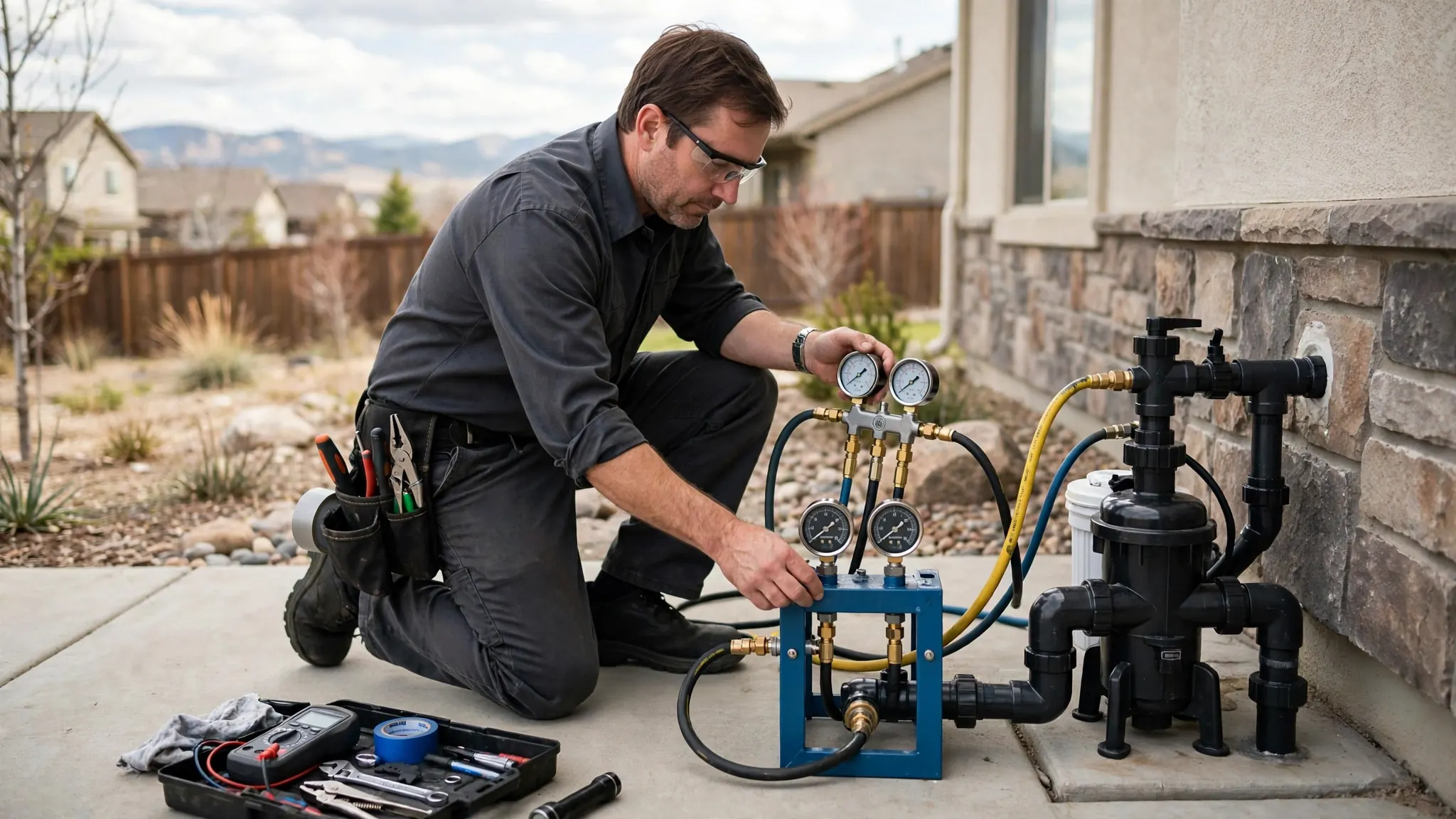
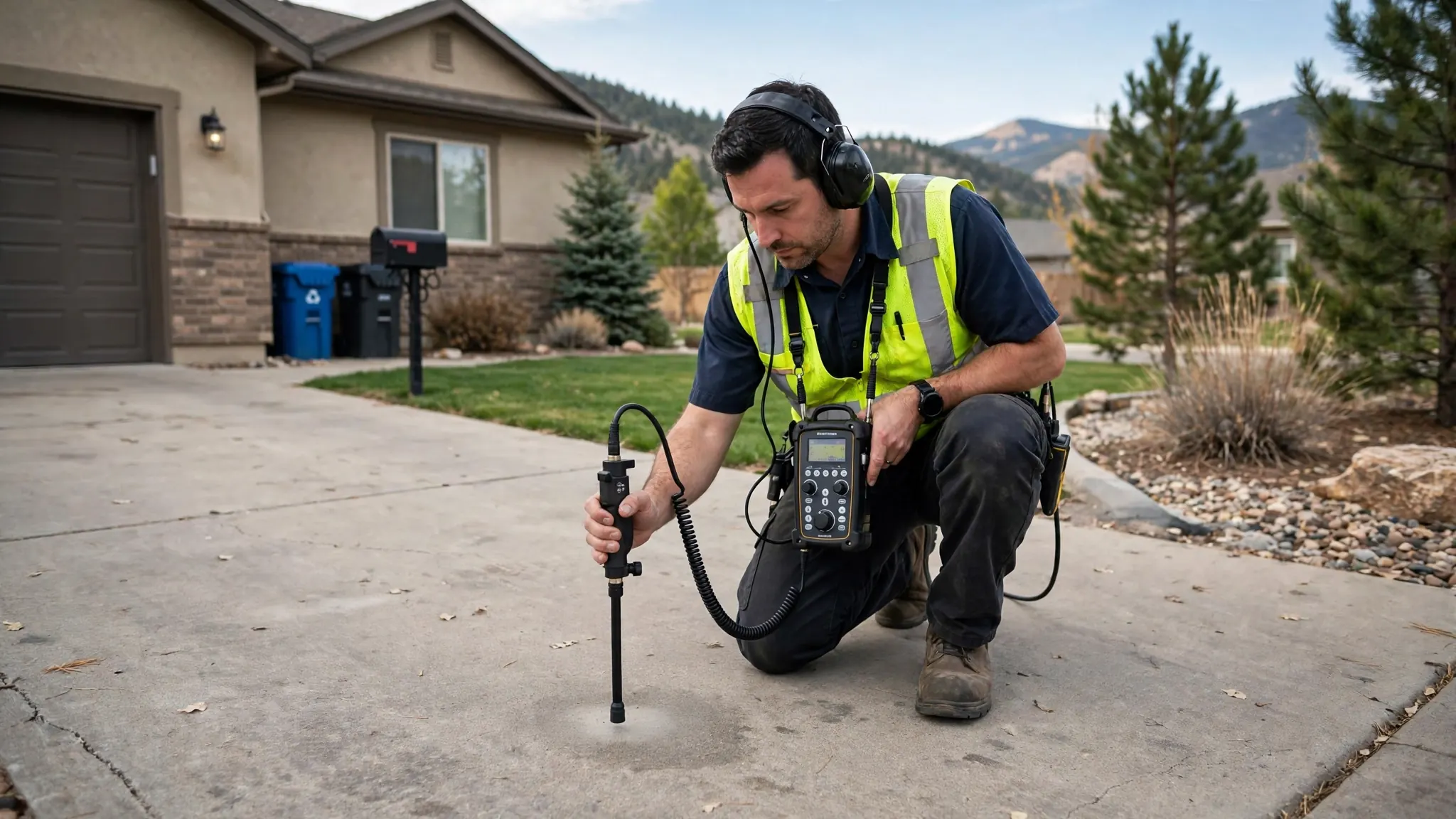
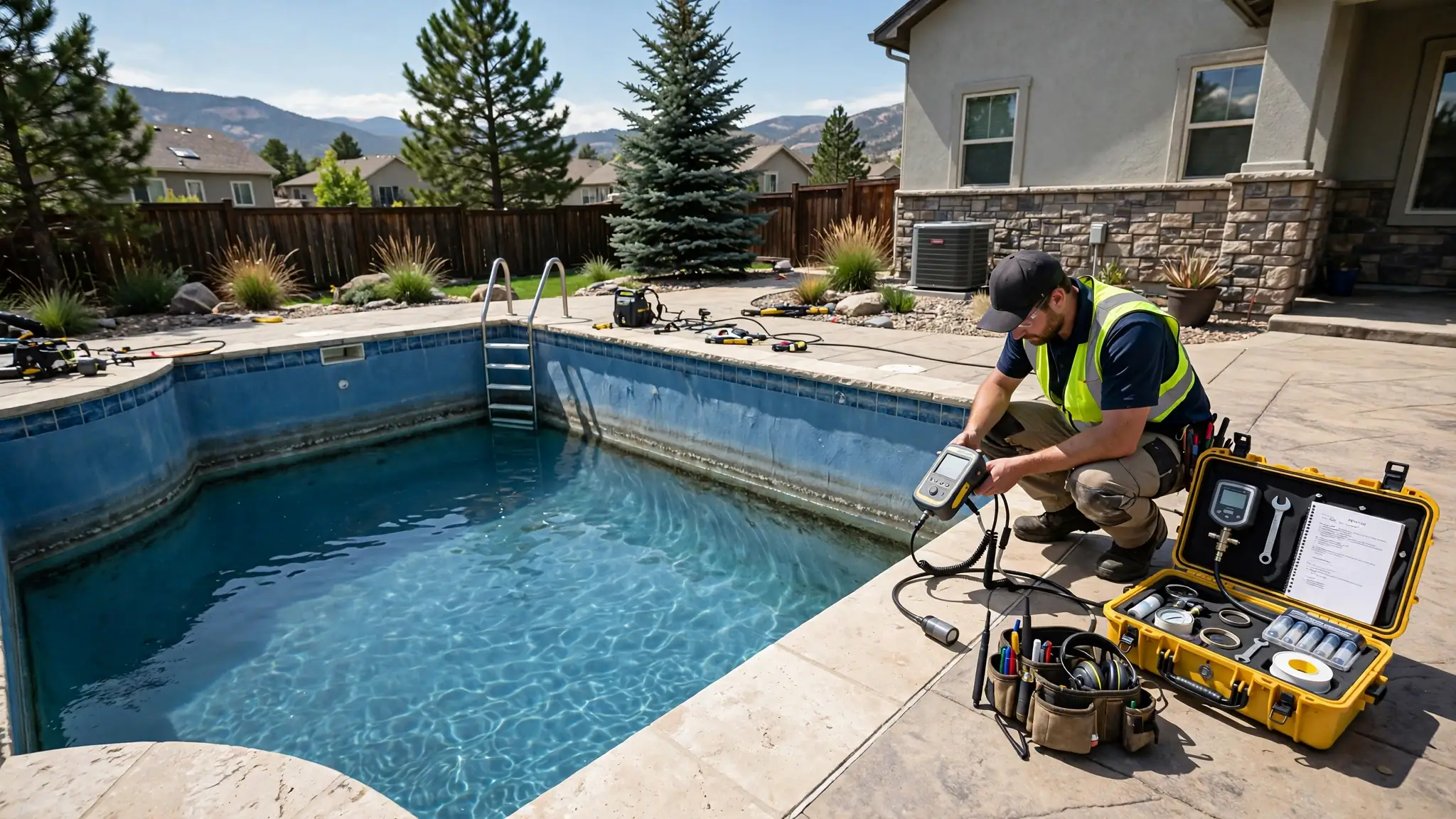
Pool leak detection combines the bucket-test results with dye testing at suspect fittings, pressure testing of each plumbing run, and acoustic listening for underground line breaks. Each test narrows the field until the leak is isolated to one fitting, joint, or pipe section.
Structural weeps get sealed or rebuilt at the fitting; underground line breaks get a targeted excavation at the marked point.
If the pool is losing water rapidly or the deck is settling, emergency pool leak service is available 24/7.
We answer pool-leak calls 24/7 and arrive in 30–45 minutes. The bucket test tells you there is a leak — our detection tells you exactly where.